
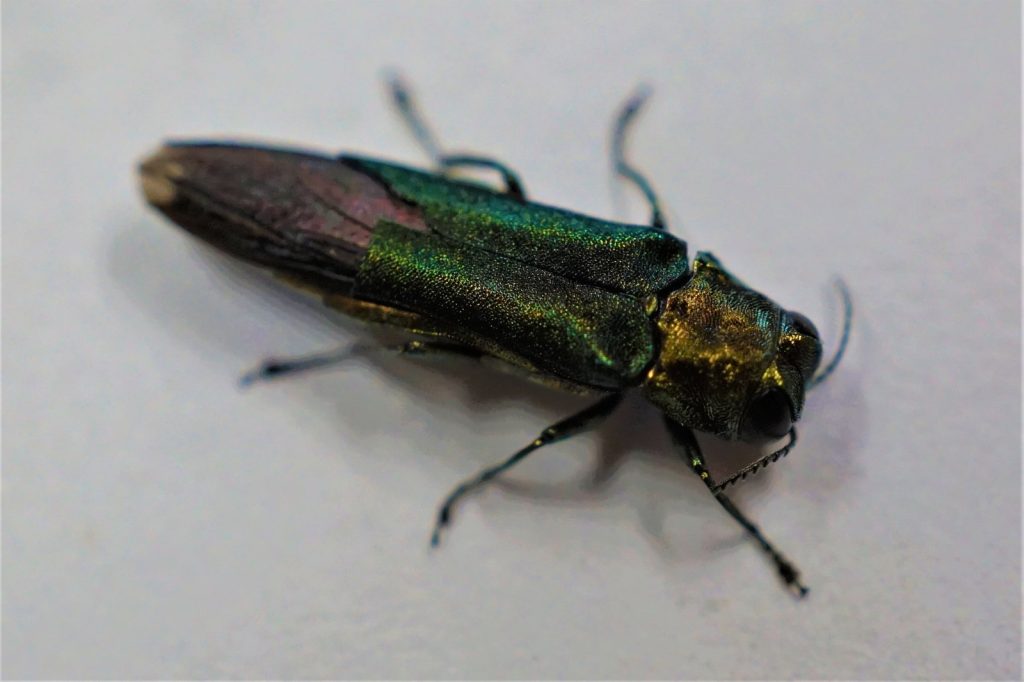
The Georgia Forestry Commission has known this day was coming for years. Now that the emerald ash borer is confirmed in the state, the agency’s playbook is shifting from prevention to damage assessment. The beetle, a metallic green insect roughly the size of a penny, has already killed hundreds of millions of ash trees across North America.
Georgia is the latest front in that march. The borer’s larvae are the real problem.
They tunnel under the bark, cutting off the tree’s ability to move water and nutrients. By the time anyone spots the damage — thinning crowns, D-shaped exit holes, bark splits — the infestation is usually well advanced. The commission is asking residents to report any signs they see.
But the tone of their message is sober. Early detection is the only play left.
That is the technical reality. The beetle did not just appear. It has been spreading south and east for years, mostly by hitching rides in firewood and nursery stock.
That is the detail that drives the commission’s public awareness campaigns. The agency is blunt about it: do not move firewood long distances. That single action remains the primary vector for new infestations.
The message is straightforward. Look for the signs.
Report them. Do not transport ash wood. The commission has been running visual surveys and trap monitoring across the state.
Those efforts are meant to track the spread, not stop it. The window for containment is narrow once the borer establishes a foothold.
That window has closed in other states. Forests from the Midwest to the Northeast have been reshaped by this insect. Georgia’s ash trees now face the same pressure.
For landowners and arborists, the commission’s guidance is clear. The beetle is here. The question is how quickly it will be found.
And whether that will be fast enough to save any of Georgia’s ash trees. The answer to that question is not yet known.
The agency is not offering false hope. They are offering a plan: identify the infestation, map its boundaries, and slow its spread as much as possible. The insect is distinctive.
Its metallic green sheen makes it stand out against bark and leaves. But it is small.
Easy to miss. Easy to carry from one county to another in a load of firewood. That is how it has moved across the continent.
That is how it arrived here. The commission’s public awareness campaigns are aimed at making sure people know what to look for. The beetle itself.
The damage it causes. The exit holes.
The bark splits. The thinning crowns. Once those symptoms appear, the tree is already in trouble.
The larvae have been working for years by then. Georgia’s response hinges on the public following the firewood rule.
Do not move it. Burn it where you buy it. That is the single most effective step anyone can take.
The commission has been saying that for years. They are saying it again now, with more urgency. The borer’s arrival was not unexpected.
It was a matter of when, not if. The when is now.
The if is what happens next. The commission is watching. They are tracking.
They are asking for help. The beetle is here.
The work is just beginning.




