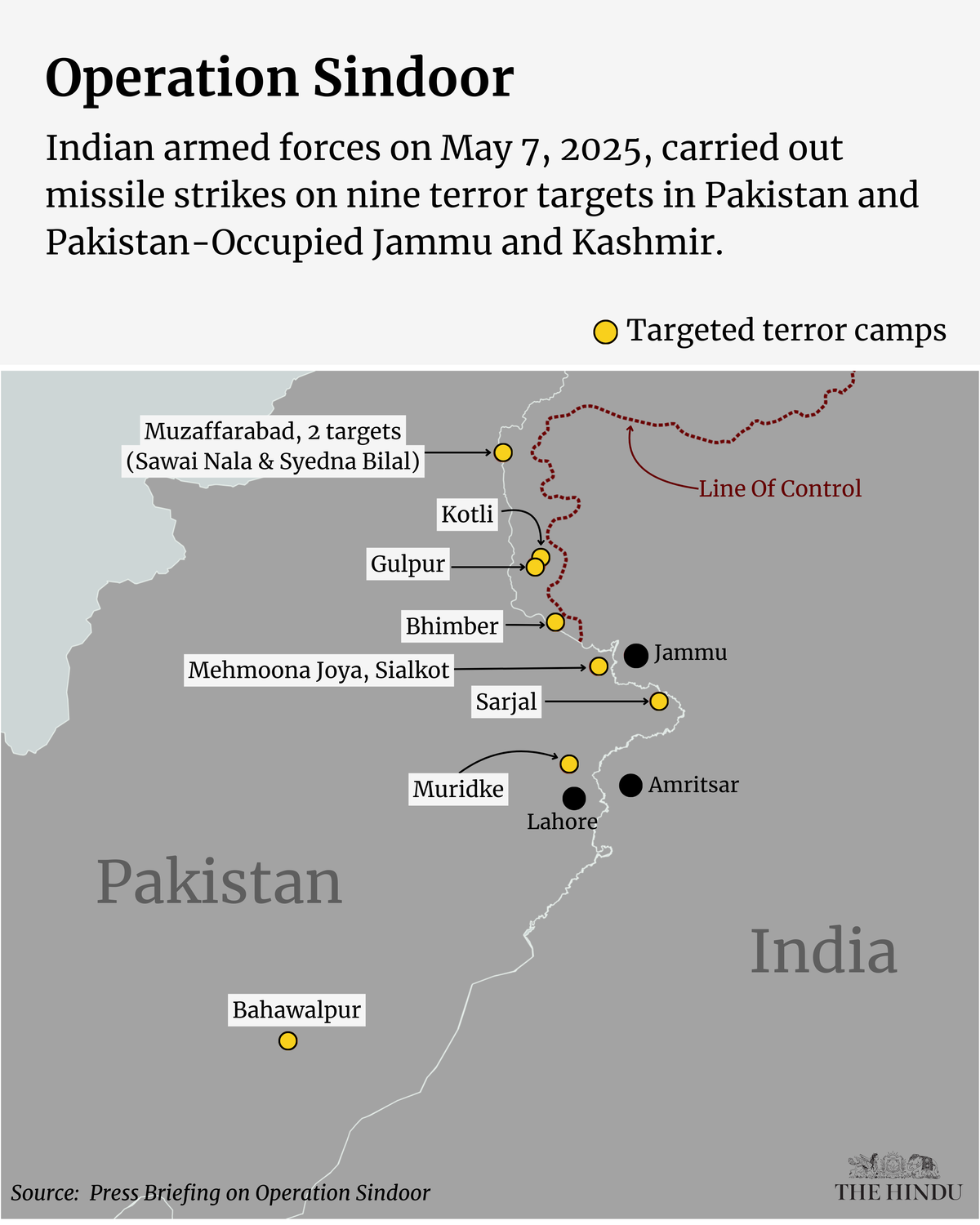
A brief armed conflict between India and Pakistan began on 7 May 2025, after India launched missile strikes on Pakistan, in a military campaign codenamed Operation Sindoor. The operation was in response to the Pahalgam attack in Indian-administered Jammu and Kashmir on 22 April 2025, in which 26 civilians were killed. India accused Pakistan of supporting cross-border terrorism, a claim that Pakistan denied.
According to India, the operation was targeted at terrorism-related infrastructure facilities of Pakistan-based militant groups Jaish-e-Mohammed and Lashkar-e-Taiba in Pakistan and Pakistan-administered Azad Kashmir. India stated that no Pakistani military or civilian facilities were targeted in the strikes. However, Pakistan claimed that the Indian strikes hit civilian areas, including mosques, and resulted in civilian casualties. This discrepancy in accounts highlights the complexity of the conflict and the challenges in verifying information in the region.
The conflict escalated quickly, with border skirmishes and drone strikes reported between the two countries. Pakistan’s army retaliated on 7 May, by launching a blitz of mortar shells on Jammu, particularly Poonch, which killed civilians and damaged homes and religious sites. The use of drones in the conflict marked a new development in the tensions between the two nuclear-armed nations, with this being the first reported drone battle between them.
The Pahalgam attack on 22 April 2025, which preceded the current conflict, was a significant incident that led to the escalation of tensions between India and Pakistan. The attack resulted in the loss of 26 civilian lives and was widely condemned. India’s decision to launch Operation Sindoor was reportedly in response to this attack, with the aim of targeting the infrastructure of militant groups believed to be responsible.
The situation on the ground remains fluid, with reports of ongoing clashes and exchanges of fire between Indian and Pakistani forces. The international community is watching the situation closely, with concerns about the potential for further escalation and the impact on regional stability. As the conflict continues to unfold, it is likely that there will be increased calls for calm and restraint from both sides, as well as efforts to verify the facts on the ground and understand the motivations behind the actions of the two nations.
Looking ahead, the key question is how the conflict will evolve in the coming days and weeks. Will the two sides be able to find a way to de-escalate tensions, or will the situation continue to deteriorate? The answers to these questions will depend on a range of factors, including the actions of the Indian and Pakistani governments, the response of the international community, and the dynamics on the ground. As the situation continues to unfold, it is essential to monitor developments closely and to seek out credible and reliable sources of information to understand the complexities of the conflict.
For now, the focus remains on the immediate situation, with concerns about the safety and well-being of civilians in the affected areas. The use of drones and other advanced technologies in the conflict has added a new layer of complexity to the situation, and it is likely that this will be an area of increasing attention in the days and weeks to come. As the world watches the developments between India and Pakistan, one thing is clear: the need for accurate and reliable information, and for a nuanced understanding of the complex factors at play in the region.