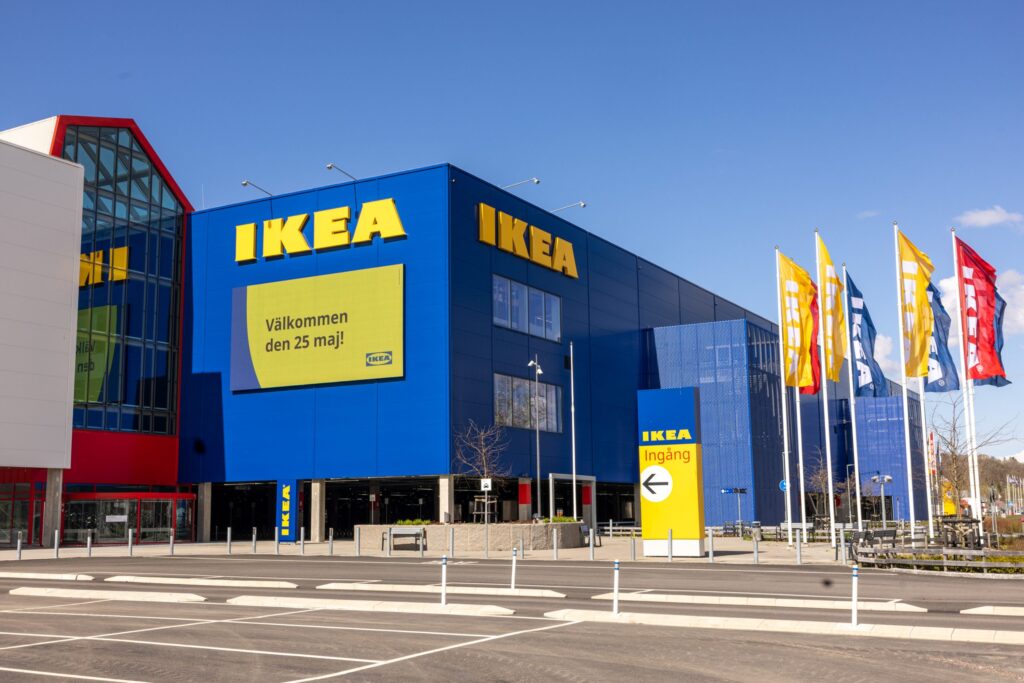
The Dutch legal entity that controls every IKEA store, meatball, and flat-pack hex key holds an estimated $60 billion in assets, yet for much of its existence it gave away only a tiny fraction of that sum. The Stichting INGKA Foundation, registered in Leiden, Netherlands, was once ranked as the wealthiest charitable foundation on earth, but according to records cited by The Economist, it was channeling just over one million euros annually to a single Swedish design institute at a time when its endowment was valued at roughly $36 billion.
That combination made it, on paper, one of the least generous foundations in the world. The arrangement is legal, but it represents one of the strangest pieces of corporate architecture in Europe.
A Multibillion-Dollar Vehicle With Minimal Giving
A stichting is a peculiar Dutch legal creature that has no members, no shareholders, and no owners. It exists only to pursue whatever purpose its founders set. The Stichting INGKA Foundation is such a body, created in 1982 by Ingvar Kamprad and his corporate attorney to hold the IKEA business.
Kamprad had founded IKEA in 1943 at the age of seventeen, selling pens and picture frames from a shed in the Swedish village of Agunnaryd. By 1982, the company had grown into a major continental retail force.
The foundation’s charitable output long remained minimal. The Economist’s calculation showed that it was directing just over one million euros annually to a single Swedish design institute even as its assets grew to the $60 billion figure now cited by financial observers. That made it, at the same time, the wealthiest charitable foundation on earth and one of its least generous.
For now, the Stichting INGKA Foundation remains what it has been for decades: a multibillion-dollar vehicle that controls one of the world’s most recognizable retail brands while giving away less than the price of a small Stockholm apartment each year.
How a Swedish Retailer Found a Dutch Home
The transfer of ownership to the Dutch foundation served multiple purposes. Swedish inheritance tax on large fortunes was a stated reason for the move, along with shielding the company from outside takeover.
The foundation later lost a Dutch tax-benefit status it had held for a short period. Its original stated aim was to support architectural and interior design innovation, and for many years it gave little beyond funding that single Swedish design institute. In 2009 the foundation broadened its mission to focus on child well-being in poorer regions.
It now works through the IKEA Foundation with groups including the United Nations High Commissioner for Refugees. This shift widened the foundation’s charitable scope but did not alter its underlying structure or its ownership of the IKEA business.
Implications of a Unique Corporate Structure
The structure matters because it shows how a retail brand used a foreign legal form to limit taxes and keep control inside one family. A stichting has no members, no shareholders, and no owners; it exists solely to pursue the purposes set by its founders.
That means the Stichting INGKA Foundation is answerable to no outside investors or owners, and its charitable output is entirely at the discretion of its directors. Readers see a model where enormous commercial wealth sits inside a charity that long gave very little, raising questions about oversight of such vehicles. The foundation’s formal headquarters in Leiden, Netherlands, and its control over one of the world’s most recognizable brands remain unchanged, as does the fundamental question of how much transparency and accountability should apply to foundations that hold vast commercial assets while operating under charitable status.