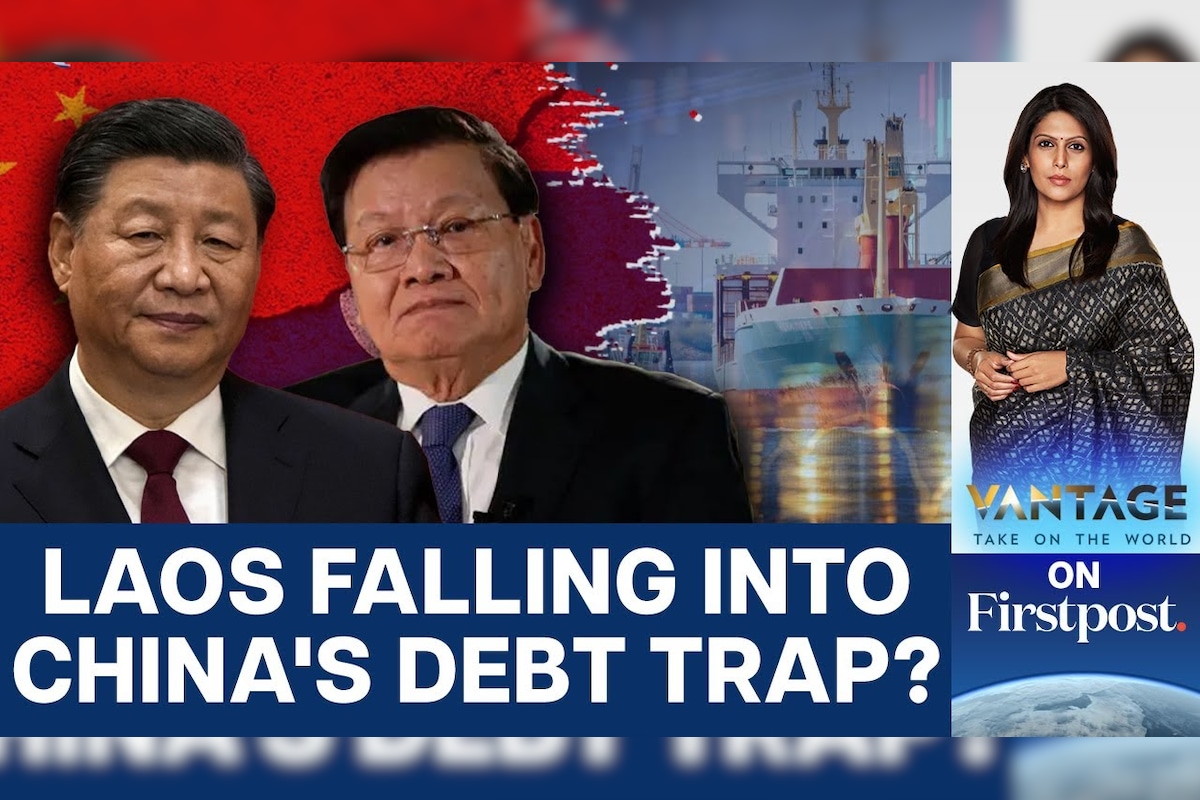
The International Monetary Fund and several Southeast Asian nations have announced a coordinated financial assistance package for Laos, responding to the country’s deepening debt crisis as of June 4, 2025. The aid aims to prevent a sovereign default and stabilize the Lao economy, which faces mounting external debt payments and depleted foreign reserves.
The scale of Laos’s debt burden
Laos owes approximately $14.5 billion in external debt, a figure that represents more than 70 percent of its gross domestic product. Much of this debt was accumulated through large infrastructure projects, including a Chinese-built railway linking Vientiane to Kunming. Servicing these loans has become increasingly difficult as the Lao kip has lost over 30 percent of its value against the U.S. dollar in the past year.
“The debt situation is unsustainable without external support,” said Sonexay Siphandone, Laos’s finance minister, in a statement on June 3. “We are working with our partners to restructure obligations and secure bridge financing.”
The government has already missed payments on several bilateral loans. Credit rating agencies have downgraded Laos’s sovereign debt to junk status. Inflation remains above 25 percent, driven by fuel and food price spikes. The central bank has limited capacity to intervene in currency markets.
The regional response
The assistance package includes a $500 million emergency loan from the IMF, subject to board approval. Thailand has pledged $200 million in bilateral support. Vietnam and Cambodia have offered technical assistance and debt rescheduling terms. China, Laos’s largest creditor, has agreed to extend repayment periods on some infrastructure loans.
“This is a collective effort to prevent contagion in the Mekong region,” said Kobsak Chutikul, Thailand’s deputy finance minister, during a press briefing on June 4. “A Lao default would destabilize supply chains and currency markets across the subregion.”
The Asian Development Bank has also committed $150 million for budget support and social safety net programs. The ADB’s country director for Laos, Sonomi Tanaka, noted that “the funds will help maintain essential public services while the government implements fiscal reforms.”
Conditions attached to the aid
The IMF loan comes with strict conditions. Laos must reduce its fiscal deficit from 6 percent of GDP to 3 percent within two years. The government must also phase out fuel subsidies, which cost the budget roughly $400 million annually. State-owned enterprises, particularly the electricity utility Electricité du Laos, face restructuring requirements.
“These are difficult but necessary measures,” said IMF mission chief for Laos, David Cowen, in a statement released on June 3. “Without fiscal consolidation and improved governance, any financing would merely delay a deeper crisis.”
The government has already announced a freeze on new foreign borrowing for non-essential projects. It has also pledged to publish quarterly debt reports, a move aimed at increasing transparency. Critics argue the conditions will hurt the poorest citizens. Fuel subsidy removal could raise transportation costs by 15 percent.
Impact on daily life in Laos
The economic strain is visible across Vientiane. Long queues form at gas stations. Many shops accept only dollars or Thai baht. Public sector salaries have been delayed by up to two months. The cost of imported rice has risen sharply, squeezing household budgets.
“We are struggling to buy basic goods,” said Bounmy, a 42-year-old motorbike taxi driver in Vientiane, who declined to give his full name. “The government says help is coming, but we need it now.”
Tourism, a key source of foreign currency, has not fully recovered from the pandemic. Visitor numbers remain 40 percent below 2019 levels. The railway project, while operational, has generated less revenue than projected due to lower freight volumes.
What happens next
The IMF board is expected to vote on the loan by late June. If approved, the first tranche of $200 million could arrive within weeks. Laos must then meet quarterly performance targets to receive subsequent disbursements. Failure to comply could trigger a suspension of aid.
The government has also begun bilateral negotiations with commercial creditors, including Chinese banks holding infrastructure debt. Those talks are expected to take months. Some analysts warn that even with the package, Laos faces years of austerity.
“The assistance buys time, but it does not solve the underlying problems,” said Phouvanh Vongxay, an economist at the National University of Laos. “Diversifying the economy away from resource extraction and debt-financed infrastructure is the only long-term solution.”
The regional response marks a rare instance of coordinated support for a single member of the Association of Southeast Asian Nations. It reflects broader concern that a Lao default could weaken confidence in neighboring economies, particularly Cambodia and Myanmar, which face similar debt pressures. For now, the focus remains on keeping the Lao government solvent and its people supplied with essentials.