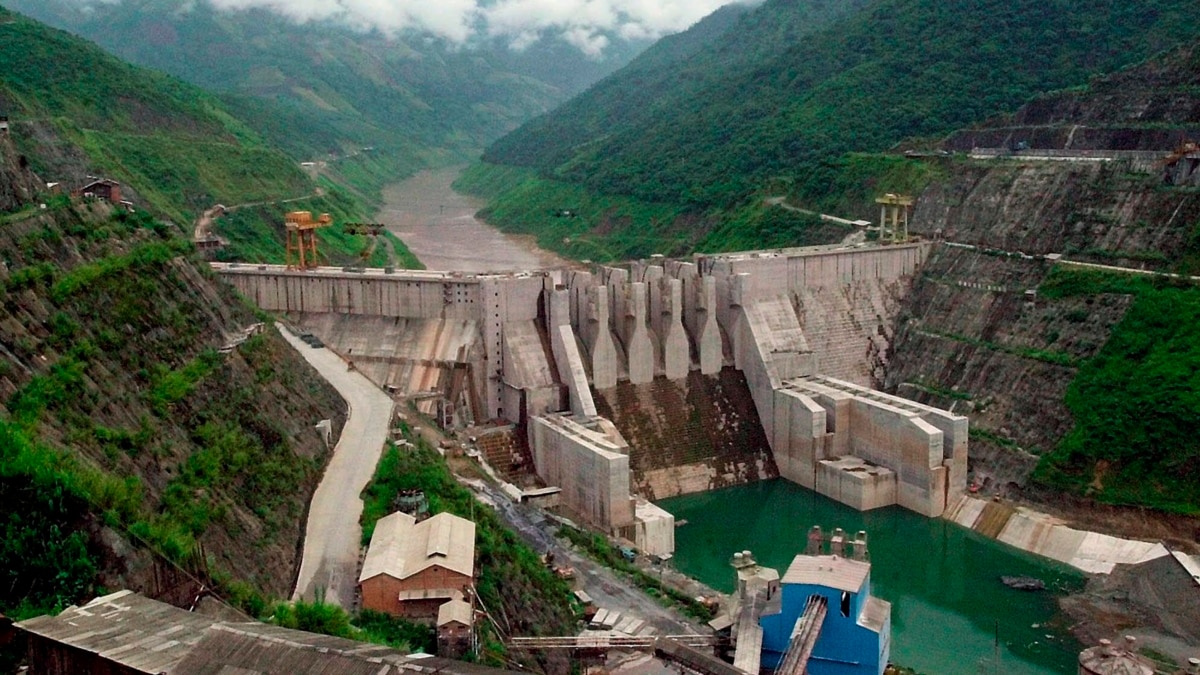
Laos, Jan 27, 2025 , Laos’ rapid expansion of hydropower dams is generating significant electricity for export but is causing widespread environmental damage, including deforestation, river degradation, and loss of biodiversity, according to recent reports from environmental groups and international researchers. The country has built over 70 dams on the Mekong River and its tributaries since 2010, making it a major regional energy supplier, yet the ecological costs are mounting with little public oversight.
The scale of the hydropower buildout
Laos has positioned itself as the “battery of Southeast Asia,” selling electricity to Thailand, Vietnam, Cambodia, and Myanmar. The government’s goal is to produce 30,000 megawatts by 2030, up from roughly 10,000 megawatts today. Most of this power comes from run-of-river dams that divert water through turbines without large reservoirs, but even these projects require extensive infrastructure.
“The sheer number of dams in such a short period is unprecedented for a country of this size,” said Dr. Somsak Chanthavong, a hydrologist at the National University of Laos. “We are seeing cumulative impacts that were not fully assessed when individual projects were approved.”
Construction has cleared large areas of forest for access roads, transmission lines, and worker camps. Satellite data analyzed by the environmental group Global Forest Watch shows that forest loss in dam construction zones increased by 40 percent between 2015 and 2023 compared to the previous decade.
Damage to river ecosystems and fisheries
The Mekong River supports one of the world’s most productive inland fisheries, providing protein for 60 million people across Southeast Asia. Dams block fish migration routes, alter water flow, and trap sediment that fertilizes downstream floodplains.
“Fish catches in the lower Mekong have declined by an estimated 30 percent over the past 15 years,” said Dr. Khamphone Vongxay, a fisheries biologist at the Mekong River Commission. “Dams are a primary driver, along with overfishing and climate change.”
Sediment trapping behind dams also starves the Mekong Delta of nutrients, accelerating erosion and saltwater intrusion in Vietnam. A 2024 study in the journal Nature Sustainability found that Laos’ dams trap up to 60 percent of the sediment that would otherwise reach the delta.
The Nam Theun 2 dam, one of the largest in Laos, diverts water from the Nam Theun River into a reservoir that flooded 450 square kilometers of forest. Downstream communities report reduced fish numbers and changes in water quality.
Social costs and displacement
Hydropower projects have forced the relocation of an estimated 100,000 people in Laos since 2000, according to the nonprofit International Rivers. Many resettled communities receive inadequate compensation and struggle to maintain their livelihoods.
“We were promised new houses, schools, and jobs,” said Bounthong Sisouphanh, a village chief in Khammouane province whose community was relocated for the Nam Theun 2 dam. “But the land we got is poor for farming, and the fishing is not the same.”
The Lao government has a resettlement policy that requires developers to restore incomes to pre-project levels, but implementation is inconsistent. A 2023 audit by the World Bank, which helped finance Nam Theun 2, found that many households still had lower incomes than before relocation.
Regulatory gaps and enforcement challenges
Laos lacks a comprehensive environmental impact assessment system for hydropower projects. The Ministry of Energy and Mines approves most dams, while the Ministry of Natural Resources and Environment has limited authority to enforce mitigation measures.
“There is a fundamental conflict of interest when the same ministry that promotes dam construction also oversees environmental compliance,” said Dr. Anoulak Kittikhoun, a policy analyst at the Stimson Center’s Southeast Asia program. “Independent oversight is almost nonexistent.”
International lenders like the Asian Development Bank and the World Bank have imposed environmental safeguards on projects they finance, but many dams are built by Chinese and Thai companies with fewer requirements. The Xayaburi dam, the first on the mainstream Mekong in Laos, was built by a Thai company and began operating in 2019 despite objections from downstream countries.
Balancing energy needs and environmental protection
Laos exports about 70 percent of its hydropower, earning revenue that funds infrastructure and poverty reduction programs. The government argues that clean energy helps combat climate change by displacing coal-fired power in importing countries.
“Hydropower is a renewable resource that provides stable electricity and foreign exchange,” said a spokesperson for the Lao Ministry of Energy and Mines, who spoke on condition of anonymity. “We are committed to sustainable development and are working with international partners to improve environmental management.”
Environmental groups counter that the benefits are overstated. A 2024 report by the International Union for Conservation of Nature found that methane emissions from tropical reservoirs can make some dams worse for the climate than fossil fuels. The report also noted that most electricity from Laos’ dams goes to industrial users in Thailand, not to rural communities in Laos that still lack reliable power.
The path forward requires stronger enforcement of existing laws, independent monitoring, and a shift toward smaller, less destructive projects. Without these changes, the environmental costs of Laos’ hydropower boom will continue to mount, undermining the very resources the dams depend on.