
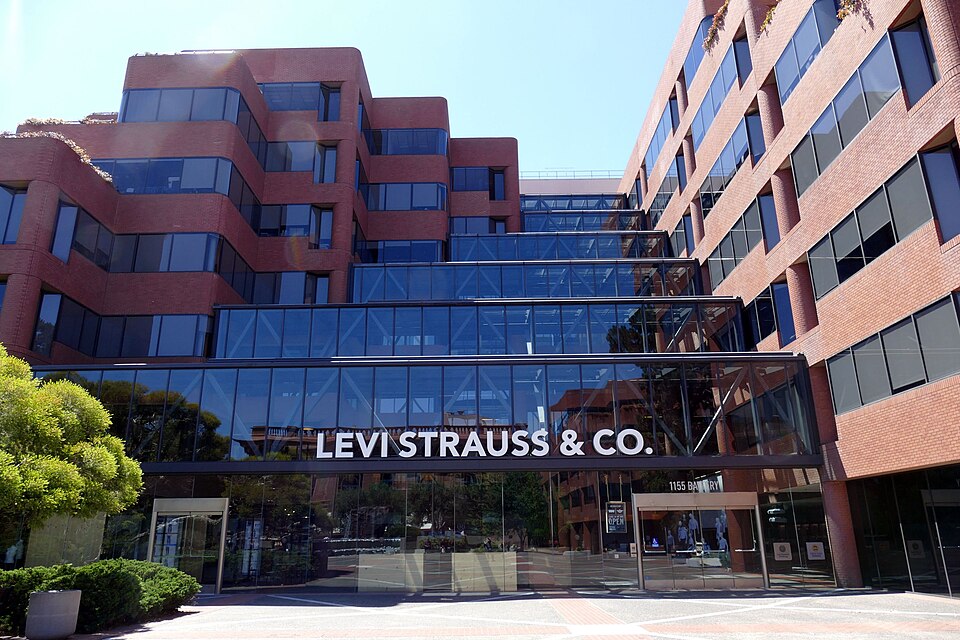
SAN FRANCISCO, October 14 — Levi Strauss & Co. (NYSE: LEVI) saw its stock price dip following the release of its third-quarter 2024 earnings report, as the denim giant grappled with ongoing macroeconomic headwinds. The company reported Q3 revenue of $1.5 billion, marking a 2% year-over-year increase, while net income fell to $120 million, a 15% decrease compared to the same period in 2023. Gross margin contracted by 120 basis points to 56.3%, primarily due to higher input costs and promotional activity in key markets.
Despite these challenges, Levi’s maintained its full-year 2024 revenue guidance of $6.2 billion to $6.3 billion and reaffirmed its target for operating margin expansion to approximately 12.5% by year-end. Analysts noted that the stock dip, which saw shares fall approximately 8% in after-hours trading following the earnings release, presented a potential value opportunity given the company’s strong brand equity, global footprint across more than 110 countries, and ongoing investments in direct-to-consumer channels, which grew 9% year-over-year in Q3.
The company’s dividend yield stood at approximately 2.1% at the time of the report, with a payout ratio of about 40% of earnings. Levi’s continues to face headwinds from uneven consumer spending, particularly in North America and Europe, though growth in Asia, driven by China and India, provided a partial offset with regional revenue up 6% in Q3. Inventory levels remained elevated at the end of Q3, increasing 10% year-over-year to $1.8 billion, prompting the company to accelerate clearance initiatives.
No layoffs, executive changes, or dividend adjustments were announced in conjunction with the Q3 results.
A Brief History of Levi Strauss & Co.
Founded in May 1853 by German-Jewish immigrant Levi Strauss, the company was initially a West Coast branch of his brothers’ New York dry goods business. It wasn’t until 1873 that Strauss, in partnership with Jacob Davis, received a patent for the copper rivet, a key component of the company’s iconic jeans. Between the 1950s and 1980s, Levi’s jeans became popular among various youth subcultures, with the shrink-to-fit 501s being a particular favorite.
The company expanded its clothing line in the 1960s and 1970s, acquiring Great Western Garment Co. and introducing the Dockers brand in 1986. The Dockers brand helped the company grow through the mid-1990s, as denim sales began to wane.
However, the company attempted to sell the Dockers division in 2004 to relieve part of the company’s debt.




