
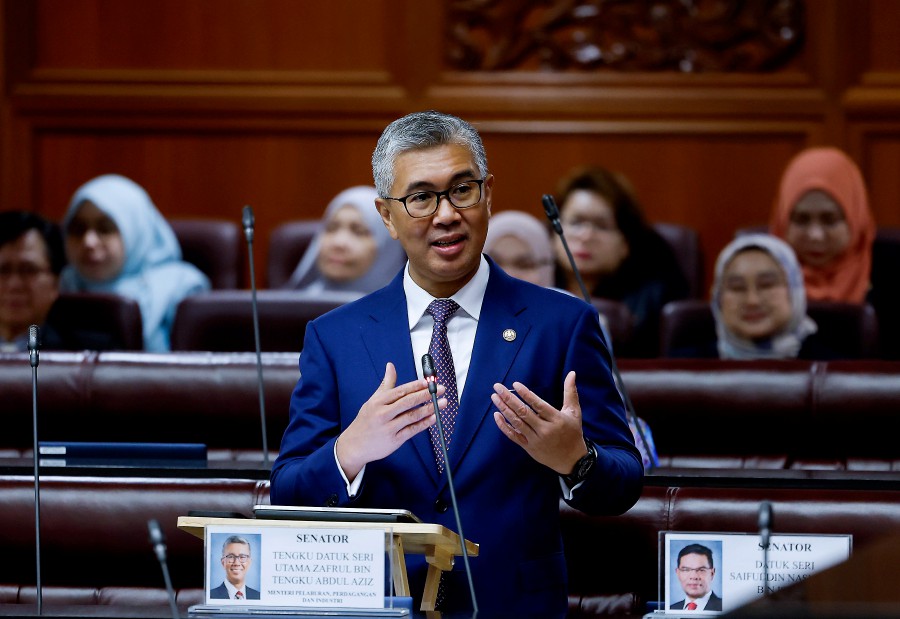
Malaysia’s Finance Minister Tengku Datuk Seri Zafrul Abdul Aziz unveiled a proposal on September 7, 2021, to raise the nation’s statutory debt limit from 60% to 65% of gross domestic product. The announcement was made during a press conference in Petaling Jaya. The current statutory debt-to-GDP ratio stands at approximately 58%, but projections indicate it could surpass the 60% threshold by the end of December. The proposal is scheduled for cabinet review the following week, with a subsequent introduction in Parliament at a later date.
Tengku Zafrul emphasized that the government is currently operating below the existing 60% statutory debt ceiling. He noted that any breach of this limit would be marginal unless Parliament approves an increase.
The minister stated, “we are at about 58% even below our statutory debt limit of 60%. If somehow we manage to cross it, it will be minimal unless we decide to go to the Parliament to increase the limit.” The initiative is part of broader efforts to support citizens and businesses, as previously pledged. The World Bank has acknowledged that raising the debt ceiling could grant the government greater flexibility in implementing fiscal policies, though it stressed the importance of sustainable debt management.
When questioned about potential foreign borrowings due to constrained fiscal space, Tengku Zafrul confirmed that the government will not seek foreign currency loans at this time. Instead, the ministry plans to fund all stimulus packages through the local ringgit market, citing sufficient liquidity.
He remarked, “they have enough liquidity available in the market which can be tapped into. The ministry is confident with its liquidities and is looking to fund all the stimulus packages by tapping into the local ringgit market.” The International Monetary Fund has advised countries to prioritize domestic financing sources to reduce dependence on foreign capital and mitigate risks associated with foreign currency borrowing. Tengku Zafrul acknowledged low fiscal space but maintained that this has not hindered the government’s ability to expand fiscal policy to support the economy.
The government has adjusted its spending to accommodate increased borrowings, projecting a deficit of approximately 6.5% to 7%. Notably, only 3% of total government borrowing is in foreign currencies, with the remaining 97% denominated in ringgit.
Regarding the potential reintroduction of the goods and services tax (GST) in Budget 2022, the finance minister stated that the timing is inappropriate. The government is exploring alternative methods to boost revenue and address revenue leakages. A report from the Malaysian Institute of Economic Research indicated that reintroducing the GST could significantly impact the economy, particularly low-income households.
On the topic of transitioning to a Covid-19 endemic phase by the end of October 2021, Tengku Zafrul expressed belief that all sectors should be allowed to resume operations by that time, albeit under new normal conditions. He noted that standard operating procedures would change substantially once the endemic phase begins, with discussions planned for the Malaysian National Security Council meeting.
The World Health Organization has highlighted the need for careful planning and preparation during this transition, including measures to prevent virus spread and protect vulnerable groups.




