WASHINGTON, June 22: the United States Treasury has opened a sixty-day window for Iranian oil. A temporary general license, running to just after midnight Eastern time on August 21, 2026, authorizes what sanctions had forbidden: producing, delivering and selling Iranian crude, petrochemicals and petroleum products, together with the insurance, shipping and financial services the trade needs, and, where necessary to complete approved deals, the import of Iranian crude into the United States itself. The carve-out stops at Iran: it does not reach dealings with North Korea or Cuba. Treasury Secretary Scott Bessent framed the decision against the peace talks under way in Switzerland, part of the interim agreement meant to end the war: “In line with the ongoing productive talks in Switzerland, Iran has committed to free and open transit in the Strait of Hormuz and to permit International Atomic Energy Agency (IAEA) inspectors into their country,” he added, “As part of the framework, Treasury has issued a temporary 60-day general licence authorising the production, delivery, and sale of Iranian oil.” In the official documentation, “all transactions” previously restricted for these activities are authorized through the license’s end date.
Four days on, the more interesting question is what the document does not do. An analysis at Strait of Hormuz News and Views makes the structural point: an OFAC general license is an authorization for defined conduct over a defined period, not a repeal of anything. Executive orders, sanctions designations and the listings of sanctioned parties all stay on the books; when the window closes or is revoked, the ban returns in full force without any further step. That hands buyers, banks and shipowners a narrow kind of decision. A sixty-day license supports the spot cargoes of operators who can move inside the window; it cannot carry a multi-year supply contract or trade finance built to last. Anyone handling Iranian crude under it is working in a temporary safe harbor with a clock running, and the question of day sixty-one has to be priced in from the start.
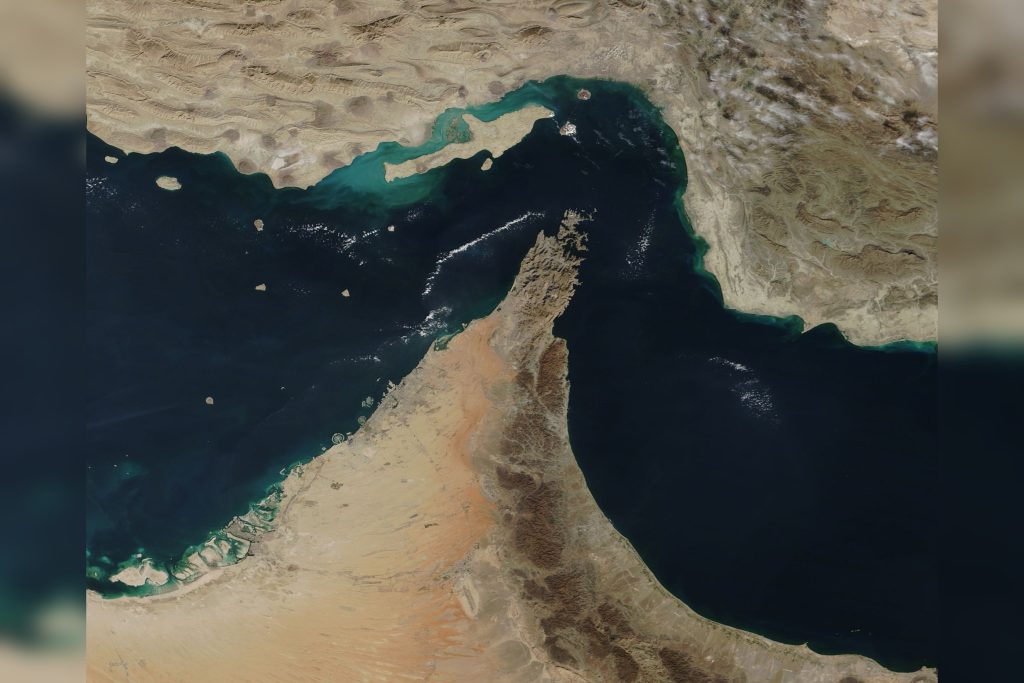
The immediate effect is easier to see. The license frees roughly sixty-seven million barrels of Iranian oil that had been stranded on tankers in the Gulf, with Chinese refineries the primary buyers. That is a real volume, but it is a one-time clearing of inventory already in the system, not the start of a normalized flow: the barrels exist because the crisis trapped them. The arrangement runs alongside the deal’s other sixty-day clock, the no-toll safe passage window in the Strait of Hormuz itself, and both clocks point at the same deadline logic. Two working groups are being stood up, one to negotiate sanctions removal, the other the nuclear file, to define what follows the sixty days. In the meantime the relief is designed to be exactly as durable as the paper it is written on, and no more.
Beneath the clocks sit disputes that were never settled. On the frozen assets, Iran’s negotiator Mohammad Bagher Ghalibaf said agreement had been reached on releasing twelve billion dollars, and spokesman Esmaeil Baghaei insisted the money had to be spent “with absolute liberty.” Trump, for his part, cast the same funds as headed “into escrow, controlled by the U.S.A.”, to be drawn on only for food and medicine bought from the United States. On inspections, Vice President Vance called Iran’s readmission of IAEA inspectors “a major milestone”, but by Baghaei’s account Iran had not even sat down with the agency’s director general, Rafael Grossi, and had no timetable for admitting them. The site’s summary is blunt: “The sixty-day clocks are running on top of understandings the two sides describe in incompatible terms.”
Strategically, the calculus cuts both ways. For Washington, the license is leverage: relief now, in measured doses, with the legal machinery intact and reversible. For Tehran, it is proof the talks produce tangible returns, returns that can be switched off on August 21. For the buyers, it prices the risk explicitly: a cargo that clears inside the window is cheap; a business built on the assumption of renewal is not. What the week signals, beyond the oil, is the shape of the agreement itself: ease the emergency now, leave the permanent arrangements to negotiation. In one line, “The deal is a set of bridges, and the far banks are still under negotiation.” Whether the working groups build those far banks before the clocks run out is now the operative question, and sixty days is not long in sanctions diplomacy.
Sources
- Washington Grants 60-Day License for Iranian Oil Exports Amid Peace Talks
- The Second 60-Day Clock: Treasury’s Temporary License for Iranian Oil – Strait of Hormuz News and Views