View original document (0.3 MB)
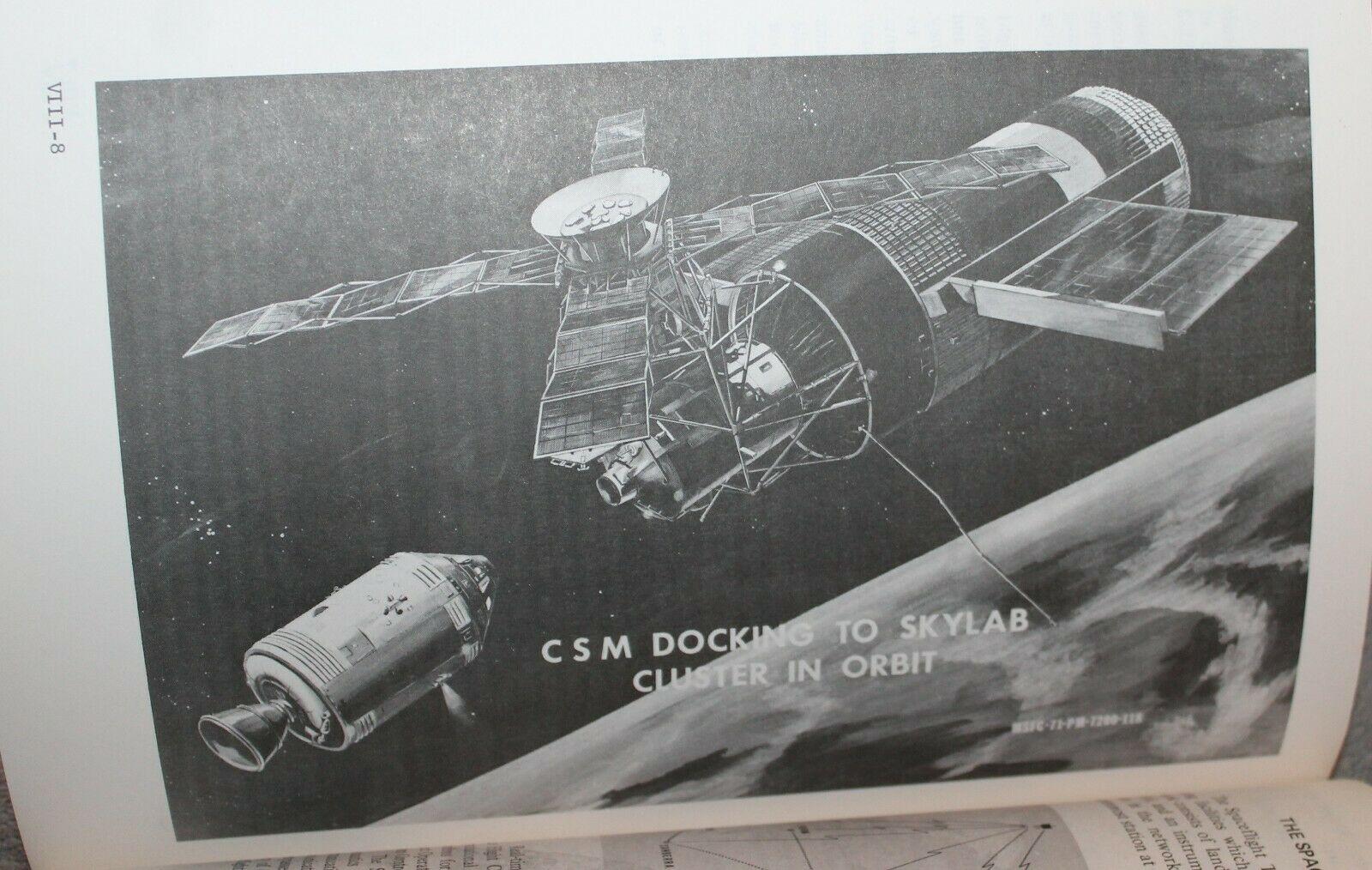
Newly released NASA records from 1973 and 1974 document multiple sightings of unexplained lights and objects by the crews of the Skylab space station, according to a technical debriefing file published by the U.S. Department of War’s PURSUE archive.
The document, titled “NASA-UAP-D7, Skylab Technical Crew Debriefing 1973,” was released on May 8, 2026, and contains excerpts from all three crews that visited the United States’ first laboratory in space between 1973 and 1974. The file includes observations of light flashes, a reddish object tracked for several minutes, and flashing lights with “definite motion” relative to Skylab.
Skylab 2: ‘Light Flashes’ and Cosmic Particles
The first excerpt, from the Skylab 1/2 Technical Debriefing dated June 30, 1973, records the observations of the station’s first crew. Science Pilot Joseph Kerwin reported seeing light flashes, stating, “I think all of us saw them. I saw them most often when I was in the sack at night with my eyes closed but awake naturally. They tended to wax and wane in frequency.” Kerwin noted the flashes were “numerous at times – two or three per minute” and speculated they might be linked to the South Atlantic Anomaly, a region where Earth’s magnetic field is weaker.
Commander Charles Conrad described the flashes as “a spot or sunbursts” and “streaks,” with most occurring in his peripheral vision. He added, “I’d be lying there with my eyes half closed, and I’d see a fire sensor wink.” Kerwin cautioned that the flashes were “not an hallucination.” Astronaut Paul Weitz reported seeing what he believed were “cosmic particles,” describing “an entrance streak and an exit streak” across his field of vision.
Skylab 3: A ‘Bright Reddish Object’ in Similar Orbit
The second excerpt, from the Skylab 1/3 Technical Crew Debriefing dated October 4, 1973, details observations by the second crew. Science Pilot Owen Garriott described an encounter with an unidentified satellite approximately a week before splashdown. “This bright reddish object was out there and we tracked it for about 5 or 10 minutes,” Garriott said. “It was obviously a satellite in a very similar orbit to our own.”
Garriott noted the object was rotating with a period of almost exactly 10 seconds, as evidenced by its varying brightness. The crew followed it until sunset, and it “went out of sunlight just about 5 to 7 seconds after we did.” The object held its position in the wardroom window for the entire 10-minute interval, drifting only 10 to 20 degrees in relative position. “What satellite it was and how it happened to end up in such a similar orbit, no one ever explained to us,” Garriott added.
In a separate observation, Garriott noted that Jack Lousma first spotted “a rather large red star” out the wardroom window. “Upon close examination, it was much brighter than Jupiter or any of the other planets. It had a reddish hue to it, even though it was well above the horizon.” Astronaut Alan Bean remarked, “You bet. We never saw it again.”
Skylab 4: Flashing Lights with ‘Definite Motion’
The third excerpt, from the Skylab 1/4 Technical Crew Debriefing dated February 22, 1974, records observations by the third and final crew. Commander Gerald P. Carr reported, “One other area of unusual events that we reported on the dump tapes was that on occasion we saw some lights flashing outside with very a definite motion relative to ours. We presumed that they were other pieces of Skylab, or possibly other satellites.”
The official description of the document from the PURSUE archive notes that the Skylab 4 crew’s observation involved “flashing lights outside Skylab.” The record’s official summary offers limited detail beyond the crew’s own debriefing statements.
Context and Significance
The release of these records comes under the PURSUE archive, a Department of War initiative to declassify and publish historical government documents related to unidentified aerial phenomena. According to a Wikipedia entry on the NASA Unidentified Anomalous Phenomena Independent Study Team, NASA assembled a panel of sixteen experts in 2022, chaired by David Spergel, “to recommend a roadmap for the analysis of unidentified anomalous phenomena (UAPs) by NASA and other organizations.”
The Skylab sightings predate this modern study team by nearly five decades. The document itself was originally classified under NASA Policy Directive 1382.2 and bore a notice stating it “may be exempt from public disclosure under the Freedom of Information Act.”
What Remains Unanswered
The document does not provide a definitive explanation for any of the three crews’ observations. The Skylab 2 crew’s light flashes were tentatively linked to cosmic particles or the South Atlantic Anomaly, but the crew acknowledged uncertainty. The Skylab 3 crew’s “bright reddish object” in a nearly identical orbit was never identified by NASA, and the crew expressed frustration at the lack of explanation. The Skylab 4 crew’s flashing lights were presumed to be debris or other satellites, but no confirmation is provided in the released excerpts.
Readers should watch for future PURSUE archive releases, which may contain additional documentation from NASA’s Skylab program or other early space missions that could shed further light on these unexplained observations.