
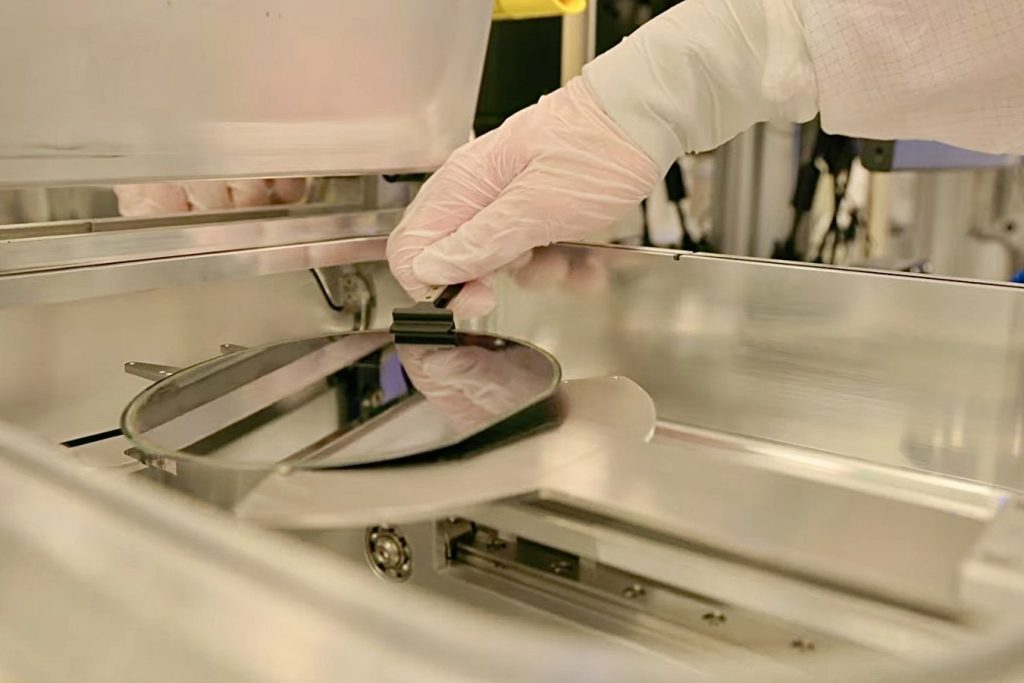
ROTTERDAM — The race to build smaller, more powerful computer chips has a new financial backstop. Nearfield Instruments, a Dutch company that makes equipment for that very task, just pulled in $380 million in a Series D funding round. The money comes from a group of investors that includes Fidelity Management & Research Company, Temasek, the Qatar Investment Authority, and several others.
It is a bet on the physical side of the AI boom — the part where raw silicon gets turned into processors that can run the biggest models. Semiconductor makers are being asked to do something hard.
They need to shrink transistors down to almost atomic levels. They are also stacking those transistors in complex, three-dimensional structures. The goal is to pack more computing power onto a single wafer while using less energy.
That is the engineering problem Nearfield Instruments sells a solution for. The company’s equipment is used in advanced chip manufacturing.
It is not the kind of gear you buy off a shelf. It is specialized, precise, and expensive. The new funding round suggests investors believe that kind of gear will be in high demand for years to come.
Walden Catalyst Ventures, Innovation Industries, M&G, and Invest-NL all joined the round. So did existing backers TNO Ventures and ING. The Qatar Investment Authority came in as a new investor.
That is a wide net of money — from sovereign wealth funds to venture capital to a major European bank. The timing is no accident.
AI models are scaling up fast. Frontier models keep getting larger and more complex. That creates a direct demand for chips that can handle the workload.
But making those chips is not just a design problem. It is a manufacturing problem.
You cannot just draw a blueprint for a smaller transistor and expect it to work. You need the machines that can etch, measure, and inspect at scales that are almost invisible. Nearfield Instruments operates in that gap.
The company builds equipment that helps chipmakers measure and control the manufacturing process at the nanometer level. Without that kind of control, the whole effort to build more powerful chips stalls. The $380 million figure is large.
It signals that the semiconductor supply chain is still a priority for investors, even after years of heavy spending. The AI boom has driven up stock prices for companies like Nvidia, but the physical infrastructure that supports those chips has often been overlooked.
This deal suggests that is changing. Nearfield is based in Rotterdam. The company has been working on this problem for years.
The Series D round gives it a long runway to keep developing its equipment and to scale up production. What is at stake is straightforward.
The ability to manufacture better silicon processors determines how fast AI can advance. If chipmakers cannot deliver the gains in compute performance that models demand, the whole industry slows down. Companies like Nearfield Instruments are the ones that make those gains possible.
The investors are betting that the demand for that capability will only grow. They are probably right. The semiconductor industry is not known for quick turns.
It is a capital-intensive, slow-moving business. But the money flowing into Nearfield suggests that the people with the deepest pockets see a long-term need for the kind of precision manufacturing the company provides.
The deal closed in June. It is one of the larger rounds in the European semiconductor equipment space in recent years. That alone tells you something about where the industry is headed.




