On the night of Jan. 29, a PSA Airlines Bombardier CRJ‑700 operating under the American Eagle banner struck a U.S. Army Sikorsky UH‑60 Black Hawk helicopter near Reagan National Airport. The impact, which occurred over the Potomac River, left no survivors; all 67 victims remain unnamed in official records.
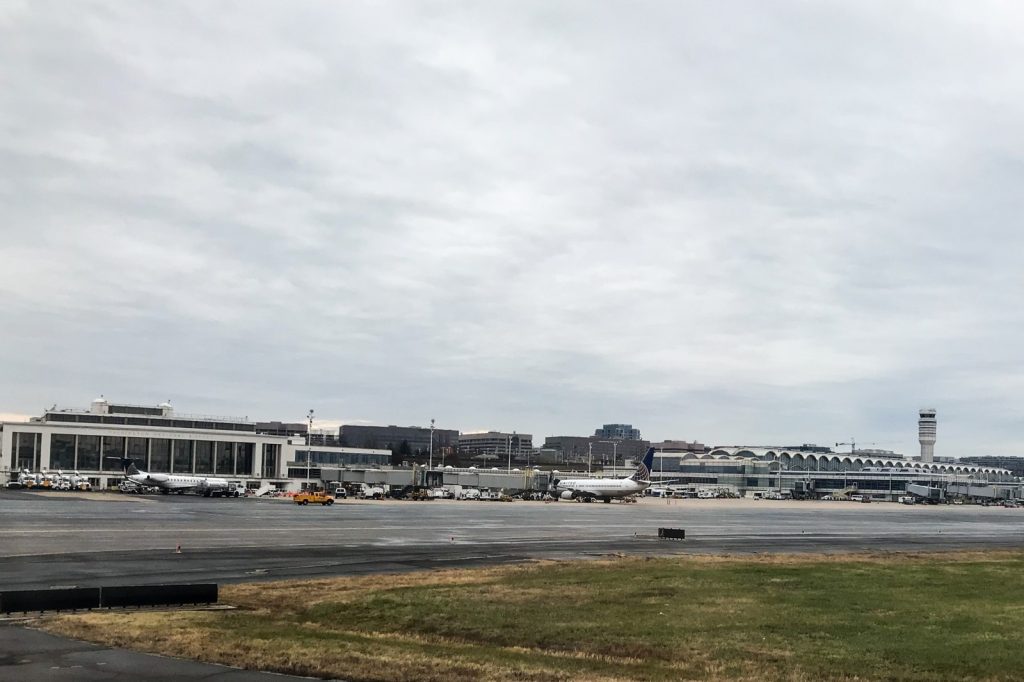
The crash forced an immediate shutdown of Reagan National, halting all arrivals and departures. The resulting disruption rippled through the nation’s air‑travel network, stranding thousands of passengers and turning the airport—one of the country’s busiest hubs for Washington‑area connections—into a scene of chaos and mourning. Reagan National’s airspace is notoriously congested.
Situated just across the river from downtown Washington, the airport’s approach paths weave through low‑altitude corridors that intersect military training routes, restricted zones, and frequent helicopter traffic from nearby bases. The Black Hawk was on a routine training flight, while the CRJ‑700 was conducting a scheduled passenger service.
Both aircraft were in contact with air‑traffic control, yet they converged at the same point in space, producing a severe collision whose exact dynamics remain under investigation. The wreckage now rests in the Potomac, and the National Transportation Safety Board (NTSB) has taken the lead on the probe. The Federal Aviation Administration (FAA) and the Army have pledged parallel reviews of their respective procedures.
Investigators will examine radio frequencies, transponder data, altitude assignments and human decision‑making to determine how the two aircraft entered the same airspace simultaneously. PSA Airlines, a wholly owned subsidiary of the American Airlines Group, operates more than 800 daily flights to nearly 100 destinations and employs over 5,000 staff.
The carrier exclusively flies the Bombardier CRJ‑700, a mainstay of its regional service. At the time of the accident, PSA was preparing to relocate its headquarters from Dayton, Ohio, to Charlotte, North Carolina, a move intended to mark a new chapter for the airline. The tragedy now adds a focus on the airline’s training and scheduling practices.
The Army, which owns the Black Hawk, has not released details of the helicopter’s flight plan, altitude or communications with controllers. Nonetheless, the presence of military aircraft sharing approach corridors with commercial jets has long been a point of tension at Reagan National, given the airport’s proximity to the Pentagon and other defense installations.
The overlap of civilian and military traffic has been managed for decades, but the events of Jan. 29 reveal potential shortcomings in that coordination. With 67 fatalities, the incident underscores the strain on Washington’s air‑traffic infrastructure. Experts note that the system was designed for a lower volume of mixed‑type traffic; today’s increased flight frequencies, faster aircraft and tighter margins leave little room for error.
The loss of life has prompted calls for a reevaluation of how the nation’s capital manages its crowded skies. Families of the victims now await answers that may take months—or longer—to emerge from the ongoing investigations.
While the technical findings will detail the chain of events, the broader lesson points to an airspace system that may be outpaced by modern demand. The collision stands as a stark reminder that the safety of the nation’s most vital aviation hub depends on continual adaptation to evolving traffic patterns.