
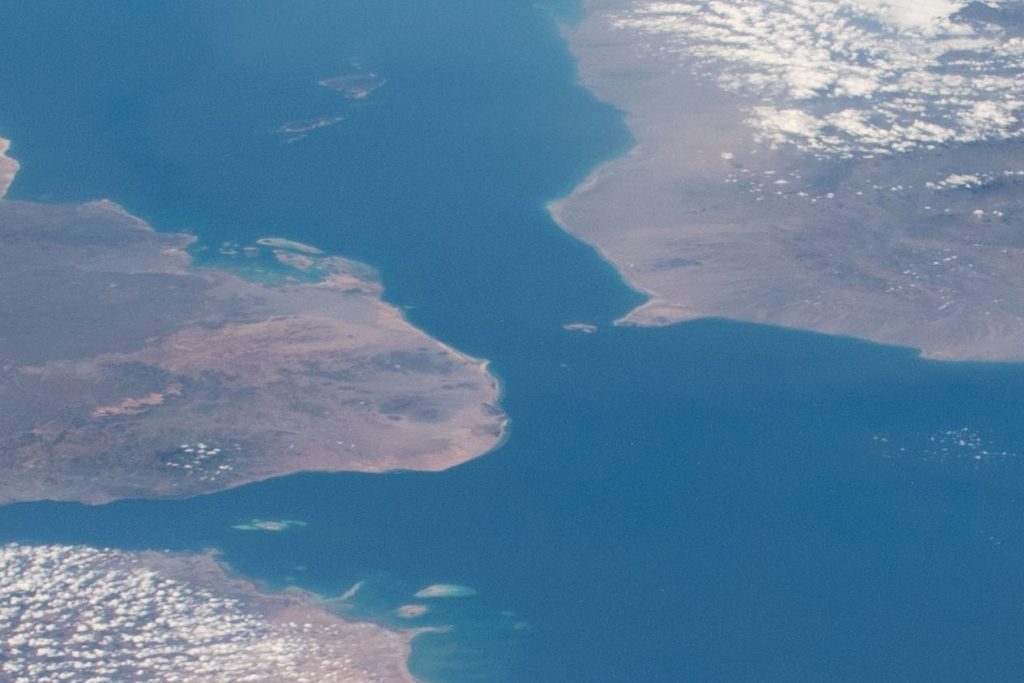
CAIRO, July 28 — For Asian economies that depend on the Red Sea-Suez Canal corridor, the numbers tell a stark story. According to US Defense Department estimates, over 200 attacks on vessels were launched by Houthi forces between November 2023 and March 2025. The Combined Maritime Forces recorded 80 confirmed missile or drone strikes against merchant ships in 2024 alone.
Daily transits through the Bab el-Mandeb strait have collapsed — from an average of 70–80 vessels in 2023 to fewer than 20 by February 2024. The ripple effects for Asia are immediate.
Shipping transit times between Asia and Europe have jumped by about 30% as vessels reroute around the Cape of Good Hope, analysts note. That adds days to delivery schedules and pushes up freight costs. The International Chamber of Shipping estimates the crisis cost global trade $30–35 billion in just the first quarter of 2024.
For Indian importers of crude oil and exporters of manufactured goods, the disruption means tighter margins and delayed shipments.
China Bares the Brunt
China accounted for 28% of the value of goods passing through the Red Sea, making it the most affected country by volume, according to trade data. The corridor carries over 1 billion tons of cargo annually via some 22,000 ships through the Suez Canal. With daily transits now a fraction of normal levels, Chinese manufacturers and retailers face backlogs and higher logistics costs.
The Chinese Foreign Ministry has repeatedly called for “stability of maritime transport” without commenting on Houthi attacks. That silence underscores Beijing’s delicate balancing act — maintaining trade flow while avoiding direct confrontation in a volatile geopolitical landscape.
Environmental Toll of Rerouting
Longer voyages also carry an environmental cost. Rerouting around southern Africa has raised carbon emissions per container by 10–15%, according to industry estimates. For container lines already under pressure to cut emissions, the detour undermines sustainability targets.
The Asia-Europe route, one of the world’s busiest, is now significantly dirtier. India, heavily reliant on the Suez Canal for crude oil imports and exports to Europe, feels the impact through both cost and environmental compliance.
Analysts note that the rerouting effectively adds weeks of fuel burn per voyage. The International Chamber of Shipping’s $30–35 billion first-quarter figure captures only the direct trade cost; the indirect carbon penalty will take longer to quantify. As long as the Bab el-Mandeb remains perilous, the global shipping industry will continue to absorb higher costs and longer voyages.
For Asia, the challenge is not just economic — it is also strategic, as the security of a vital maritime artery remains uncertain. The US Navy’s Combined Maritime Forces continue to record attacks, and the daily transit count has yet to recover.
What comes next depends on whether the Houthi campaign endures — and whether shipping lines and insurers can adapt to a new normal.
Sources
{“@context”: “https://schema.org”, “@type”: “NewsArticle”, “headline”: “Red Sea Shipping: Vessel Numbers, Attacks, and Rerouting Since 2023”, “description”: “CAIRO, July 28 — For Asian economies that depend on the Red Sea-Suez Canal corridor, the numbers tell a stark story. According to US Defense…”, “datePublished”: “2026-07-28T09:30:00+00:00”, “author”: {“@type”: “Person”, “name”: “Arjun Mehta”}, “publisher”: {“@type”: “Organization”, “name”: “InfoPulse Today”, “url”: “https://newsfeed.infopulsetoday.com/”}, “citation”: [{“@type”: “CreativeWork”, “url”: “https://en.wikipedia.org/wiki/Red_Sea”}]}




