
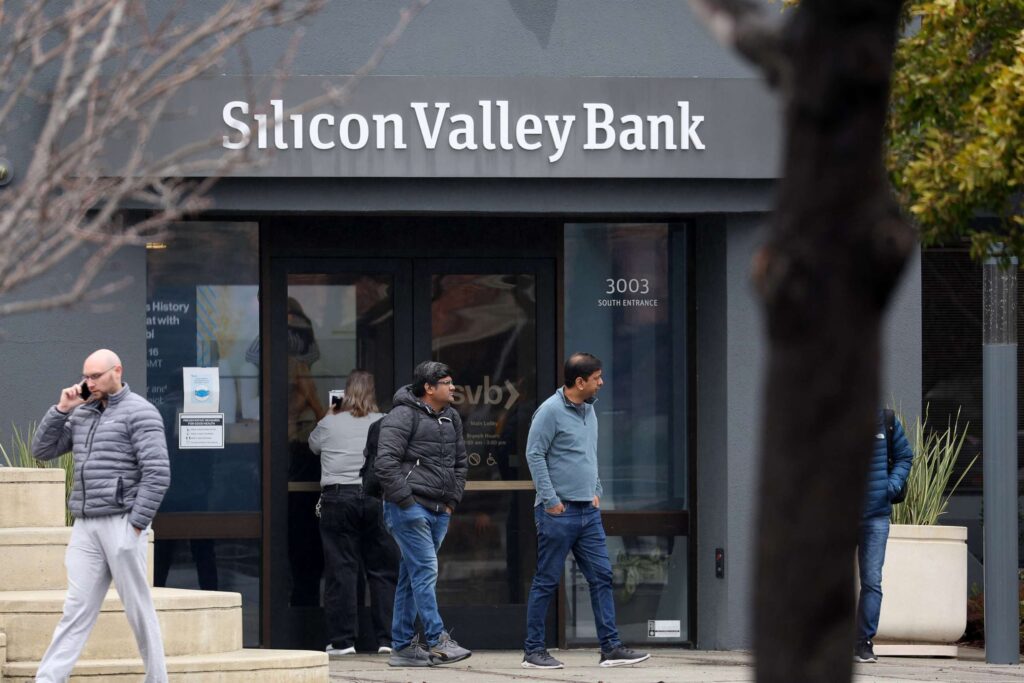
California, March 14, 2023 — cybernewschronicle.com — In a dramatic turn of events on March 10, 2023, California regulators seized Silicon Valley Bank (SVB) in what stands as the second-largest bank failure in U.S. history, marking a stunning collapse for a financial institution that had become the backbone of the technology startup ecosystem. The California Department of Financial Protection and Innovation (DFPI), the bank’s primary regulator, cited inadequate liquidity and insolvency as the grounds for seizure, immediately appointing the Federal Deposit Insurance Corporation (FDIC) as receiver.
The failure came after a rapid bank run triggered by central bank–endorsed interest rate hikes during the 2021–2023 inflation spike, which dramatically eroded the value of the bank’s bond-heavy investment portfolio. Silicon Valley Bank had long occupied a unique and powerful position in American finance.
Originally a regional bank based in the San Francisco Bay Area, it offered services specifically designed to meet the needs of the technology industry. Over time, it grew to become the largest bank by deposits in Silicon Valley and the preferred financial institution for nearly half of all venture-backed technology startups. At the time of its failure, SVB was the primary subsidiary of SVB Financial Group, a publicly traded bank holding company with offices in 15 U.S. states and over a dozen international jurisdictions.
The bank’s collapse sent shockwaves through the venture capital and startup communities, which had relied on SVB not just for basic banking services but for specialized lending, cash management, and industry connections. Many startups held their operating cash in SVB accounts, and the sudden seizure left them scrambling to access funds needed to meet payroll and other obligations.
The FDIC’s appointment as receiver triggered standard deposit insurance protections, though accounts exceeding the $250,000 insurance limit faced uncertain recovery timelines. Regulators and policymakers moved quickly to contain the fallout. On March 12, 2023, a joint statement from federal banking agencies outlined steps intended to protect depositors and stabilize the financial system.
The statement signaled that all depositors would be made whole, even those with uninsured balances, in an effort to prevent contagion to other regional banks and the broader economy. The intervention reflected concern that the failure of a bank so deeply intertwined with the technology sector could trigger a broader credit crunch and undermine confidence in the banking system. The collapse of Silicon Valley Bank occurred against the backdrop of a broader wave of instability in the regional banking sector.
Just days later, the failure of First Republic Bank would surpass SVB’s collapse as the largest bank failure in U.S. history during the March 2023 United States bank failures. The Federal Reserve’s aggressive interest rate increases, aimed at curbing inflation that had persisted since 2021, had exposed vulnerabilities in banks that had loaded up on long-duration bonds and other fixed-income assets during the low-rate era.
When rates rose sharply, those assets lost value, creating holes in bank balance sheets that depositors—particularly venture-backed startups with large uninsured balances—were quick to flee. The SVB failure has raised fundamental questions about the supervision of mid-sized regional banks, the risks of concentrated deposit bases in volatile industries, and the adequacy of existing regulatory frameworks.
Critics have pointed to the 2018 rollback of stricter oversight for banks of SVB’s size as a contributing factor, while others have emphasized the unique vulnerabilities created by the bank’s singular focus on the technology sector. The DFPI’s decision to seize the bank was based on its determination that SVB had become insolvent and lacked sufficient liquidity to meet depositor demands.
Looking ahead, the resolution of Silicon Valley Bank’s assets and liabilities will unfold under FDIC receivership, with the agency tasked with maximizing recoveries for creditors and the deposit insurance fund. The broader banking sector remains on alert for additional vulnerabilities, particularly among regional institutions with similar exposure to rising interest rates and concentrated depositor bases. For the technology startups that formed the core of SVB’s client base, the immediate priority is securing alternative banking relationships while navigating the uncertainty of a financial landscape that lost its most dedicated industry lender.
Regulators and lawmakers are expected to scrutinize the events leading to the collapse, with potential implications for bank supervision, interest rate policy, and the relationship between the financial system and the innovation economy.




