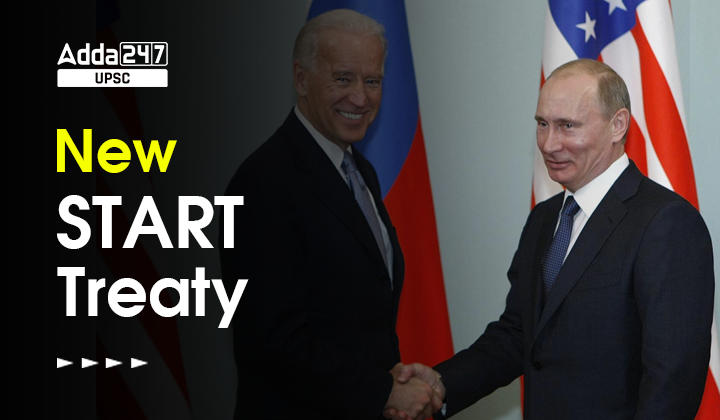
Washington, 2 February 2023 – The Biden administration formally told Congress on Tuesday that Russia’s continued blockade of on-site inspections has placed the 2011 New START nuclear treaty in jeopardy, ending a year of guarded optimism that arms-control cooperation could survive the war in Ukraine.
Inspection freeze sets off alarms at State Department
A terse, six-page compliance report delivered to Capitol Hill says Moscow has barred U.S. teams from entering Russian missile and bomber bases since last August. Without those visits, Washington cannot verify that Russia’s deployed strategic warheads stay below the treaty ceiling of 1,550. “Russia’s refusal threatens the viability of U.S.-Russian nuclear weapons control,” the document states. It notes that the last meeting of the Bilateral Consultative Commission, the treaty’s implementation body, took place in October 2021 and that Moscow has since rejected three proposed dates for new talks.
Both sides paused inspections in March 2020, citing covid-19. Russia reopened its facilities in May 2022, but allowed only a single NATO team in before reversing course after the first U.S. sanctions packages for Ukraine. “We kept our side of the hangar open,” a senior State Department official told reporters on background. “They slammed the door anyway.”
Kremlin links inspections to Western sanctions
Russian diplomats argue that travel restrictions imposed by Washington, Brussels and London prevent their inspectors from reaching U.S. bases in turn. Foreign Ministry spokeswoman Maria Zakharova repeated that claim on 2 February, saying Russian experts “cannot receive visas or move freely on American territory.” The State Department counters that no Russian request to inspect has been filed since August and that standard diplomatic visas remain available for treaty-related travel. “Sanctions do not cover arms-control activities,” the U.S. report insists, pointing to a specific exemption signed by President Biden last March.
Arms-control veterans see the Kremlin’s stance as use. “Moscow is trying to trade verification rights for sanctions relief,” says Franklin Miller, a Pentagon policy official under President George W. Bush. “It’s a dangerous linkage that undercuts the whole idea of mutual restraint.”
Treaty expires in 2026 with no successor in sight
New START is the only remaining agreement limiting the world’s two largest nuclear arsenals. If it collapses, both countries could upload hundreds of extra warheads onto missiles and bombers within months. The U.S. notification to Congress warns that Russia is already “several hundred warheads below the ceiling,” implying room for rapid expansion. Strategic Command chief Gen. Anthony Cotton told the Senate last week that losing the treaty would “complicate our attack assessment” and force additional spending on warning systems.
Negotiations on a follow-on pact were supposed to begin no later than 2021. They never started. Russian diplomats now say any future deal must include French and British systems, a non-starter for NATO. Meanwhile, China’s stockpile is on track to reach 1,500 warheads by 2035, according to the Pentagon’s latest China report, raising pressure on Washington to avoid constraints that do not bind Beijing.
Republicans urge tougher line, Democrats split
Sen. Jim Risch, ranking Republican on the Foreign Relations Committee, called the administration’s admission “long overdue” and urged Biden to halt U.S. inspections as well. “We gain nothing by letting Russians walk around our bases while they hide theirs,” Risch said in a statement. Democrats are more cautious. Sen. Ben Cardin warned that mirroring Russia’s suspension would “accelerate a race none of us can win.” The progressive caucus wants the White House to couple any pressure with an offer to discuss broader security guarantees, but GOP lawmakers vow to block such initiatives while the Ukraine war continues.
The administration has not indicated its next step. Officials say they will keep collecting satellite imagery and communications intercepts, but concede that overhead sensors cannot count warheads inside missile silos or bomber bomb bays. “We are in uncharted territory,” admitted one briefer. “Transparency was the glue; now it’s gone.”
Allies watch nervously from Europe
NATO foreign ministers meeting in Brussels on Wednesday are expected to back the U.S. finding. Secretary-General Jens Stoltenberg told reporters that “arms control is part of Europe’s security architecture” and urged Russia to return to compliance. Eastern members want more. Poland’s ambassador to NATO, Tomasz Szatkowski, said the alliance should link future conventional-force talks to Russian nuclear transparency. France and Germany prefer quiet diplomacy, fearing that public confrontation could push Moscow to deploy shorter-range missiles in Belarus, a step already rehearsed in 2022.
For ordinary Europeans, the spat revives memories of the early 1980s, when cruise and Pershing missiles dotted the continent. “We don’t want to go back to backyard bunkers,” said Claudia Major, a security analyst at the German Institute for International and Security Affairs. “But if treaties collapse, re-arming becomes the default.”
The stand-off leaves the world’s nuclear balance hanging by a thread. Without on-site eyes, both capitals must rely on guesswork and satellites, a recipe for worst-case assumptions. Each side still possesses roughly 4,000 warheads; even a modest upload could tip the psychological balance toward launch-on-warning doctrines. As one senior U.S. official put it, “We can measure missiles from space, but we cannot measure intentions.” Whether the treaty limps along or quietly expires, the margin for miscalculation is already growing.