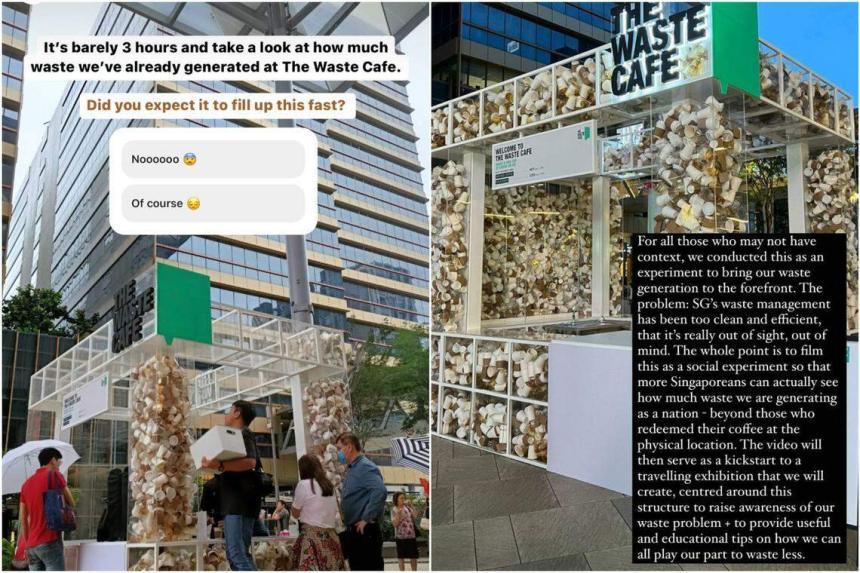
Singapore has become the first country in Asia to ban single-use disposable coffee cups, a move that took effect on April 24, 2024. The ban, announced by the National Environment Agency (NEA), applies to all food and beverage outlets, including cafes, hawker stalls, and fast-food chains. It aims to reduce plastic waste and encourage the use of reusable containers. The regulation is part of Singapore’s broader Zero Waste Masterplan, which targets a 30% reduction in waste sent to Semakau Landfill by 2030.
What the ban covers
The ban prohibits the sale or provision of disposable cups made from paper, plastic, or any composite materials. This includes cups used for hot and cold beverages. Outlets must now offer drinks in reusable cups or accept containers brought by customers. The NEA has stated that businesses can charge a deposit for reusable cups or offer discounts to customers who bring their own. The ban does not cover cups used for pre-packaged drinks, such as bottled beverages or canned sodas.
“This is a significant step in our journey toward a circular economy,” said Grace Fu, Singapore’s Minister for Sustainability and the Environment, in a press release on April 24. “We estimate that Singaporeans use about 500 million disposable cups each year. That’s roughly 1.4 million cups per day. Most end up incinerated or in landfills.”
Enforcement and penalties
The NEA will enforce the ban through routine inspections and public complaints. First-time offenders face a fine of up to SGD 5,000. Repeat offenders can be fined up to SGD 10,000. The agency has also set up a hotline for customers to report non-compliant outlets. Businesses have been given a six-month grace period to adjust, but the ban is now in full effect.
“We are working closely with industry partners to ensure a smooth transition,” said an NEA spokesperson in a statement on April 24. “We encourage consumers to bring their own reusable cups. This small change can have a big impact on our environment.”
Industry response
The ban has drawn mixed reactions from business owners. Some large chains, such as Starbucks and Toast Box, have already introduced reusable cup programs. Smaller hawker stalls, however, face higher costs. A reusable cup costs about SGD 1.50 to SGD 3.00, compared to SGD 0.10 for a disposable cup. Many stallholders worry about passing these costs to customers.
“We support the idea, but the implementation is tough,” said Tan Kian Hock, owner of a coffee stall in Chinatown, in an interview with local media on April 24. “We have to buy hundreds of reusable cups. That’s a big expense for a small business. We also need to wash them. That takes time and water.”
Public reaction and alternatives
The public has largely supported the ban, according to a survey by the Singapore Environment Council. The survey, released on April 23, found that 78% of respondents were willing to bring their own cups. Many coffee drinkers have already adopted reusable cups. Some cafes now offer a SGD 0.50 discount for customers who bring their own.
“I’ve been using a reusable cup for years,” said Lim Siew Mei, a 34-year-old office worker, in a comment to the Straits Times on April 24. “It’s easy. I just keep one in my bag. It saves money and the environment.”
The NEA has also promoted alternatives like biodegradable cups made from plant-based materials. But these are not exempt from the ban. The agency argues that biodegradable cups still require energy and resources to produce and often end up in landfills anyway.
Broader context
Singapore’s ban is part of a global trend. The European Union banned single-use plastic cups in 2021. Australia’s Victoria state banned them in 2023. Singapore is the first Asian country to do so. The move aligns with the country’s goal to become a zero-waste nation by 2030. Semakau Landfill, Singapore’s only landfill, is expected to run out of space by 2035. The ban is one of several measures to extend its lifespan.
“We cannot continue to consume and discard at our current rate,” said Minister Fu. “This ban is a necessary step. It sends a clear signal that we must all do our part.”
The ban also builds on earlier efforts. Singapore introduced a mandatory plastic bag charge at supermarkets in 2023. It has also banned plastic straws and stirrers at food outlets since 2022. The coffee cup ban is the most ambitious yet.
The ban has drawn attention from other Asian countries. Malaysia and Thailand are considering similar measures. Japan and South Korea have voluntary programs but no outright bans. Singapore’s move could set a precedent for the region.
The first day of the ban saw mixed compliance. Some outlets had already switched to reusable cups. Others were still using disposable cups, claiming they had not received official notice. The NEA said it would issue warnings for the first week before imposing fines.
“We are taking a pragmatic approach,” the NEA spokesperson said. “We want to educate, not punish. But we will enforce the law if necessary.”
The ban is expected to reduce plastic waste by an estimated 10,000 tons per year. That is roughly 2% of Singapore’s total plastic waste. Environmental groups have praised the move but called for more action. They want a ban on all single-use plastics, including food containers and packaging.
“This is a good start, but we need to go further,” said Jenna Tan, executive director of the Singapore Environment Council, in a statement on April 24. “We hope the government will expand the ban to other single-use items. We also need better recycling infrastructure.”
The ban on disposable coffee cups marks a new chapter in Singapore’s environmental policy. It is a bold step that forces businesses and consumers to change habits. The success of the ban will depend on compliance, cost, and convenience. For now, Singaporeans will have to get used to carrying a reusable cup when they want their morning coffee.