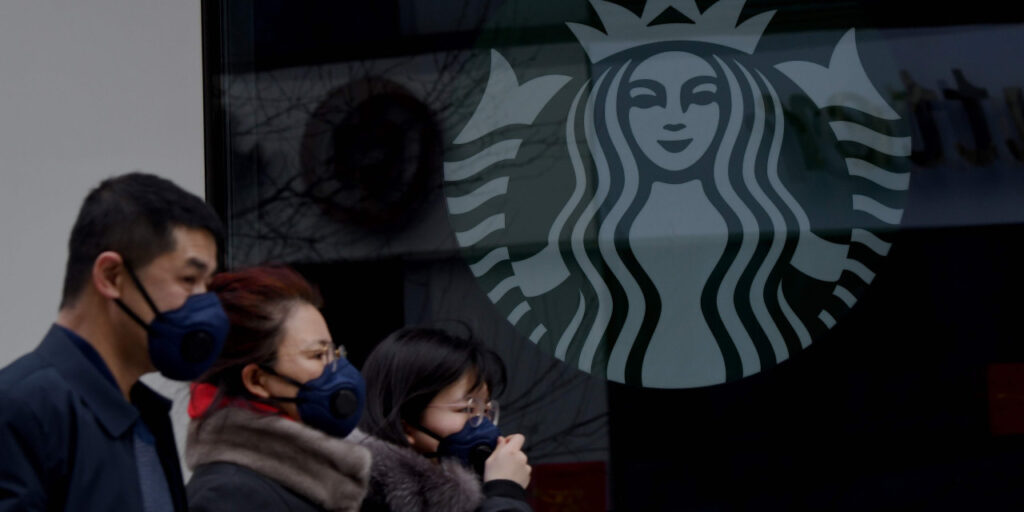
On January 30, 2020, Starbucks, the world’s largest coffee chain, closed more than 2,000 branches in China, becoming the first major American company to warn of a sales hit due to the deadly coronavirus. The closures represent half of Starbucks’ total stores in China, its biggest market outside the United States. The company opened its first Chinese store in Beijing in 1999.
The closure of over 2,000 stores in China has significantly impacted Starbucks’ operations. Kevin Johnson, Starbucks chief executive, stated that the company had to delay its 2020 profit forecasts due to the outbreak, despite earlier plans of upgrading its financial earnings based on its overwhelming first-quarter performance.
Johnson said that the firm was “navigating a very dynamic situation” despite the fact that the number of closed stores makes up about 10% of global revenue. The chain’s management explained that the financial impact caused by the outbreak will be determined at least by March, depending on how many stores will close and for how long. Starbucks has taken measures to protect its workers and support the Chinese government’s efforts to prevent the spread of the virus.
The company has adjusted operating hours in some outlets and is working closely with health officials to contain the public health risk. Johnson added, “Starbucks is responding to the virus in a thoughtful and responsible way to protect our partners and support health officials and the government as they work to contain this public health risk.” This response is in line with the measures taken by other companies and governments around the world to limit the spread of the virus.
The novel coronavirus has spread rapidly over the world, pressuring several companies to halt services and transport sectors to limit travel to and from China. This has had a significant impact on the global economy, with many companies warning of potential losses due to the outbreak. According to a statement by the National Retail Federation, the outbreak could have a significant impact on the global supply chain, particularly for companies that rely heavily on Chinese manufacturing.
Meanwhile, Starbucks’ Chinese rival, Luckin Coffee Inc., said it will resume operations in Wuhan after the Lunar New Year Holidays, indicating that some companies are taking a wait-and-see approach to the outbreak. The coronavirus outbreak has also raised concerns about the impact on US-China trade. The US-China trade deal, signed on January 15, 2020, aimed to ease tensions between the two countries, but the outbreak has raised questions about the potential impact on trade.
According to a statement by the US Chamber of Commerce, the outbreak could have a significant impact on US businesses that rely on Chinese supply chains. However, the organization also noted that the US and Chinese governments are working closely together to contain the outbreak and minimize its impact on trade.
As President Trump stated on January 24, 2020, “We’re working very closely with China and other countries to get this problem resolved.” The closure of Starbucks stores in China is a significant indicator of the impact of the coronavirus on global businesses. As the situation continues to evolve, it is likely that more companies will be affected, and the global economy will feel the effects of the outbreak.
The response of companies like Starbucks, as well as the efforts of governments around the world, will be crucial in containing the outbreak and minimizing its impact on trade and commerce. With the situation still unfolding, it remains to be seen how the coronavirus will ultimately affect the global economy, but one thing is certain – the impact will be significant, and companies will need to be prepared to respond quickly and effectively to the challenges posed by the outbreak.