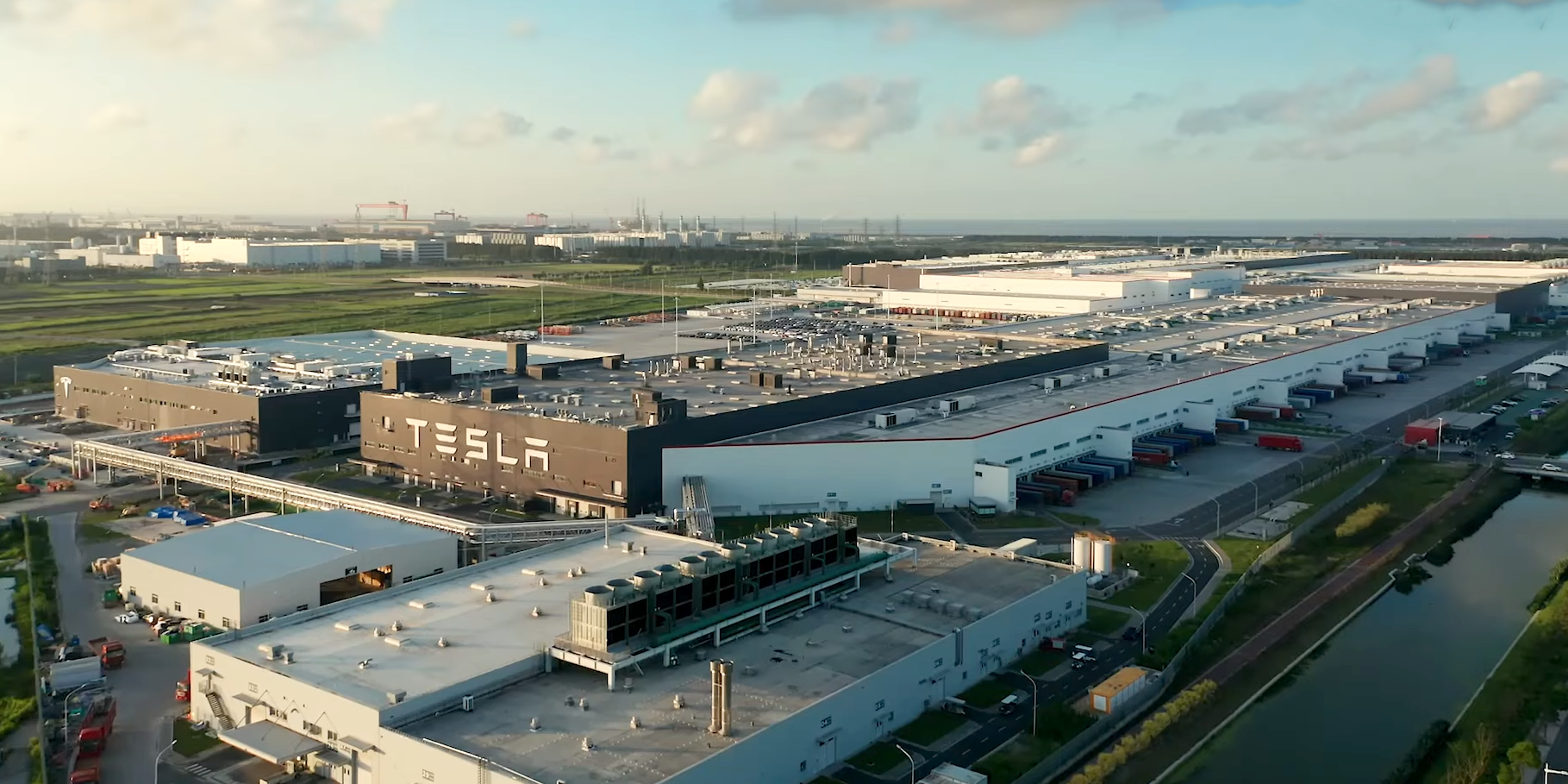
Tesla Inc. said on 1 January 2020 that it has closed a secured term-loan package of up to 9 billion yuan, about $1.29 billion, with four major Chinese banks to fund expansion of its Shanghai Gigafactory, the company’s first vehicle-assembly plant outside the United States. The Palo Alto-based automaker also secured an unsecured revolving credit line of 2.25 billion yuan to cover general working-capital needs at the same site. Proceeds drawn on 20 December 2019 were used to retire an existing 3.5 billion yuan bridge loan, according to a regulatory filing.
Loan details and lender lineup
The new debt is backed by Tesla’s land-use rights, buildings and machinery inside the Lingang free-trade zone. China Construction Bank, Agricultural Bank of China, Shanghai Pudong Development Bank and Industrial & Commercial Bank of China are the joint arrangers. Interest will float 90 percent of the People’s Bank of China one-year rate, a level that bankers describe as typical for priority manufacturing projects. The revolving portion carries no collateral, giving Tesla flexibility to draw, repay and redraw for general corporate purposes inside China.
A company spokesperson told Reuters the facility “replaces short-term bridge financing with longer-dated, lower-cost local currency debt, eliminating foreign-exchange risk on the Shanghai build-out.” The move keeps Tesla’s balance-sheet use inside the 30 percent ceiling the board set in 2019.
Shanghai plant becomes export hub
The Shanghai Gigafactory went from bare ground to pre-fabricated walls in 168 days and produced its first Model 3 for Chinese customers on 30 December 2019. Capacity is already above 3,000 cars a week, and Tesla China vice-president Tao Lin said the site will begin exporting to “select Asian and European markets” during the second half of 2020. Local sourcing now exceeds 70 percent by value, allowing the cars to qualify for China’s new-energy-vehicle purchase rebate even though Tesla is a foreign brand.
By building inside China, the company sidesteps the 15 percent retaliatory tariff Beijing still imposes on most U.S.-made autos, a levy left over from the 2018 trade dispute. Industry analysts at LMC Automotive estimate the tariff savings alone is worth $4,500 per Model 3. Lower logistics costs and cheaper labor add another $2,000 of advantage, giving Tesla room to cut the sticker price while protecting margins.
Competitive pressure on U.S. policy makers
The speed of Tesla’s Chinese rollout is being watched closely in Washington. The Trump administration’s Phase-One trade deal, signed 15 January 2020, keeps most existing tariffs in place while boosting U.S. energy and farm exports. Critics inside the president’s own party say that leaves high-tech manufacturers at a disadvantage. “When an American icon like Tesla has to borrow a billion dollars from Chinese state banks to avoid Chinese taxes, it tells you our tariff strategy needs a second act,” Senator Marco Rubio (R-FL) said on 31 December.
Democrats argue the episode proves the administration should re-join the Trans-Pacific Partnership or negotiate broader auto rules. Yet even they concede Tesla had little choice. “No CEO can ignore the world’s largest EV market,” former Michigan governor Jennifer Granholm told CNBC. “If we want that capital investment back in Michigan, we need a domestic industrial policy that competes.”
Market reaction and 2020 outlook
Tesla shares rose 3.4 percent in the first trading session of the year, extending a rally that tripled the stock during the final six months of 2019. Bondholders barely flinched: the company’s 2025 euro-denominated notes traded at 98 cents on the euro, implying a yield of just 3.9 percent. Analysts attribute the calm to Tesla’s third-quarter 2019 cash balance of $5.3 billion and the fact that the new yuan debt is non-recourse to the parent.
Chief financial officer Zach Kirkhorn said on the October earnings call that Shanghai output “should allow us to approach 500,000 global deliveries in 2020 without additional equity raises.” With the Chinese facility funded, attention now shifts to the next U.S. assembly line in Austin, Texas, and to the Model Y crossover due this spring. Tesla still guides for positive free cash flow every quarter going forward, “barring unforeseen macro shocks,” Kirkhorn added.
The company’s ability to tap cheap state-directed credit in China while retaining full ownership of its plant, Beijing lifted foreign-auto caps in 2018, sets a precedent other U.S. firms may follow. Ford has already asked for similar financing for its joint venture with Zotye, and General Motors is weighing a battery plant in Shanghai that would replicate Tesla’s wholly owned structure. Whether Washington views that as a win for American competitiveness or a strategic vulnerability will shape the next round of trade talks.
Tesla’s billion-dollar Shanghai loan closes the books on a year in which the company proved it can build, sell and finance cars on three continents at once. By swapping a high-interest bridge for long-term yuan debt, the automaker cuts its cost of capital and shields itself from currency swings while it races to meet global EV demand. If the Shanghai factory hits its 150,000-unit target for 2020, the plant will have paid for itself in roughly eighteen months, an efficiency record that U.S. policy makers may need to match if they want the next gigafactory built at home.