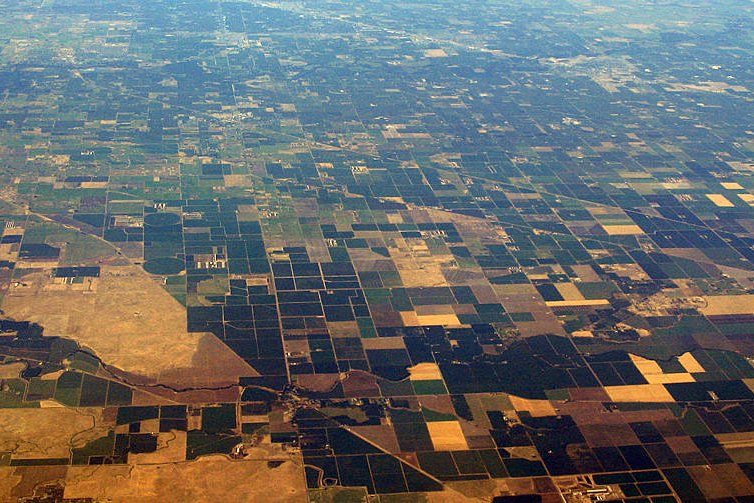
WASHINGTON, July 25 — 2.04 million farms. 900 million acres. Those are the headline numbers from the 2017 census of agriculture, the most recent official count of the industry’s scale. The average farm size: 441 acres.
The bottom line: the United States remains a net exporter of food, with production concentrated in two enormous sweeps of land — the Central Valley of California and the Great Plains. By the numbers, the Great Plains stretch west of the Great Lakes and east of the Rocky Mountains.
They split into two distinct zones: the eastern Corn Belt, where corn and soybeans dominate, and the western Wheat Belt, where high wheat production is the norm. The Central Valley, meanwhile, is the nation’s fruit, vegetable and nut basket. Florida leads the country in citrus production and holds the world’s number-two position behind Brazil for oranges.
The American South historically produced cotton, tobacco and rice, but those crops have declined over the past century. That shift is part of a longer story of regional specialization and changing markets.
Innovation and Mechanization
The U.S. has led developments in seed improvement, including hybridization. The work of George Washington Carver — developing new crop uses — laid a foundation later expanded into bioplastics and biofuels. Mechanization has been a central theme of American agriculture.
John Deere’s steel plow, Cyrus McCormick’s mechanical reaper, Eli Whitney’s cotton gin, and the widespread adoption of the Fordson tractor and the combine harvester all drove productivity gains. Modern agriculture today ranges from small hobby farms to large commercial operations covering thousands of acres.
That range is a direct inheritance from generations of technical change.
Historical Footprint
European colonists brought livestock that caused deforestation, soil compaction and the introduction of new weed species. In New England, deeper plowing with oxen accelerated erosion and nutrient depletion — a case of soil exhaustion that reshaped farming practices. As settlers pushed westward, a “wheat frontier” moved across the country over years, followed later by diversified farms that included dairy cattle.
In the antebellum Midwest, corn and hog farming complemented each other. The difficulty of transporting grain before canals and railroads made hog production a practical way to convert corn into a more portable product.
That logic — pairing grain with livestock — defined the region’s early economy. The figure that matters for anyone watching U.S. agriculture: 2.04 million farms covering 900 million acres. That is the snapshot from the 2017 census.
It captures an industry shaped by regional geography, a long history of machinery and seed innovation, and an ongoing shift in what is grown where. With the U.S. still a net exporter, the production from those farms — from California’s nuts to the Corn Belt’s soybeans to the Wheat Belt’s grain — remains a pillar of the country’s trade balance.
What to watch next: the extent to that the historic patterns of specialization and mechanization continue to evolve as technology and markets change. The census data from 2017 is the baseline; future counts will show whether the consolidation into larger farms and the concentration of production in the Central Valley and Great Plains is accelerating.