
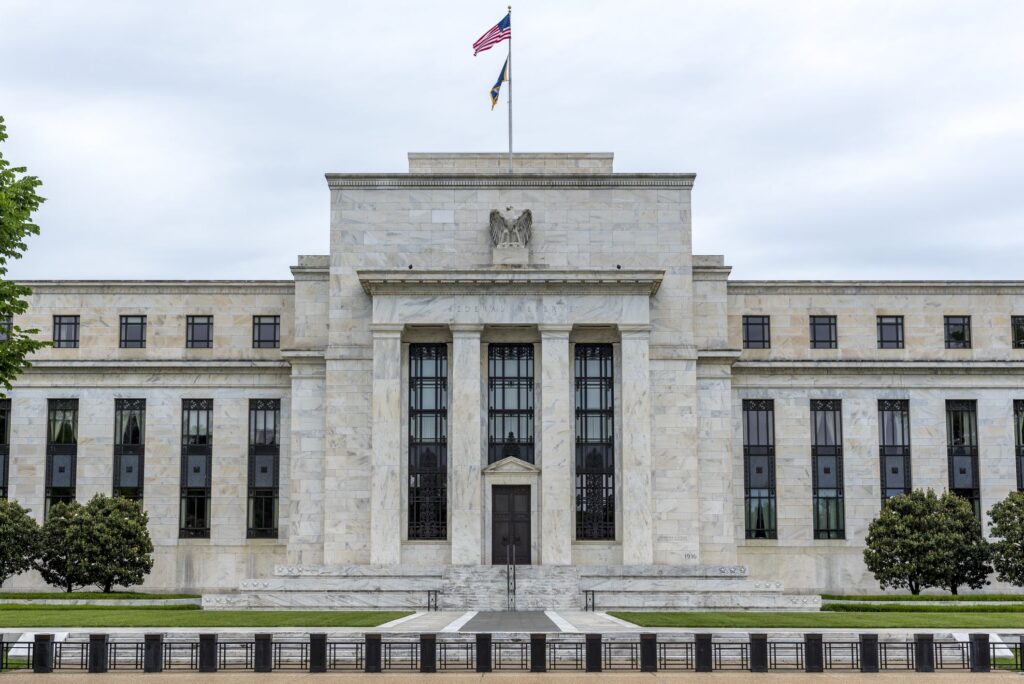
WASHINGTON, July 11 — For communities across the United States and indeed for global markets watching closely, the cost of the federal government’s borrowing has surged to a striking new level. The U.S. Treasury is now making a weekly interest payment of $24 billion, a direct consequence of the Federal Reserve’s campaign to raise interest rates. This figure translates to an annualized rate of about $1.25 trillion, though the Congressional Budget Office projects actual net interest costs for fiscal year 2024 will reach $870 billion.
The story begins with the Federal Reserve’s policy pivot. The central bank, through its Federal Open Market Committee chaired by Jerome Powell, raised the federal funds rate from near zero in March 2022 to a range of 5.25% to 5.5% by July 2023.
It has held that rate steady through July 2024. This benchmark rate influences the yields on Treasury securities, which in turn determine the interest the government must pay on its debt. The impact on the government’s balance sheet has been dramatic.
The average interest rate on the total outstanding marketable debt has more than doubled, rising from about 1.6% in 2021 to over 3.3% in mid-2024, according to the Treasury. As of June 2024, the Treasury had about $26 trillion in marketable debt, with an average maturity of about six years.
This means that as older, lower-interest bonds mature, they must be refinanced at today’s higher rates, steadily pushing up the government’s interest burden. For families across the region and beyond, these numbers may seem abstract, but the consequences are tangible. Interest payments have become the fastest-growing component of the federal budget.
In 2023, they surpassed spending on Medicare. The Congressional Budget Office projects that net interest costs will exceed $1 trillion by 2026. This growing obligation competes with other priorities, from infrastructure to social programs, and influences the fiscal room available for future policy.
The mechanism behind the payments
The $24 billion weekly figure is not a static number but a reflection of the entire debt stock’s interest rate sensitivity. When the Fed raises the federal funds rate, it pushes up yields across the Treasury curve. Short-term bills, which are refinanced frequently, adjust quickly.
Longer-term bonds, while locked in for their duration, eventually roll over into higher-rate securities. The average maturity of about six years means that a significant portion of the debt is repriced every few years, locking in higher costs gradually.
The Fed’s policy decisions, made by the FOMC, directly impact these costs. The rate hikes from 2022 to 2023 were aimed at cooling inflation, but they have had the side effect of making the government’s own borrowing more expensive. This dynamic is not unique to the U.S.; it resonates across global markets, including here in Asia, where central banks watch the Fed’s moves closely.
Higher U.S. rates can strengthen the dollar, affect capital flows, and influence borrowing costs for emerging economies.
What it means for the budget
Closer to home, for taxpayers and policymakers, the rising interest bill is a structural challenge. The CBO’s projection that net interest costs will top $1 trillion by 2026 underscores the trajectory. This is money that cannot be spent on other programs, and it adds to the national debt.
The Treasury’s weekly payment of $24 billion is a concrete, recurring reminder of this fiscal pressure. The average interest rate on marketable debt has risen from about 1.6% to over 3.3% in just a few years.
With $26 trillion in marketable debt, each percentage point increase in average rates adds hundreds of billions to annual interest costs. The Fed’s rate path, therefore, is not just a matter for Wall Street; it has direct implications for the federal budget and, by extension, for the economic environment that affects communities everywhere. As of July 2024, the Fed has held rates steady for an extended period.
The question for markets and policymakers is whether the current level of rates will persist, or whether the central bank will begin to cut. Any reduction would gradually ease the pressure on Treasury refinancing, but the existing stock of debt will continue to roll over at higher rates for years.
The weekly $24 billion payment is a snapshot of this ongoing transition. For the months ahead, the trajectory of interest costs will depend on the Fed’s next moves and the pace at which maturing debt is refinanced. The CBO’s projection that net interest costs will exceed $1 trillion by 2026 provides a benchmark for what lies ahead.
For now, the $24 billion weekly payment stands as a clear signal of the fiscal weight that higher rates have brought.




