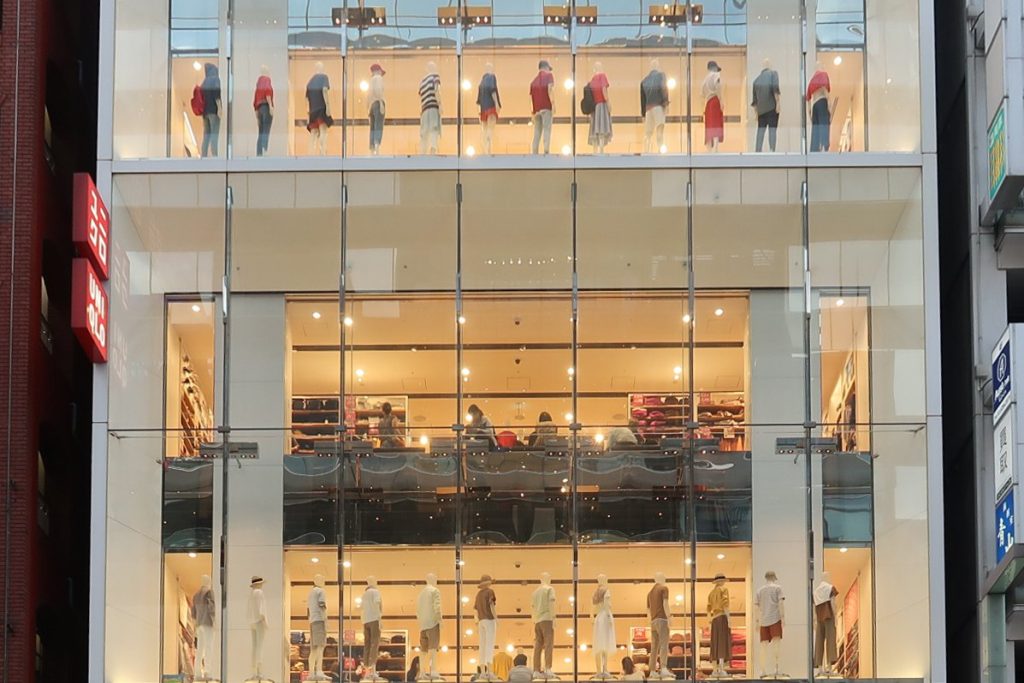
Seven weeks after shuttering all 750 of its Chinese outlets in response to the Covid-19 outbreak, Fast Retailing’s Uniqlo has reopened 720 stores across the country. The process has unfolded in stages, beginning two weeks ago in Shanghai and Shenzhen before spreading inland to cities such as Chengdu and Xi’an.
As of mid-week, only Hubei province—the epicenter of the outbreak—remained entirely dark, with 30 stores still closed. The initial shutdown was swift and sweeping. On February 1, the day after the Lunar New Year holiday ended, Uniqlo’s Chinese workforce remained at home.
By February 3, every store nationwide had lowered its shutters. This marked the most comprehensive retail closure of any foreign brand in China during the outbreak.
The shutdown aligned with Beijing’s extended holiday period, implemented to slow the virus’s spread. Inventory meant for the gift-buying season sat in regional distribution centers, and spring deliveries were postponed. The full impact on second-quarter revenue is still being assessed.
Fast Retailing has told investors that its cash reserves are sufficient to withstand the disruption. The company’s share price, however, has dropped nearly 30 percent since January, closing Monday at 46,000 yen.
Now, as stores reopen, operations remain cautious. Hours are shortened, staff receive temperature checks before shifts, fitting rooms stay closed, and checkout lines enforce one-meter spacing—rules posted at every entrance. A Fast Retailing spokesman in Shanghai said Friday that the company is strictly following government guidance.
“Safety comes before sales,” he stated, “but every reopened store is a step toward normal life for our 30,000 Chinese employees.” Despite the reopenings, foot traffic tells a more measured story. Store managers told local media that customer numbers remain roughly 40 percent lower than the same week in 2019.
This indicates not a recovery but a tentative first step. Chinese consumers are not returning in large numbers; they are arriving gradually, navigating temperature checkpoints, closed fitting rooms, and unfamiliar signage. Uniqlo’s reopening mirrors China’s broader emergence from lockdown. New local virus cases have declined outside Hubei, and the government is encouraging a return to normalcy.
But normalcy, for now, means sparse aisles, cautious shoppers, and a company that absorbed a month of lost sales to prioritize compliance and safety. Fast Retailing’s February decision to close all stores was among the most extensive of any retailer in China—and the most costly.
The company accepted the revenue loss rather than risk its reputation or staff health. Now, it is applying the same careful approach on the way back. Each reopened store sends a signal, but the signal remains weak: 30 stores still dark, foot traffic down 40 percent, fitting rooms still locked.
Most of Uniqlo’s 30,000 Chinese employees are back at work, but the work, routine, and customer base have all changed. The company says cash is adequate.
The share price suggests investors remain unconvinced. The stores are open. The question is how long it will take for people to walk back in.