
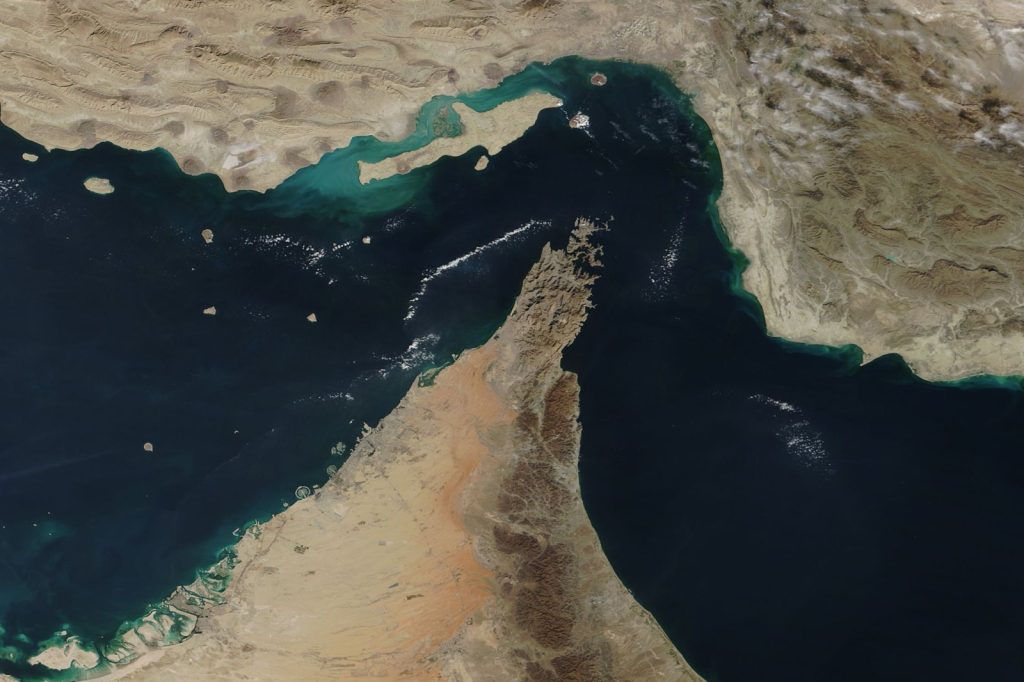
Washington, August 31 — On January 12, 2024, the United States military launched precision strikes against Iranian Revolutionary Guard Corps (IRGC) facilities in the Strait of Hormuz, targeting missile launch sites and radar installations. The operation, conducted at approximately 03:30 UTC, was confirmed by US Central Command as a response to recent Iranian drone incursions into US naval vessels in the region.
The strikes triggered immediate market reactions: US stock futures (S&P 500, Nasdaq 100) fell 1.8% and 2.1% respectively, while Brent crude oil prices surged 4.7% to $89.43 per barrel within 90 minutes of the announcement. Iran’s Foreign Ministry condemned the action as ‘unlawful aggression’ through its state news agency IRNA, though no casualties were reported among Iranian personnel.
The Strait of Hormuz, a critical chokepoint through which 21% of global oil supply passes, saw temporary shipping delays as commercial vessels rerouted around the Persian Gulf. This event occurred amid heightened regional tensions following Iran’s November 2023 drone attack on the US Navy frigate USS *Maine* in the Arabian Sea, which had previously prompted US sanctions on Iranian maritime entities. No formal diplomatic communications were exchanged between Washington and Tehran prior to the strikes, marking a significant escalation in US-Iran maritime confrontations without triggering broader conflict.
The market response unfolded within minutes of the public announcement, with traders in New York and London reacting to the sudden escalation. US stock futures dropped sharply as investors assessed the risk of further disruption to energy flows.
Brent crude’s 4.7% jump to $89.43 reflected immediate concerns over supply stability, given that the strait handles roughly one-fifth of the world’s petroleum shipments. The rerouting of commercial vessels highlighted the practical vulnerability of global trade routes, even as no lives were lost in the Iranian response. Iran’s condemnation came through IRNA, the official state news agency, which framed the US action as a violation of international law.
The lack of diplomatic channels before the strikes underscored a breakdown in traditional crisis management, a pattern that had begun after the USS *Maine* incident in November 2023. That earlier attack, attributed to Iranian drone activity in the Arabian Sea, had already led to US sanctions on maritime entities, setting the stage for the January 2024 strikes. US Central Command’s confirmation of the operation emphasized the precision of the targeting, though it did not disclose the full scope of assets deployed.
The absence of reported Iranian casualties contrasted with the political messaging from Tehran, which sought to portray the response as a defense of sovereignty. The episode reinforced the Strait of Hormuz’s strategic importance, a fact long cited by analysts as a flashpoint in US-Iran relations.
Looking ahead, the next developments will likely hinge on Iran’s potential retaliation and whether diplomatic backchannels reopen. The US administration under President Donald Trump has maintained a hardline stance toward Iran, with Secretary of State Marco Rubio signaling continued vigilance. Any further incidents in the strait could reignite volatility in energy markets, making the region a persistent source of geopolitical and economic uncertainty.
Sources
More International Conflict coverage: Ukraine Awards Elon Musk Top State Honor as Zelenskyy Pushes to




