
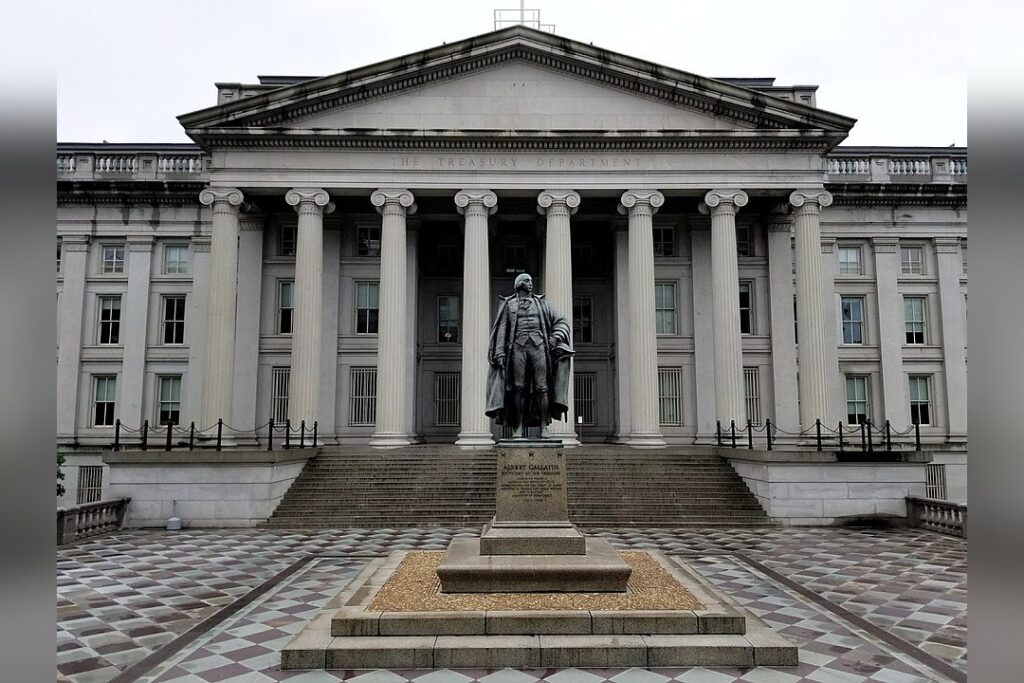
WASHINGTON, July 9 — The yield on the benchmark 10-year U.S. Treasury note settled at 4.28% on July 5, down from 4.36% the prior session, as investors rotated into safe-haven assets amid persistent economic uncertainty.
The 2-year yield also declined, falling to 4.61% from 4.71% the day before. The yield curve remains inverted, with the shorter-dated 2-year note yielding more than the 10-year — a classic signal that has historically preceded recession. Strategically, the persistence of this inversion, now stretching well over a year, continues to flash a warning to markets and policymakers alike.
The Broader Stakes in the World’s Largest Debt Market
At $26 trillion in outstanding debt as of 2024, the U.S. Treasury market is the deepest and most liquid securities market on the planet. Its movements are watched closely not just by bond traders, but by central banks, foreign governments, and institutional investors around the globe. When yields fall, as they did on July 5, it signals a flight to quality — investors are willing to accept lower returns for the safety of U.S. government backing.
What this signals is a market that remains on edge. The calculus for investors has been shaped by the Federal Reserve’s aggressive tightening cycle. The central bank’s federal funds rate has stood at 5.25%-5.50% since July 2023, the highest level in over two decades, as the Fed has fought to bring inflation under control.
The broader stakes are clear: the longer rates stay elevated, the more pressure builds on the economy. An inverted yield curve, where short-term borrowing costs exceed long-term returns, effectively penalizes banks for lending and can constrict credit. That dynamic is a headwind for growth.
Safe-Haven Demand Drives the Dollar Higher
The U.S. dollar index, or DXY, rose 0.3% to 105.6 on July 5, reflecting the same safe-haven demand that pushed Treasury yields lower. When geopolitical or economic risks rise, the dollar typically strengthens as global capital seeks the world’s primary reserve currency.
That move in the dollar, while a sign of confidence in U.S. assets, also carries its own set of consequences. A stronger dollar makes U.S. exports more expensive abroad and can weigh on multinational corporate earnings. For emerging markets, it can tighten financial conditions further.
The dual move — lower bond yields and a higher dollar — paints a picture of a market that is pricing in risk, not optimism.
The Fed’s Next Move
The Federal Reserve’s next policy meeting is scheduled for July 30-31, 2024. Markets will be watching closely for any signal that the central bank is preparing to cut rates. The current federal funds rate range of 5.25%-5.50% has held steady for a full year, the longest pause at this level in the current cycle.
The calculus for Fed policymakers is delicate. Inflation has moderated from its 2022 peaks but remains above the central bank’s 2% target. Cutting rates too soon risks reigniting price pressures. Waiting too long, however, risks tipping the economy into recession — especially with the yield curve still inverted.
For context, during the height of the COVID-19 pandemic in 2020, the 10-year yield fell to 0.5% as the Fed slashed rates to near zero and launched massive bond-buying programs. The current level of 4.28% is a stark reminder of how far the landscape has shifted.
What to Watch Next
The July 30-31 Fed meeting will be the next major inflection point for Treasury markets. Investors will parse the accompanying statement and Chair Jerome Powell’s press conference for any shift in language that might signal a rate cut in September or later this year.
The broader stakes remain high. The U.S. Treasury market, at $26 trillion, is not just a barometer of American economic health — it is the foundation of the global financial system. When its signals flash warning, the world takes notice. For now, the inversion persists, the dollar is firm, and the market is waiting for clarity from the Fed.




