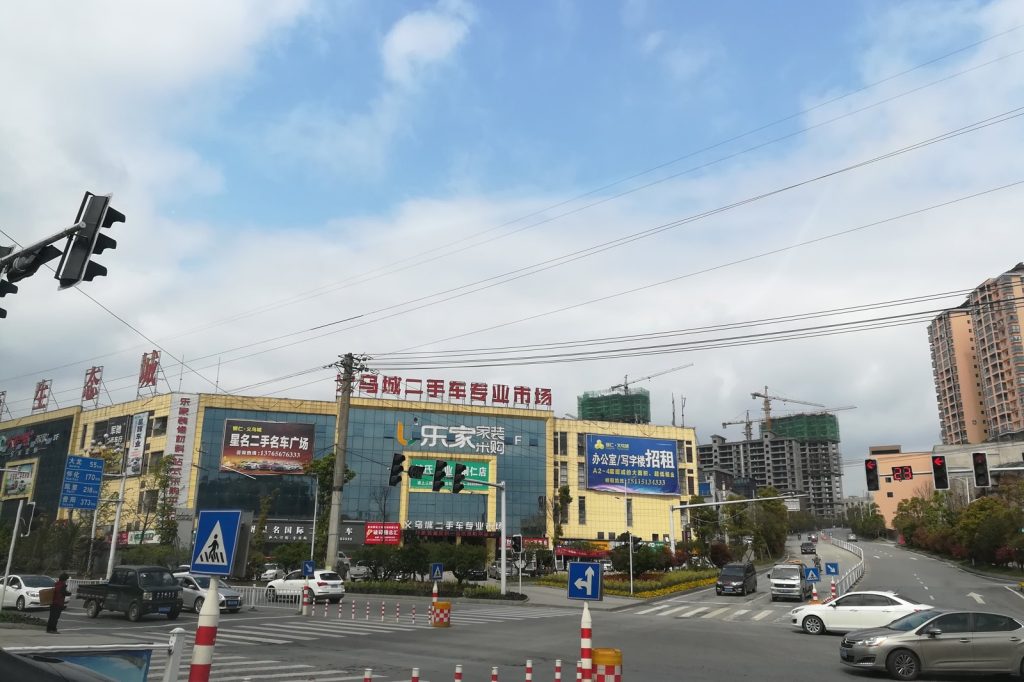
China’s new-car market has spent 2026 falling down a flight of stairs. Sales of new passenger vehicles dropped roughly 20% in the opening five months of the year, and internal-combustion models fell over 35% in both April and May. The used-car sector, hostage to those price cuts, has taken a painful mark-down of its own. Into this gloom stepped Uxin Limited (Nasdaq: UXIN), the Beijing used-car retailer, with not a profit warning but an investor FAQ, released June 23, that reads, for all the noise in the market, like a company describing “turning chaos into opportunity” while prices fall around it.
The arithmetic of the correction is stark. Prices for mainstream used ICE vehicles lost 10-15% in two months during the second quarter, and the residual value of three-year-old cars in China, which hovered around 70% of the new price for years, has been brought down to a globally ordinary 58-60%. Uxin’s phrase for this is a “one-time revaluation.” It frames the pain as “a healthy, albeit abrupt, market maturation.” The salient point in the company’s telling: the pricing framework broke, the demand did not. Used transactions rose 2% in the opening five months, comfortably outperforming the new-car segment’s slide.
The defense rests on speed and data. Uxin runs a 30-day inventory turnover target, on the logic that a depreciating car is a wasting asset, and a machine-learning pricing engine fed on real transaction data that reprices both acquisition and retail in near real time. There is precedent for the bet, and the company cites it: in the American crash of 2007-2009, new sales cratered and many dealers went under, while disciplined independents like CarMax emerged stronger. Uxin is wagering that China is being reshaped the same way, and that the fastest data wins.
The structural target is fragmentation. China has more than 500,000 used-car dealers, over 90% of them holding fewer than 30 vehicles each, an industry built on opaque condition reports, inconsistent pricing and almost no after-sales support. Uxin’s answer is the “factory-warehouse-retail” model: warehouse superstores attached to self-operated reconditioning factories, controlling the chain from sourcing to sale. Cars are inspected, reconditioned and listed in under three days on average, about 50% faster than the industry norm, which is how a murky transaction becomes something like modern retail. The trust metrics follow: a Net Promoter Score consistently above 65, and conversion above 40% at mature superstores. Notably, the model is a hybrid. It borrows CarMax’s scale while keeping showrooms, unlike Carvana’s online-only pitch, on the observation that Chinese buyers still want to see and test-drive the thing, a car being a major household expense there. Online deals are 30% of sales now, up from 10% in the early days, with an AI-driven retailer as the stated destination.
Proof, the company says, comes from Xi’an. The first pilot superstore, opened in late 2022, hit maturity with approximately 2,700 vehicles sold in peak months of 2025, roughly a quarter of the local market, and profitability at store level. The replication curve is steepening: the Wuhan store, opened in March 2025, passed 1,000 sales a month inside six months; Zhengzhou, opened that September, needed four. Six superstores now operate, another four to six arrive in 2026, and the long view holds room for superstores in 200-plus cities, 50 or more by 2030 and annual retail sales above one million vehicles.
The financing is the least glamorous paragraph and possibly the decisive one. Each new superstore costs about US$10 million in facility and inventory working capital; every two mature stores can fund one new opening a year; inventory financing covers about two-thirds of acquisition costs. External money still matters, and Uxin confirmed about US$40 million in signed equity commitments expected to close, enough, it says, for the 2026 build-out, with more being raised for 2027 and beyond. Management has also promised to pace openings against market conditions, capital and operating performance, which is the sort of caveat that ages well. It would seem the bet, in the end, is not that China’s car market recovers, but that its used-car trade finally consolidates. On the evidence of the FAQ, Uxin intends to be holding the data when it does.
Sources
- Uxin’s Playbook for Taming China’s Turbulent Used Car Market
- Uxin (UXIN): Volume Growth Meets a Margin Reset in the Used-Car Market – Alphastreet