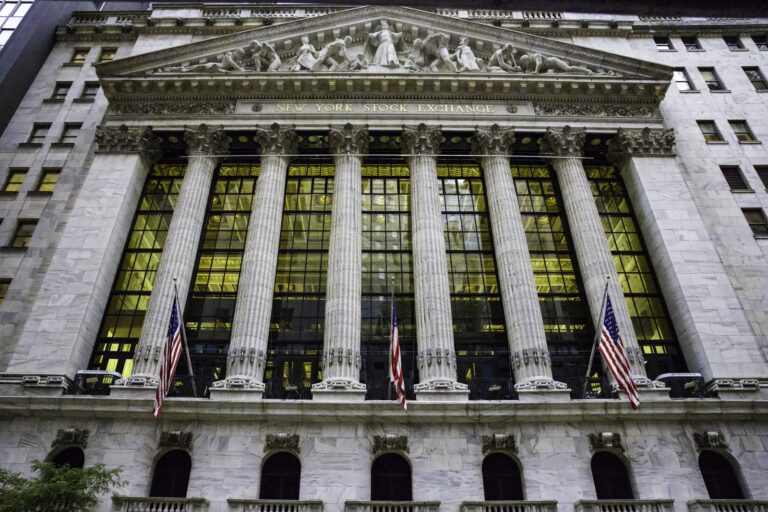
Wall Street closed lower on October 26, 2023, as U.S. crude oil prices rose 1.2% to $91.45 per barrel amid supply concerns from OPEC+ production cuts, pressuring energy stocks and broader market sentiment. The S&P 500 fell 0.8% to 4,321.50, the Dow Jones Industrial Average dropped 0.7% to 33,765.23, and the Nasdaq Composite declined 1.1% to 13,482.97, driven by rising bond yields following the Federal Reserve’s hawkish dot plot indicating two additional 25-basis-point rate hikes by year-end.
The Fed’s updated projections, released October 25, projected inflation remaining above 3% through 2025, prompting expectations of sustained high interest rates. Oil prices have climbed 18% year-to-date, with Brent crude trading at $94.10 per barrel, pressuring inflation-sensitive sectors.
The 10-year U.S. Treasury yield hit 4.95% on October 26, its highest level since 2007. No new economic data was released on October 26, making the Fed’s signals the primary catalyst for the selloff. The energy sector underperformed, with ExxonMobil and Chevron each declining over 2% as oil prices surged.
This downturn marks the third consecutive week of losses for the S&P 500, driven by concerns that higher borrowing costs will slow economic growth without effectively curbing inflation. Investors will note the market reaction reflects anxiety over prolonged monetary tightening, with the Fed’s dot plot signaling further tightening ahead.
Looking ahead, the trajectory of inflation and the Fed’s rate path will continue to shape market direction in the coming weeks. Wall Street’s decline on October 26, 2023, followed a sharp rise in U.S. crude oil prices, which climbed 1.2% to $91.45 per barrel amid persistent supply concerns linked to OPEC+ production adjustments, amplifying inflationary pressures across the economy.
The market selloff was primarily driven by the Federal Reserve’s updated policy outlook, which projected inflation remaining above 3% through 2025, reinforcing expectations of sustained higher interest rates and prompting investors to reassess risk across equity and credit markets. Energy sector stocks, including ExxonMobil and Chevron, underperformed as rising oil prices heightened concerns about cost pressures, even as the broader market declined for the third consecutive week amid growing uncertainty over the pace and impact of monetary tightening.
With no new economic data released on October 26, the Fed’s dot plot and inflation projections served as the dominant catalysts for market movement, underscoring the increasing sensitivity of financial markets to central bank messaging in a high-rate environment.
Sources
Background and why it matters
Crude oil has long been one of the most volatile commodities in global trade. Its price swings are rarely gentle. Over the past half-century, major surges have followed wars, embargoes, revolutions, and deliberate production decisions by exporting countries.
The 1970s saw two of the most famous episodes, when geopolitical shocks sent prices climbing sharply and reshaped Western economies for years. Similar, if less dramatic, spikes occurred during the Gulf War of the early 1990s and again in the lead-up to the global financial crisis of the late 2000s.
An oil price surge is a sharp and sustained increase in the price of crude oil on international markets. It usually comes from the supply side: exporters cut output, conflict disrupts shipping lanes, or sanctions remove barrels from the market. It can also come from the demand side, when a fast-growing global economy suddenly needs more fuel.
The current period is largely a story of supply. A coalition of major producers, known as OPEC+, has been trimming production to support prices, and markets have responded with steady upward pressure.
Sustained oil price increases matter far beyond the trading floor because petroleum is woven into the cost structure of nearly everything. Higher crude prices raise the price of gasoline and heating oil for households. They push up freight charges, plastic prices, and the cost of a wide range of manufactured goods.
For central banks, that is an uncomfortable complication. In 2023, global inflation was already running above comfortable levels, and authorities such as the United States Federal Reserve were trying to cool price pressures by raising interest rates. A fresh oil shock tends to push inflation in the opposite direction, leaving policymakers with a difficult tradeoff.
The memory of recent history helps explain the anxiety in financial markets. In 2020, demand collapsed and prices briefly turned negative. Two years later, a major invasion disrupted oil exports in Europe, sending prices to their highest level in more than a decade. By 2023, attention had shifted to OPEC+ output policy, with several rounds of cuts announced through the year. Each announcement tightened the expected balance between supply and demand, and investors watched closely because they had been burned before. A surge in oil prices, coming at a moment when central banks were already fighting inflation, is precisely the kind of shock that can force interest rates to
More Small Business coverage: Barclays Forecasts Two Additional Fed Rate Hikes This Year After