
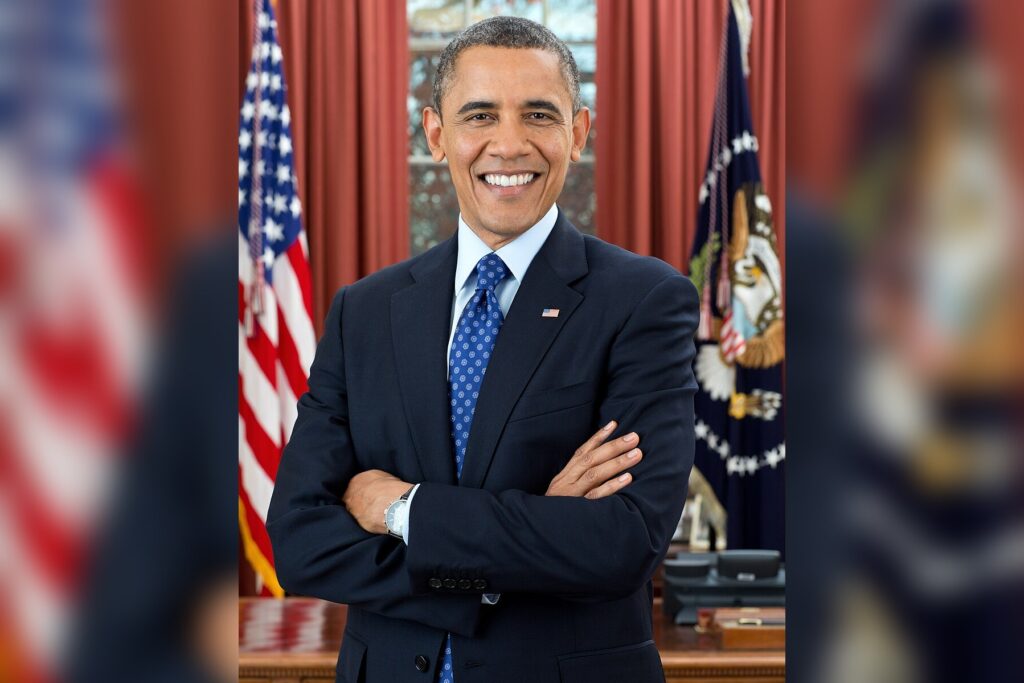
On July 21, 2010, President Barack Obama signed into law the sprawling statute the world would come to call Dodd-Frank. Under the hood, it was a repair job built from a diagnosis: three broad failures Congress believed had produced the 2007-09 crisis. Obama named them at the signing. The financial sector had been “governed by antiquated and poorly enforced rules”; the rescue machinery had “left taxpayers on the hook if a big bank or financial institution ever failed”; and at the retail edge, “lenders locked consumers into complex loans with hidden costs”. Nearly everything in the act’s architecture maps onto one of those three sentences, and the technical reality of the law is easiest to read that way.
Bucket one: prudential supervision. Dodd-Frank clamps tougher capital, leverage, risk-management, merger and stress-testing requirements onto bank holding companies and other firms whose collapse could threaten the system, and it hands the Federal Reserve wider authority to scrutinize nonbank companies. Derivatives move toward transparent trading and clearing, with over-the-counter swaps policed by the Commodity Futures Trading Commission, the Securities and Exchange Commission, or both, and the Volcker Rule bars insured depositories from trading derivatives on their own account. Securitizers, whenever they package an asset, must keep a slice of the credit risk. A new Financial Stability Oversight Council, seating the heads of every financial regulator, exists to scan for trouble the way an ops team watches dashboards.
Bucket two: bailouts. The phrase “Too Big To Fail” entered the public discourse because the marketplace had learned to assume rescue; creditors lent to the largest corporations more cheaply on that assumption, privatizing gain while socializing loss. The statutory counter is the Orderly Liquidation Authority, a receivership path that takes a failing systemically important nonbank apart while insulating the economy, with the excess costs saddled on large financial companies. The act states flatly that “Taxpayers shall bear no losses” in the process. The Fed keeps its emergency-lending power but only through programs broadly available to many firms, never a single one, and the biggest institutions must file “living wills” explaining how they would wind themselves up without extraordinary government support. As ever, the detail that matters is incentives: cheap rescue was the bug, and every clause here is an attempt to make failure expensive again, for the right people.
Bucket three: consumers. The Bureau of Consumer Financial Protection enforces most federal financial consumer protection laws, with authority over medium-sized and larger banks covering basics like deposit taking and check cashing, and power to police “abusive” acts or practices. Lenders must verify a mortgage borrower’s ability to repay; loans meeting qualified-mortgage criteria satisfy that test, and violating the standard is a defense against foreclosure. Yield-spread premiums, the incentive payments that steered borrowers into pricier loans, are banned outright.
Then there is the corner of the law almost nobody discusses: insurance. The banking industry absorbed hundreds of pages of stringency while insurers, who came through the crisis in far better shape, got one section. Title V creates a Federal Insurance Office inside the Treasury to monitor every line of the business except health, long-term care and crop cover, to demand data from large insurers, and to recommend to the FSOC that an insurer be designated systemically significant and handed to Fed supervision. Its director must report to Congress within 18 months on whether insurance regulation should move, in whole or part, from the states, its exclusive home until now, to Washington.
The state-versus-federal argument underneath that study is old and mostly unprintable in its vehemence. One camp takes the “If it ain’t broke, don’t fix it” position, noting the system evolved and worked while banking burned. The other points out that a company writing business across the country conforms to the laws of 50 states plus the District of Columbia, and that a globalized market needs one American voice in international agreements, which is exactly the turf where the FIO can pre-empt the states. The pragmatic changes came faster in surplus lines and reinsurance: only an insured’s home state may license a surplus lines insurer or broker serving that customer, premium taxes now run solely through that home state, brokers need no longer exhaust the admitted market first, and a ceding insurer whose home state is accredited by the NAIC, or applies solvency standards similar to its rules, cannot be denied reinsurance credit by another state. Foreign reinsurers are the obvious winners. A Government Accountability Office study on the surplus lines market is due to Congress within 30 months.
The wry note: a law sold as taming Wall Street spends its quietest title starting a transfer of regulatory authority over the one industry that did not blow up. Setting the FIO to speak for the United States lets non-US insurers deal with one regulator instead of 51, and aligns American capital and accounting standards with the E.U.’s Solvency II buildup, where a single authoritative voice was always going to be essential. Time will tell how far the federal role grows; the direction of the first step is not in doubt.
Sources
- The Dodd-Frank Act and the insurance industry: Strategic considerations of U.S. financial reform
- Dodd-Frank Wall Street Reform and Consumer Protection Act of 2010 | Federal Reserve History




