MUMBAI, November 28, 2026 — The Adani Group has formally requested government permission to invest in the airline sector, seeking to challenge a domestic market where Air India and IndiGo control roughly 90 per cent of flights. Group CFO Jugeshinder Robbie Singh made the appeal on Friday at the India Debt Capital Market Summit, arguing that India requires nearly ten times its current daily flight capacity to serve a latent base of more than 60 crore potential flyers.
The Capacity Gap
Figures show India currently operates approximately 3,200 to 3,300 daily flights. Singh stated the country needs to reach about 30,000 daily services to unlock demand from the vast population segment currently priced out or underserved by the existing duopoly. “More than 60 crore people in India had the potential to fly,” Singh told reporters, pointing to the structural shortage of seats as the primary constraint. Operational disruptions at IndiGo last year, which triggered mass cancellations, have amplified industry calls for additional competitors to absorb demand and stabilise the network.
Regulatory Barrier: The 10% Cap
The primary hurdle sits in existing airport concession agreements. According to the filing, airport operators are restricted from holding more than a 10 per cent stake in domestic scheduled airlines, a rule designed to prevent conflicts of interest between infrastructure providers and their airline customers. Adani Airport Holdings Ltd operates eight airports — including Mumbai, Navi Mumbai, Ahmedabad, Lucknow and Guwahati — handling more than a quarter of the country’s passenger traffic. This infrastructure footprint makes the group a critical landlord to the very carriers it would effectively finance if the cap is lifted or an exemption granted.
Investor, Not Operator
The company stated its preference is to act as a funder rather than an operator. “We would rather remain an investor and let an entrepreneur run the business,” Singh said on Friday, echoing remarks from earlier in the week. This marks a shift from the group’s position in July, when it said it was not evaluating any proposal to enter the airlines business, and from November 3, when Adani Airport Holdings CEO Arun Bansal ruled out a venture, citing the risk of competing with airport customers. The new posture frames Adani as a capital provider for a third-party airline startup, sidestepping direct operational rivalry with its tenant carriers.
Capital Plan and Demerger Timeline
The aviation push sits inside a broader FY27 capital expenditure plan of roughly ₹2.2 trillion, up from ₹1.56 trillion in FY26. The group aims to demerge Adani Airport Holdings Ltd in 2027 once the unit achieves financial self-sufficiency. According to the company, total borrowings are expected to reach Rs 1.3-1.4 lakh crore in the 2027 fiscal year, with a similar level projected for FY28. Adani Power and Adani Enterprises plan to access the public rupee bond market, while Adani Ports and Special Economic Zone targets long-tenor dollar bonds after April to extend its maturity profile.
Sources
- More airlines, more choice? Adani seeks govt nod to invest in aviation, challenge Air India IndiGo duopoly – BusinessToday
- Adani Group to list airport business in FY28; plans $140 billion capex over five years
- AECOM Wins $15B Adani Infrastructure Program Role
- Adani Group plans ₹2.2 trillion capex in FY27, eyes airport business demerger in 2027 – CNBC TV18
- Adani Airports could be ready for listing by 2027, says Adani Group CFO- Moneycontrol.com
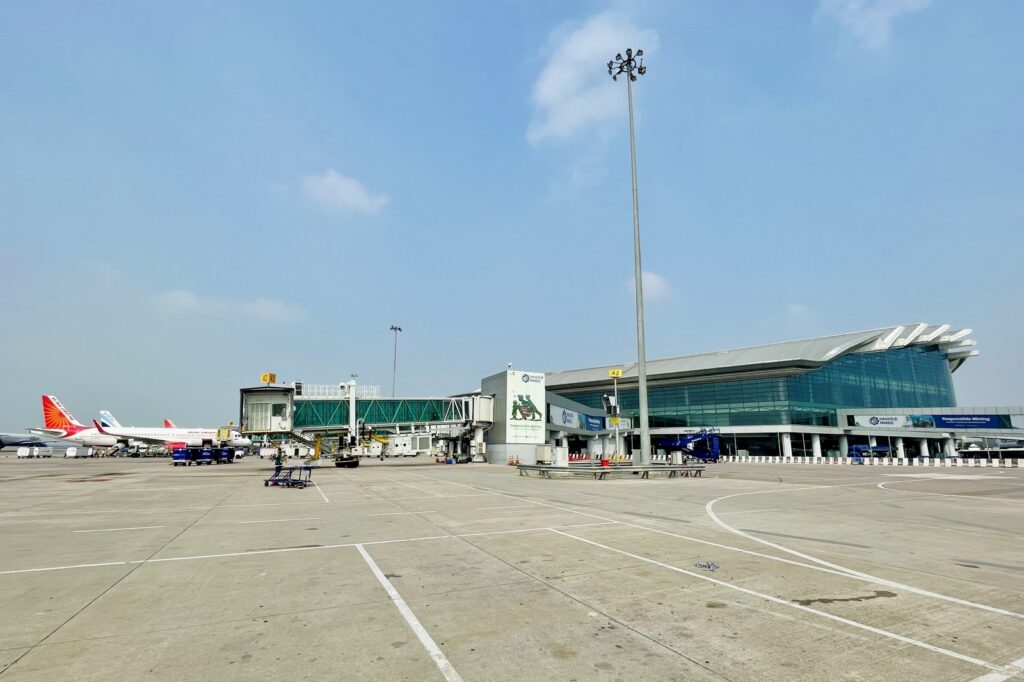
Photo: AjayDas (CC BY-SA 4.0)