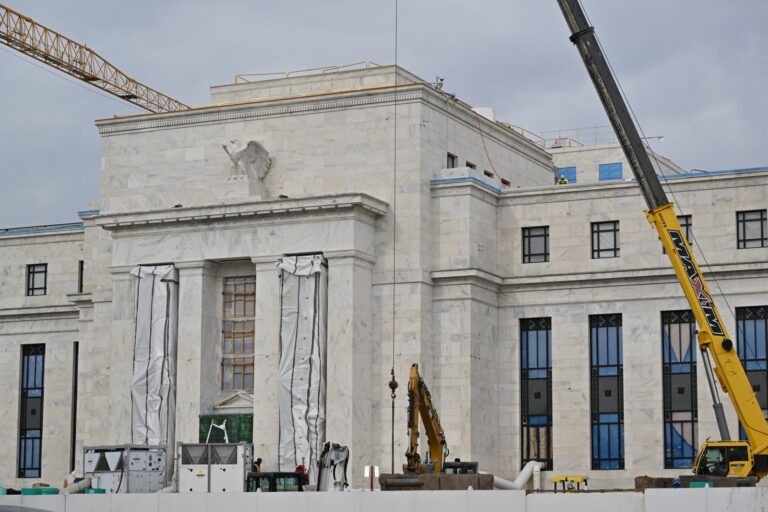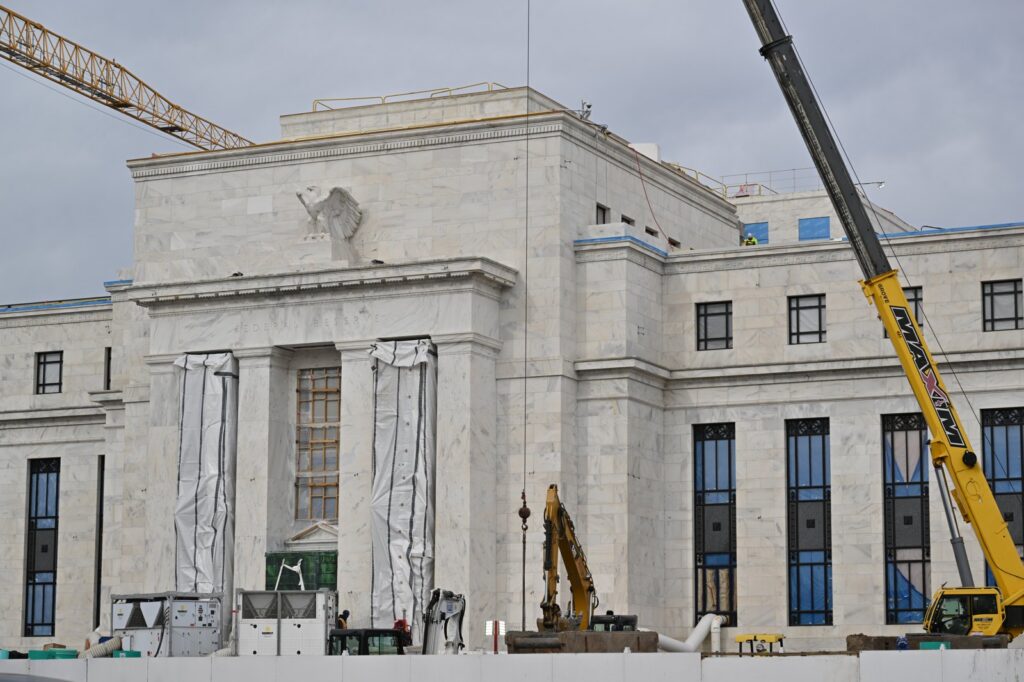
3.75 to 4.00 percent. That is where the Federal Reserve left its benchmark rate at its latest meeting, pointing to strong economic activity despite uncertainty and to inflation that still runs above its 2 percent long-term target.
The figure that matters is what came before it. At the September meeting the Fed raised rates for the first time since July 26, 2023. For five meetings ahead of that, the range had sat at 3.50 to 3.75 percent, after a 0.25 percentage point cut announced on December 10, 2025. That cut was the third in a row at the end of 2025 and the sixth since September 18, 2024. The easing run is over, for now.
How the rate got here
The federal funds rate is what banks charge one another for overnight loans. After holding it close to zero from the start of the pandemic in 2020, the Fed raised it seven times in 2022 and four more in 2023, reaching 5.25 to 5.50 percent, a 23-year high. It stayed there until September 18, 2024, when the cuts began.
Treasury yields moved with it. The 3-month bill rate climbed from 0.15 percent in early 2022 to a peak of 5.3 percent in October 2023, and has since eased to 3.9 percent as of September 2026. Longer-term rates went from about 1.7 percent to nearly 5 percent over the same stretch, and the 10-year sits around 5.0 percent now. Those longer rates are the ones that set the price of mortgages, car loans and business investment loans.
What the debt costs
Higher rates hit the government too. The Congressional Budget Office put net interest costs at $970 billion in 2025, and they passed $1 trillion for the first time as of August. The agency expects them to reach $2.1 trillion in 2036, and that assumes short-term rates fall to 3.1 percent by 2032. If rates stay higher, the bill grows faster.
The longer view is starker. Over the next 30 years, interest payments would total around $99 trillion and take 37 percent of all federal revenue by 2056. Interest would pass Medicare in 2028 and Social Security in 2047, becoming the largest single item in the budget. By 2056 it would be nearly triple what Washington has historically spent on research and development, nondefense infrastructure and education combined.
Five task forces
The Fed has also launched five task forces on communications, balance sheet policy, data, productivity and jobs, and inflation frameworks. External advisers, among them economists, business leaders and former central bankers, co-lead each one, with Fed staff in support. Their job is to follow the evidence and report back to the Federal Open Market Committee. The productivity and jobs group will look at how new general-purpose technologies, super intelligence included, change the economy.
Beijing and the trade truce
A commentary on the decision argued that the pause gives China a somewhat easier external setting for its moderately accommodative policy, though it still has to weigh growth against currency stability. The writer noted that the Fed’s stance does not signal easing, because another hike remains possible and global liquidity could stay tight.
Trade tension sits underneath all this. The truce Washington and Beijing reached last year runs until next January and ended the tit-for-tat tariffs, but neither side has built assurances against new hostilities. Both treat the standoff as a national security matter. China throttled exports of rare earths and magnets last year, and the International Energy Agency has estimated that a Chinese block on rare earth magnets could cost US and European economies about $1.5tn per year.
Sources
- Federal Reserve
- Board of Governors of the Federal Reserve System
- Fed Holds Rates as Interest Costs on the National Debt Top $1 Trillion
- US Fed's rate pause gives room for policy maneuver
- The US-China trade war seems to have subsided – but the sense of calm is misleading
- FSB says US warned Russia of possible Moscow attack – AOL
Photo: G. Edward Johnson (CC BY 4.0)