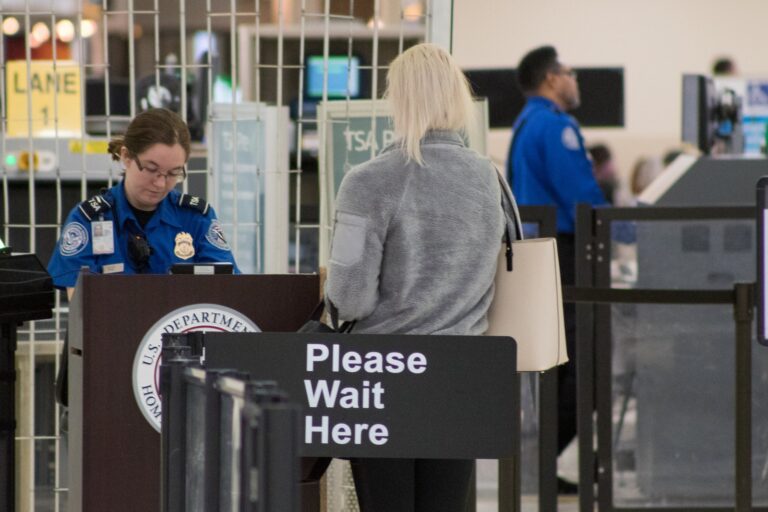
WASHINGTON, November 20, 2026 — The FBI, Department of Homeland Security, and Transportation Security Administration jointly issued an informational report to the U.S. aviation industry on Thursday warning of Al-Qaeda messaging that praises a September attempted hijacking and encourages similar attacks against U.S., Israeli, and Jewish interests. A law enforcement source told CNN there are no known specific and credible threats underway despite the alert.
By the Numbers
The bulletin lands ahead of the busiest travel week of the year. AAA anticipates approximately 6 million people will travel on U.S. domestic flights from November 24 to 30. The report cites “multiple messages praising the attempted hijacking” of a Tel Aviv-bound Flydubai flight in September 2026 and states that Al-Qaeda narratives “reiterate longstanding AQ narratives that encourage supporters to exploit aviation access, evade security measures, and conduct attacks using commercial aircraft.”
The Figure That Matters
The bottom line: the warning reflects aspirational propaganda, not demonstrated operational capacity for Western aviation attacks. Intelligence assessments show Al-Qaeda’s center of gravity has shifted to regional insurgencies. In the Sahel, the Al-Qaeda affiliate Jama’at Nusrat al-Islam wal-Muslimin (JNIM) is driving an expanding insurgency across Burkina Faso, Mali, and Niger, with the UN recording 2,640 civilian deaths between January and March 2026 alone. In Syria, a new group called Ajnad Beit al-Maqdis pledged allegiance to Al-Qaeda in March 2026 and claimed a rocket attack on U.S. forces at al-Shaddadi base, but analysts assess it shows “low operational capability.”
Command Structure and Leadership
Al-Qaeda was founded in 1988 in Peshawar, Pakistan, by veterans of the Soviet-Afghan War including Osama bin Laden, Abdullah Yusuf Azzam, and Ayman al-Zawahiri. The group mounted the 1998 U.S. embassy bombings, the USS Cole bombing, and the September 11 attacks. It has been designated a terrorist organization by the United Nations and over two dozen countries. Following the deaths of bin Laden and Zawahiri, the organization operates through a franchise model rather than a centralized command capable of directing complex transnational aviation plots.
Regional Franchise Strength vs. Western Reach
A 2026 analysis of U.S. counterterrorism operations in Afghanistan concluded the night-raid model “mistook tactical success for strategy,” failing to translate targeted killings into strategic degradation of the group’s regional franchises. The emergence of Ajnad Beit al-Maqdis in Syria follows the January 2025 dissolution of Hurras al-Din, suggesting what analysts call an “early attempt to reorganize dispersed al-Qaeda-aligned structures” in the region. The group’s media productions feature speeches from senior Al-Qaeda leadership such as Saad bin Atif al-Awlaki, emir of Al-Qaeda in the Arabian Peninsula, indicating access to communication networks but not the operational capacity to execute aviation attacks against the West.
Screening Protocols and Insider Threat Vectors
The September Flydubai incident — in which a pilot stabbed the other pilot with an ax in an apparent attempt to crash the plane — highlights the insider threat vector cited in the bulletin. Israeli Prime Minister Benjamin Netanyahu said the attacked pilot “managed to prevent a 9/11 disaster.” The attacker, Hamam al-Hammami, had terrorist images on his social media. The TSA report notes that while individuals inspired by foreign terrorist organizations historically have not mobilized directly in response to calls for action, “they have demonstrated the ability to mobilize rapidly and with little or no warning.”
Holiday Travel Security Posture
Investors will note the alert is informational, not operational. The agencies routinely share items of concern detected by the intelligence community with private carriers. The 6 million domestic travelers expected next week will move through a system calibrated to the insider threat and propaganda-driven inspiration, not a specific plot. The contrast between the bulletin’s language and the intelligence community’s assessment of no credible threats defines the current security posture.
Sources
- Al-Qaeda
- Central Sahel (Burkina Faso, Mali and Niger) – Global Centre for the Responsibility to Protect
- We Owned the Night, We Lost the War: The Echo of Afghan Counterterrorism Missions – Modern War Institute
- Ajnad Beit al-Maqdis and al-Qaeda’s Restructuring in Syria and Iraq
- Security officials warn the US aviation industry of recent calls for attack by Al Qaeda | CNN Politics
- American Jews are fighting the wrong war
Photo: Michael Ball (CC0)