
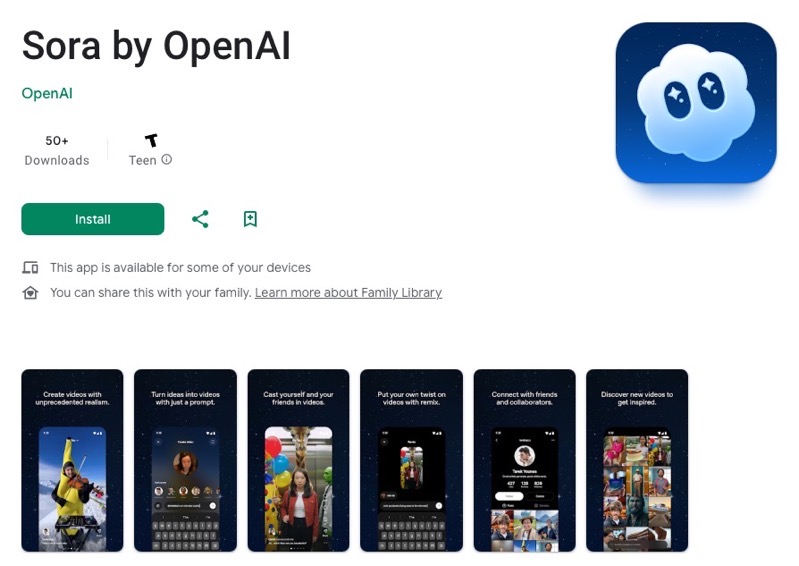
On December 15, 2024, OpenAI released the first generation of Sora, a text-to-video model and social media app, to the public for ChatGPT Plus and ChatGPT Pro users in the United States and Canada. This marked a significant milestone in the development of artificial intelligence technology, as Sora was capable of generating short video clips based on prompts and extending existing short videos. The release of Sora was preceded by a preview of its output in February 2024, which showcased the model’s capabilities to the public.
The Sora model used artificial intelligence to generate videos, and by default, it utilized copyrighted material in its videos unless copyright holders actively opted out of having their content included. To prevent misuse, the generated videos contained a visible, moving digital watermark. However, the effectiveness of this watermark was short-lived, as third-party programs became available just a week after the release of Sora 2, which could remove the watermark.
The second generation of Sora, released to select users in the US and Canada at the end of September 2025, integrated social media features into the app. This update expanded the capabilities of Sora, allowing users to interact with the model in new ways. The release of Sora 2 marked a significant update to the original model, and it demonstrated OpenAI’s commitment to continuously improving and expanding the capabilities of its technology.
Despite the advancements made with Sora, the app was shut down on April 26, 2026. This decision marked the beginning of the end of the Sora AI brand as a whole. Furthermore, the application programming interface (API) is planned to be discontinued on September 24, 2026, which will effectively bring an end to the Sora project. The shutdown of Sora and the planned discontinuation of its API raise questions about the future of text-to-video models and the challenges associated with developing and maintaining such technology.
The development and release of Sora demonstrate the rapid progress being made in the field of artificial intelligence. The ability to generate short video clips based on prompts and extend existing short videos has significant implications for a range of applications, from entertainment to education. As the technology continues to evolve, it will be important to address the challenges associated with copyright and misuse, as well as the potential impact on various industries and society as a whole.
Looking ahead, the shutdown of Sora and the discontinuation of its API will likely have implications for the development of future text-to-video models. As the field of artificial intelligence continues to advance, it will be important to watch for new innovations and developments in this area. The experience gained from the Sora project will likely inform the development of future models, and it will be interesting to see how the challenges associated with copyright and misuse are addressed in future releases. As the technology continues to evolve, it will be important to stay informed about the latest developments and advancements in the field of artificial intelligence.
The story of Sora serves as a reminder of the rapid pace of innovation in the field of artificial intelligence. As new technologies emerge and existing ones are discontinued, it is essential to stay informed about the latest developments and advancements. In the coming months, it will be important to watch for new releases and updates in the field of text-to-video models, as well as the potential impact of these technologies on various industries and society as a whole. By staying informed and up-to-date, we can better understand the implications of these advancements and prepare for the opportunities and challenges that they will bring.