
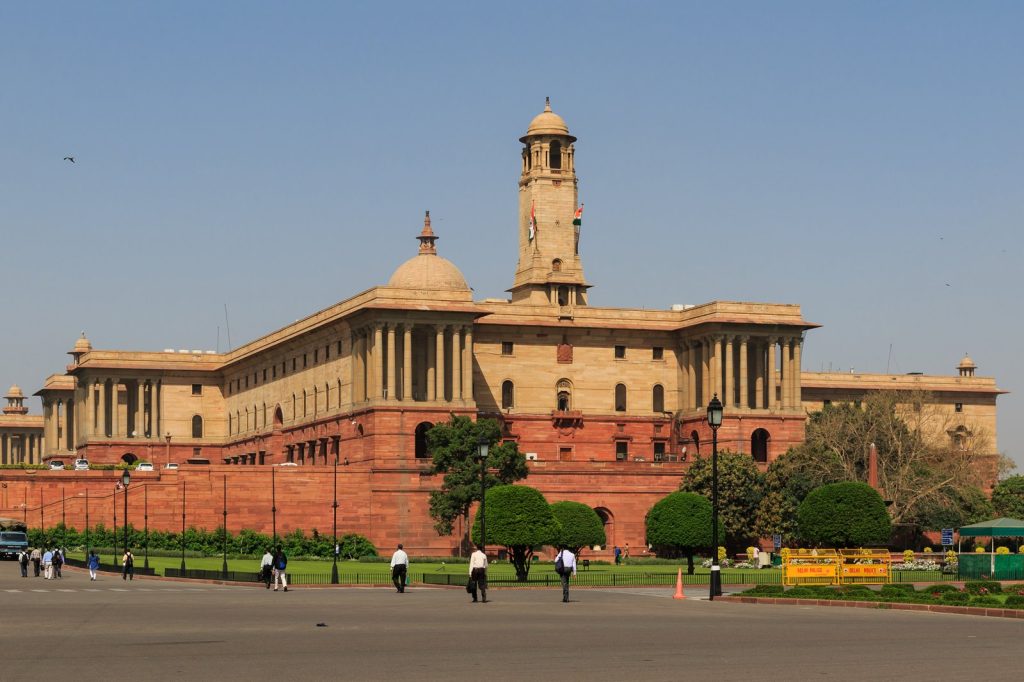
India has appointed a Central Pay Commission roughly once a decade since 1946, each one charged with reviewing pay and structure for federal civilian and defence employees. The commission is based in New Delhi and is expected to deliver its recommendations within 18 months of being constituted.
The first three
The first commission began work in January 1946 under Srinivasa Varadachariar and had nine members. It reported in May 1947 to the Interim Government of India. Armed forces pay was handled separately, by a departmental committee of service members, and the new pay code based on that committee’s work took effect on 1 July 1947.
The second commission was set up in August 1957, ten years after independence, and took two years to report. Its recommendations carried a financial impact of ₹39.6 crore. Jagannath Das chaired it.
Raghubar Dayal, a former Supreme Court justice, chaired the third. It was constituted in April 1970 and presented its findings in March 1973.
Fourth to sixth
The fourth commission, constituted in June 1983 under former Supreme Court judge P.N. Singhal, reported in three phases over four years. The cost to the government came to ₹1,282 crore. Its recommendations led the Rajiv Gandhi government to introduce Rank Pay for armed forces officers, ranging from ₹200 to ₹1,200. Because Rank Pay was deducted from the officer’s pay grade rather than added as an allowance, it upset the established parity between military and police services.
The fifth was notified on 9 April 1994 and became operational on 2 May, once its member secretary took charge. S. Ratnavel Pandian, a former Supreme Court justice, chaired it, and its final report reached the government in April 1997. Accepting it would have cost ₹17,000 crore. The report ran to nine parts and 172 chapters.
Several of its proposals went nowhere. It urged cutting the government workforce by about 30 percent, trimming pay scales from 51 to 34 and leaving about 350,000 vacant central posts unfilled. None of that was implemented.
The Cabinet approved the sixth commission in July 2006 and gave B.N. Srikrishna’s panel 18 months. It tabled its findings in March 2008, and the Union Cabinet approved them that August. Federal employees had threatened a nationwide strike over pay, pointing to rising inflation and faster wage growth in the private sector. Arrears were owed from January 2006 to September 2008. In 2008 nearly all government employees received 40 percent of those arrears, and the remaining 60 percent arrived in 2009. The commission consolidated pay scales into pay bands and recommended abolishing the Group-D cadre.
The seventh and eighth
The government approved the seventh commission on 25 September 2013, with A.K. Mathur, a former Supreme Court justice, in charge. On 19 November 2015 it recommended a 23.55 percent increase in pay and allowances, effective 1 January 2016. The Union Cabinet signed off on 29 June 2016, though the approved package amounted to roughly a 14 percent rise in salary.
Employees did get something earlier than before. Arrears were paid within the same financial year, 2016-17, and the wait for implementation was six months, against 19 months for the fifth commission and 32 for the sixth.
The armed forces were less pleased. In March 2016, eighteen former service heads, among them General Ved Prakash Malik and Admiral Arun Prakash, wrote jointly to the Prime Minister about the seventh commission’s recommendations. The government issued instructions in July 2016 implementing them, including separate pay matrices for civilians and the armed forces, without significant changes. Earlier, in May 2014, a group of retired officials had gone to the Delhi High Court over the inclusion of a senior IAS officer on the three-member panel, arguing it could bias the outcome toward IAS officers.
The Union Cabinet approved forming an eighth commission in January 2025, and Railways Minister Ashwini Vaishnaw announced it on 16 January. During the Monsoon Session on 21 July 2025, the Minister of State for Finance said inputs had been sought from the Ministry of Defence, the Ministry of Home Affairs, the Department of Personnel and Training and the states, and that a chairperson and members would be named once the commission was notified. Eight days later, replying to Rajya Sabha member Sagarika Ghose, Minister of State Pankaj Chaudhary said the government had decided to constitute the commission but had not yet issued the official notification.




