
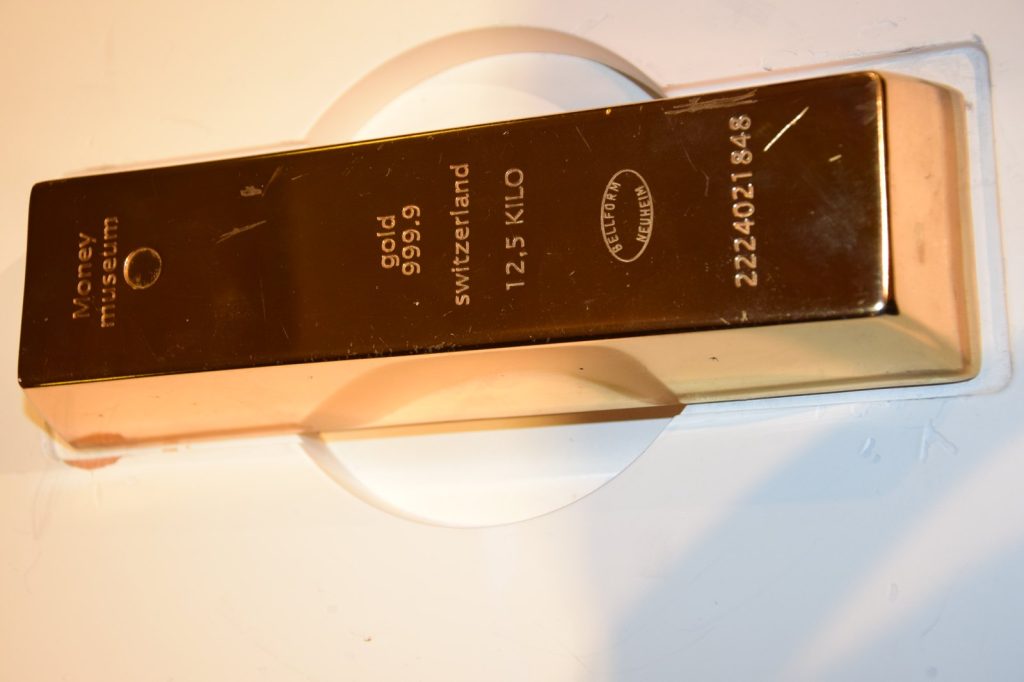
LONDON, July 21 — The shift is subtle but real: gold is no longer just the relics of vaults and central bank balance sheets. It has become a fully liquid, sentiment-driven asset class traded around the clock — and the numbers tell the story. Above-ground gold was pegged at roughly 158,000 tonnes at the end of 2006.
Annual mine production runs about 2,500 tonnes. Of that, roughly 2,000 tonnes go toward jewelry and industrial use, and 500 tonnes find their way into the hands of retail investors and exchange-traded funds.
What’s changing is that gold is no longer just a commodity or a currency peg. The trend underneath is about democratized access. ETFs let anyone buy a piece of the yellow metal without a safe deposit box.
And that shift fuels price moves in ways that pure supply and demand never could.
From Bretton Woods to the Swiss Franc
History anchors this metal like nothing else. Many European countries adopted gold standards in the late 19th century, only suspending them during World War I. After World War II, the Bretton Woods system locked the U.S. dollar to gold at $35 per troy ounce — until the Nixon shock in 1971, when the U.S. unilaterally ended convertibility.
The last major currency to divorce from gold was the Swiss franc in 2000. Since 1919, the London gold fixing has been the primary benchmark.
The metal trades continuously worldwide in over-the-counter markets under code XAU. Central banks are still heavy hitters. At the end of 2004, central banks and the International Monetary Fund held 19% of all above-ground gold as official reserves.
The Washington Agreement on Gold, signed in September 1999, capped sales by signatory central banks at under 400 tonnes per year. That cap was raised to 500 tonnes in 2009, cut again to 400 tonnes in 2014, and then — notably — not renewed in 2019.
Key sellers in the early years included the Bank of England and the Swiss National Bank. Russia expressed interest in growing its reserves as of late 2005. China held only 1.3% of its foreign reserves in gold in early 2006.
The Sentiment Engine
Supply is finite. Demand has clear channels: jewelry, industry, investor flows. But the real wild card is sentiment.
Because of the enormous above-ground stock, the annual flow of new gold is tiny compared to what’s already sitting in vaults, jewelry boxes, and central bank depositories. That means a small shift in sentiment — a rumor, a policy surprise, a geopolitical jolt — can move prices dramatically.
The gold price is driven by supply, demand, and speculative demand. And with the Washington Agreement expired since 2019, the regulatory guardrails that once constrained central bank sales are gone. Gold’s history as money is not just a museum piece.
It is a live asset that still interacts with monetary policy, trade flows, and the psychology of investors worldwide. As retail access via ETFs keeps widening, the trend underneath points to gold becoming even more integrated into modern portfolios — not less.
The shift is clear. How far it runs depends on the next wave of sentiment and policy decisions. Watch this space.
Sources
{“@context”: “https://schema.org”, “@type”: “NewsArticle”, “headline”: “Gold Reserves and Central Bank Sales: Managing Deficits with Bullion”, “description”: “LONDON, July 21 — The shift is subtle but real: gold is no longer just the relics of vaults and central bank balance sheets. It…”, “datePublished”: “2026-07-21T09:30:00+00:00”, “author”: {“@type”: “Person”, “name”: “Maria Romano”}, “publisher”: {“@type”: “Organization”, “name”: “InfoPulse Today”, “url”: “https://newsfeed.infopulsetoday.com/”}, “citation”: [{“@type”: “CreativeWork”, “url”: “https://en.wikipedia.org/wiki/Gold_as_an_investment”}]}




