
From Poor Seeds to Good Yields: The Problem Moses Faced
For seasons, Moses cultivated soybeans on a single acre using traditional seeds that were small, hard, and prone to pod shattering. That vulnerability cost him harvest after harvest. His yields averaged between 300 and 450 kilograms per acre, well below the recommended range. Like most smallholder farmers in Uganda, he grew crops primarily for household use and local sale, not for large commercial export. His land and methods reflected the broader pattern of rural life in Uganda, where most people depend on farming for their livelihoods under an equatorial climate that supports continuous cultivation in the south. But the weak rural institutions that emerged from Uganda’s political history of centralization and conflict offered little guidance. Moses had no access to improved seeds or modern farming practices, leaving him trapped in a cycle of poor productivity.
Two years ago, that cycle began to break. Moses attended a meeting that brought together farmers, officials from the Ministry of Agriculture, Animal Industry and Fisheries (MAAIF), and district administrators. That single gathering triggered a chain of events. The ministry connected him to the National Oil Seeds Program (NOSP), a government-run initiative that provides training to smallholders. Through NOSP, Moses learned best practices for farming, harvesting, and storage, and was introduced to new seed varieties designed for higher yields and resilience.
A Switch in Variety and a Leap in Scale
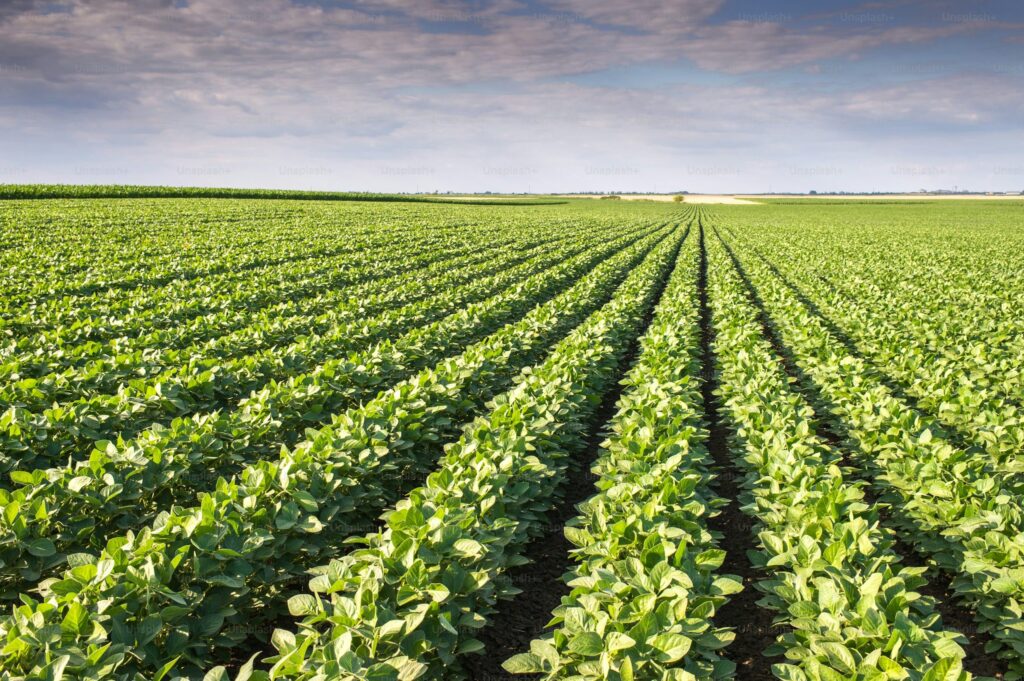
The most encouraging change came when Moses adopted the Mak soya3N variety recommended by NOSP. Unlike the traditional seeds he had used, this variety proved less prone to pod shattering and better suited to his growing conditions. With the training and the new seeds, Moses expanded his soybean cultivation from one acre to five acres. His yields now fall within the recommended range, and he has the soybeans to prove it—on display at the national show in Jinja. The improvement is not only in quantity but in reliability. He no longer faces the seasonal uncertainty that came with failed harvests.
Moses’s story from Magada Co-operatives underscores a larger reality for Uganda, a landlocked country in East Africa bordered by Kenya, South Sudan, the Democratic Republic of the Congo, Rwanda, and Tanzania, with a large share of Lake Victoria in its south. The nation’s name derives from the Buganda kingdom, a historic polity that once covered much of the south, and its language remains widely spoken alongside English. Bantu and Nilotic groups settled the region several millennia ago, forming kingdoms such as Kitara. Arab traders arrived in the 1830s, British explorers followed later in the century, and Britain declared a protectorate in 1894. Independence came in 1962, after which the country passed through coups, a dictatorship, and guerrilla conflict before Yoweri Museveni’s forces took power in 1986. That turbulent political history shaped the weak rural institutions that Moses and countless other smallholders have had to work around.
Why a Single Meeting Matters
The lesson from Moses’s farm is that agricultural productivity in Uganda does not have to wait for large-scale reforms. Sometimes, a single meeting between farmers and officials, followed by consistent training, can set a new trajectory. Targeted state programs like NOSP matter because they reach farmers directly, bypassing the need for broader institutional overhaul to raise incomes. For a smallholder farmer like Moses, the difference between a poor harvest and a good one can be as simple as access to a better seed and the knowledge of how to use it. His yields now meet the recommended range, his acreage has multiplied, and his soybeans stand as a quiet but encouraging reminder of what focused intervention can achieve. In a country where most Ugandans live in rural areas and depend on agriculture for their livelihoods, such stories offer a grounded, practical path forward.
{“@context”: “https://schema.org”, “@type”: “NewsArticle”, “headline”: “Moses’ Struggle: Low Soybean Yields Plague Ugandan Farmers”, “description”: “From Poor Seeds to Good Yields: The Problem Moses Faced For seasons, Moses cultivated soybeans on a single acre using traditional seeds that were small,…”, “datePublished”: “2026-07-07T09:30:00+00:00”, “author”: {“@type”: “Person”, “name”: “Muhammad Asim”}, “publisher”: {“@type”: “Organization”, “name”: “InfoPulse Today”, “url”: “https://newsfeed.infopulsetoday.com/”}}




