
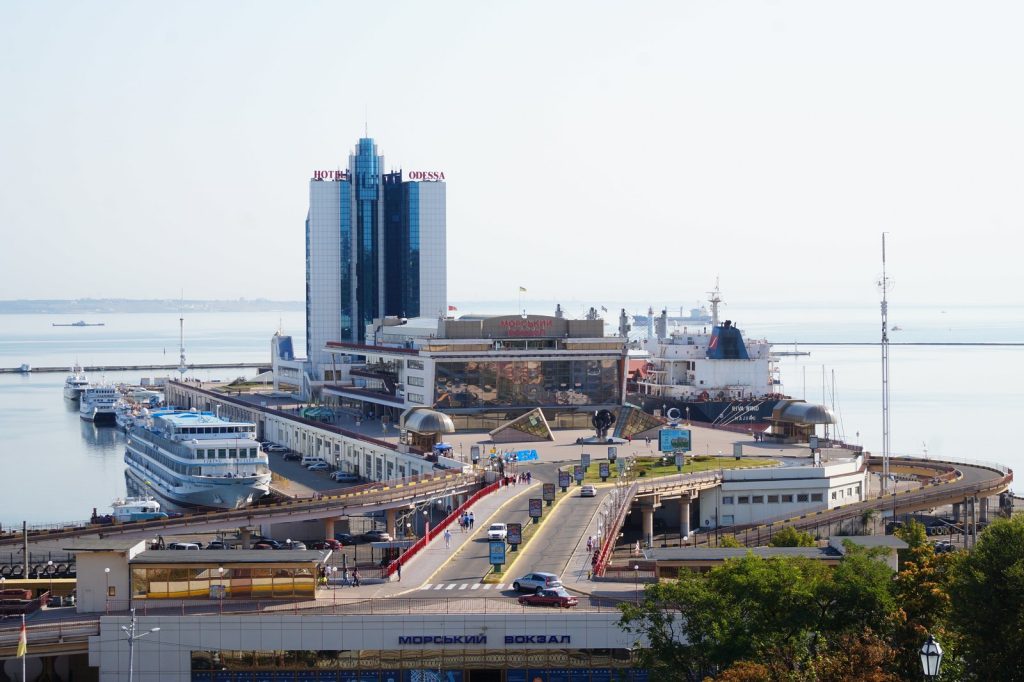
KYIV, July 15 — Against this backdrop of grinding war, the story of Ukraine’s Black Sea grain corridor is one of quiet defiance and tangible success. When Moscow walked away from the UN-brokered Black Sea Grain Initiative in July 2023, the expectation in many capitals was that Ukraine’s agricultural exports would be effectively strangled. What has unfolded since is a different narrative entirely.
In August 2023, Kyiv established its own humanitarian corridor along the western Black Sea coast. The route was carefully charted to hug the shores of Ukraine, Romania, and Bulgaria, staying within the territorial waters of NATO allies wherever possible.
It was a calculated gamble—a maritime lifeline laid through waters still thick with danger.
A corridor that works
The numbers speak to the scale of the operation. As of early 2025, over 30 million metric tons of grain and other agricultural products have been exported via this route. That is not merely a Ukrainian success; it is a global one.
The corridor has also enabled the export of steel, iron ore, and other commodities vital to Ukraine’s war-battered economy. What is at stake here goes well beyond the balance sheets of Ukrainian farmers.
In mid-2023, Russia’s blockade had caused grain prices to spike by 20-30 per cent, sending shockwaves through markets from Cairo to Jakarta. Ukraine’s Deputy Prime Minister Oleksandr Kubrakov stated in January 2025 that the corridor has been a key factor in stabilizing global food prices. The wider picture is clear: this is not just a trade route; it is a buffer against hunger and political instability in the developing world.
Risk and resilience
The corridor is protected by Ukrainian naval forces, including minesweepers and coastal artillery. The risks have not vanished, but they have measurably diminished. Insurance costs for ships using the corridor have dropped from 20 per cent of hull value to 5 per cent as risks decreased.
That is a dramatic shift in the calculus of war-risk insurance, and it signals a growing confidence among commercial shippers. In the corridors of maritime trade and international diplomacy, this corridor has become a quiet but potent symbol.
It demonstrates that even without the formal blessing of a UN-brokered deal, determined action—backed by capable naval forces and the tacit security umbrella of NATO territorial waters—can break a blockade. The success has reduced the impact of Russia’s original stranglehold on Ukraine’s ports. The question now is whether this route can be sustained and expanded.
The corridor remains a wartime measure, dependent on continued Ukrainian naval capability and the forbearance of its Black Sea neighbours. For the moment, however, it has given Kyiv a vital economic artery—and the world a reason to watch the western Black Sea with renewed attention.
Sources
{“@context”: “https://schema.org”, “@type”: “NewsArticle”, “headline”: “Ukraine’s Grain Corridor: Maritime Lifeline After Russia’s Blockade”, “description”: “KYIV, July 15 — Against this backdrop of grinding war, the story of Ukraine’s Black Sea grain corridor is one of quiet defiance and tangible…”, “datePublished”: “2026-07-15T09:30:00+00:00”, “author”: {“@type”: “Person”, “name”: “Beatrice Bianchi”}, “publisher”: {“@type”: “Organization”, “name”: “InfoPulse Today”, “url”: “https://newsfeed.infopulsetoday.com/”}, “citation”: [{“@type”: “CreativeWork”, “url”: “https://en.wikipedia.org/wiki/Black_Sea_Grain_Initiative”}]}




