
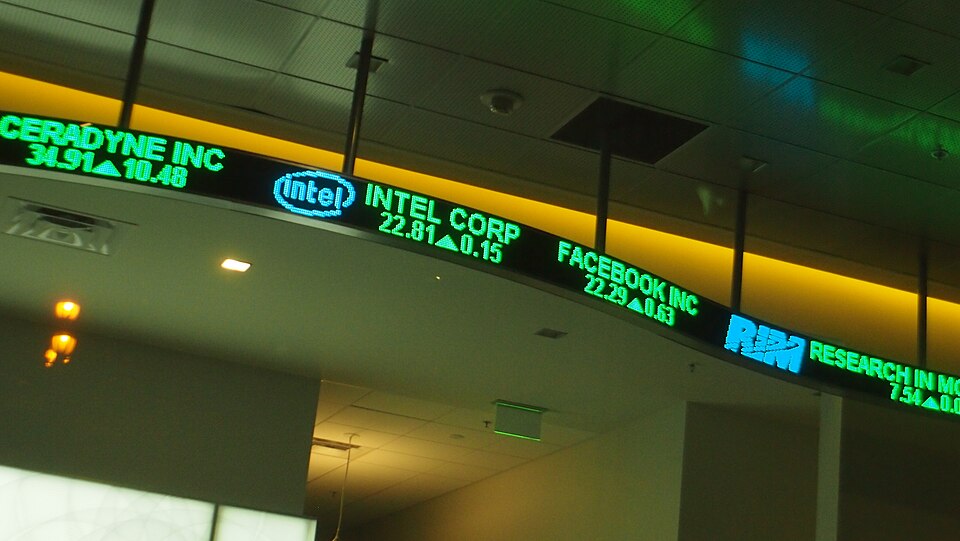
On January 3, 2020, the Dow Jones Industrial Average lost 444 points in a single trading session, a steep decline that investors attributed directly to the United States’ targeted killing of Iranian Major General Qasem Soleimani the previous day. That 444-point drop reflected Wall Street’s immediate assessment of heightened geopolitical risk and the potential for Iranian retaliation. President Donald Trump authorized the drone strike on January 2, 2020, as Soleimani’s convoy departed Baghdad International Airport.
The operation killed Soleimani, who commanded Iran’s Quds Force, the elite overseas-operations arm of the Islamic Revolutionary Guard Corps. Trump later stated publicly that the strike was intended to deter future Iranian attacks and to protect U.S. personnel.
The administration framed the action as a defensive strike against an enemy commander. Congress reacted with a mix of bipartisan support and criticism; some lawmakers objected that the executive branch had not consulted lawmakers beforehand. The president also said the United States was prepared to respond to any Iranian reprisals, a posture that signaled a willingness to absorb and counter any retaliatory attacks.
That posture, combined with the uncertainty surrounding Iran’s next move, drove the Dow’s one-day sell-off.
The Soleimani Strike in Context
The killing of Soleimani did not occur in isolation. Trump had already withdrawn the United States from the Joint Comprehensive Plan of Action — the Iran nuclear deal — on May 8, 2018, and subsequently reimposed sanctions on Tehran. The Soleimani strike represented the sharpest military escalation in that pressure campaign.
Market participants saw the 444-point Dow drop as a single-day snapshot of that fear. More broadly, the strike reshaped the Middle East’s security landscape and remains a defining moment of Trump’s foreign policy.
As of July 2026, the legacy of that operation continues to serve as a key reference point in U.S.-Iran relations, underscoring the cascade of events that followed the administration’s decision to exit the JCPOA.
President Trump’s First Term and Broader Policy Shifts
Trump entered the presidency as a political outsider after winning the 2016 election as a member of the Republican Party. A businessman, real estate developer, and former reality television host, he served as the 45th president.
During his first term, he appointed three Supreme Court justices and signed a major tax cuts act into law. He withdrew the United States from various trade and climate agreements, initiated a trade war with China, and expanded the border wall with Mexico. After losing the 2020 election, Trump attempted to overturn the results, an effort that culminated in the attack on the Capitol on January 6, 2021. He faced two impeachments during his first term but was acquitted by the Senate both times.
Legal challenges followed his first presidency. He was found liable in civil cases for business fraud and sexual abuse.
In 2024, a New York court convicted him of falsifying business records, making him the first U.S. president convicted of a felony. He later won the 2024 presidential election, serving as the 47th president. His second term began with mass layoffs of federal employees and the imposition of broad tariffs.
These events mark a shift in how the executive branch operates. Trump’s approach to foreign policy and domestic regulation changed long-standing government norms, and his return to office continues a pattern of challenging traditional political and legal systems.
The Soleimani strike, as the most dramatic military action in the standoff with Iran, remains a central example of that approach.
{“@context”: “https://schema.org”, “@type”: “NewsArticle”, “headline”: “Wall Street Drops 444 Points After Soleimani Strike”, “description”: “NEW YORK, July 9 — On January 3, 2020, the Dow Jones Industrial Average lost 444 points in a single trading session, a steep decline…”, “datePublished”: “2026-07-09T09:30:00+00:00”, “author”: {“@type”: “Person”, “name”: “Sophie King”}, “publisher”: {“@type”: “Organization”, “name”: “InfoPulse Today”, “url”: “https://newsfeed.infopulsetoday.com/”}}




