
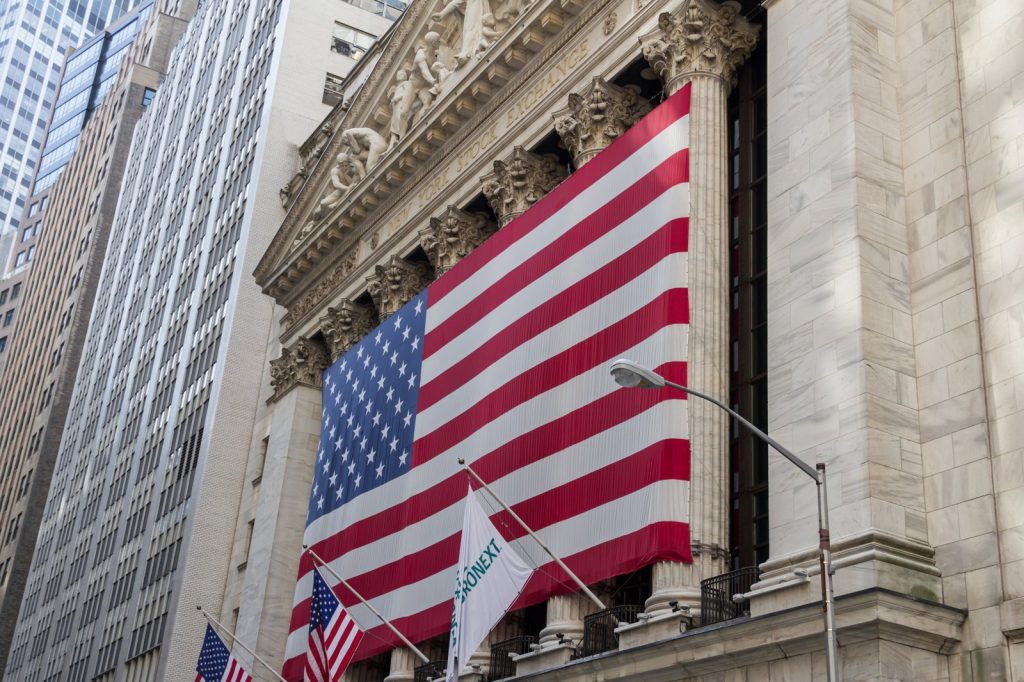
In the opening days of 2020, Wall Street was reminded that international crises can upend markets with little warning. On January 3, the Dow Jones Industrial Average plunged 444 points, settling at 28,634.88.
That 1.5 percent decline represented the index’s worst single-day showing in four weeks. The sell-off was not confined to the Dow alone. The S&P 500 also shed 1.5 percent, while the Nasdaq Composite fell 1.3 percent.
The catalyst was a sudden escalation in tensions between the United States and Iran, a geopolitical flashpoint that sent traders scrambling. Fear spread quickly through the financial system, and the numbers captured it precisely.
The CBOE Volatility Index, widely known as the VIX or the “fear gauge,” surged 16 percent to 14.02. That jump signaled that market participants were bracing for further disruptions, even if the precise course of events remained uncertain. The episode demonstrated how quickly a shift in the security landscape can reset investor sentiment, regardless of the broader economic backdrop.
Investors Flock to Safe Havens as Oil Prices Climb
In times of heightened uncertainty, money typically flows toward assets perceived as stable storehouses of value, and this sell-off was no exception. Gold prices advanced 1.6 percent, reaching $1,552.50 per ounce. At the same time, demand for U.S. government debt pushed the yield on the 10-year Treasury note down to 1.79 percent from 1.88 percent the previous day.
When bond prices rise, yields fall, and that move reflected a broad appetite for safety among institutional and individual investors alike. Crude oil experienced one of the most consequential moves of the day.
Prices jumped 3.1 percent, closing at $63.05 per barrel. The reason for such a pronounced spike was rooted in geography and logistics. Roughly 20 percent of the world’s oil supply transits the Strait of Hormuz, a narrow waterway that has long been a chokepoint for global energy markets.
Any conflict involving Iran raised the very real possibility of supply disruptions. Traders responded to that risk by bidding up the price of crude, betting that even the threat of instability could tighten supply chains in the near term.
Historical Precedent Suggests Temporary, Not Lasting, Damage
For all the drama of that single trading day, the market’s reaction appeared relatively contained when measured against past geopolitical crises. The 1990 Iraqi invasion of Kuwait, for example, drove the Dow down 17 percent.
That decline, however, proved temporary, with the index recovering fully within months. The 2020 sell-off was only a fraction of that magnitude, suggesting that investors were weighing the probability of a full-scale war rather than assuming the worst outcome. The episode underscored a lesson that market veterans know well: major geopolitical events routinely cause short-term declines, but U.S. equity markets have historically bounced back within weeks.
This pattern has held across multiple cycles of boom and bust, war and peace, providing some reassurance even in moments of acute stress. Still, the rapidity of the January 3 reaction highlighted how sensitive the Dow can be to headline risk, particularly when the underlying situation remains fluid.
The Dow Jones Industrial Average itself has a long and storied history. First calculated in 1896, it is one of the oldest equity benchmarks in the United States. Charles Dow, a co-founder of the Wall Street Journal, created it alongside statistician Edward Jones.
Today, the index is maintained by S&P Dow Jones Indices, an entity majority-owned by S&P Global. Unlike broader indices such as the S&P 500, the Dow is price-weighted.
That means the stock price of each component, rather than the company’s total market value, determines its influence on the index. A single high-priced stock can therefore move the Dow more than a giant company with a lower share price. The index also contains far fewer stocks than most major benchmarks, which can concentrate risk but may also reduce volatility because all its components are well-established large-cap firms.
For individual investors, these structural quirks matter. Because the Dow tracks only 30 companies, movements in a handful of stocks can mask broader market trends.
Understanding how the index works helps readers interpret daily market news and assess whether a drop represents a fleeting panic or something more lasting. The January 2020 sell-off, while sharp, fit the historical pattern of temporary geopolitical disturbances rather than a sustained downturn.




