
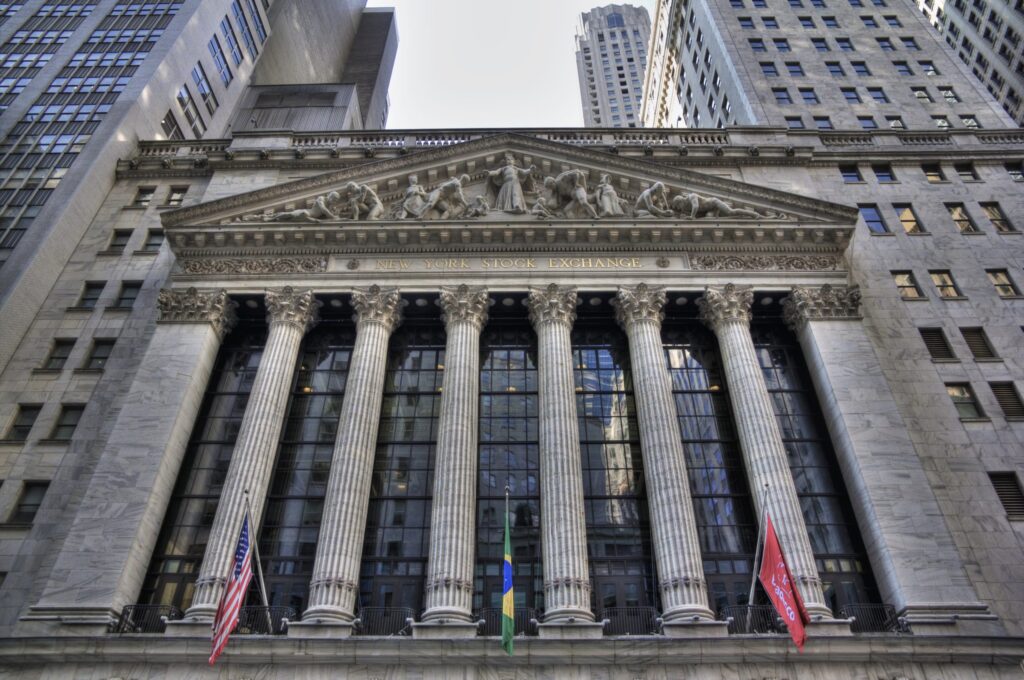
The stock market today is an intricate digital ecosystem where roughly two-thirds of all trades are executed by computer algorithms, but its foundation was laid more than four centuries ago on a far simpler trading floor in Amsterdam. At its core, a stock market remains a marketplace where buyers and sellers exchange shares of ownership in publicly held companies, with prices set by supply and demand. This system allows companies to raise capital by selling ownership stakes, while investors gain a claim on future profits and voting rights on corporate matters.
The value of all publicly traded companies worldwide has risen enormously over the decades, with most of that market concentration now in North America, Europe, and Asia. For ordinary Americans, the stock market frequently serves as a barometer of economic health and a primary vehicle for retirement savings, pension funds, and long-term investment.
Origins of Modern Stock Markets
The modern stock market traces its roots to the Amsterdam Stock Exchange, founded in 1602 by the Dutch East India Company, which issued the first tradable shares. On Wall Street, the history is more recent but no less consequential.
The New York Stock Exchange was founded in 1792 under the Buttonwood Agreement, signed by 24 brokers under a tree on Wall Street. That agreement established the framework for organized securities trading in the United States. The Dow Jones Industrial Average followed in 1896, introduced by Charles Dow and initially comprising just 12 industrial stocks.
The 1929 stock market crash exposed the vulnerabilities of an unregulated market, revealing deep flaws that prompted Congress to take action. In response, Congress passed the Securities Act of 1933 and the Securities Exchange Act of 1934, which created the Securities and Exchange Commission in 1934.
The SEC’s establishment marked a pivotal shift toward federal oversight of the securities industry. Decades later, the NASDAQ launched in 1971 as the world’s first electronic stock exchange, paving the way for today’s high-speed trading environment.
The Instruments and Tools of Modern Investing
The tools available to investors have expanded dramatically since the early days of simple stock and bond trading. Individual stocks and bonds remain the foundation, but mutual funds were first introduced in 1924 by MFS Investment Management, giving ordinary investors a way to pool their money and diversify across many securities. Exchange-traded funds arrived much later, with the first ETF — the SPDR S&P 500 ETF — launching in 1993. The S&P 500 index itself now represents about 500 of the largest U.S. publicly traded companies and is widely used as a benchmark for the overall market.
The rise of electronic trading and these new investment products has made it easier for individuals to participate in the market. The NASDAQ’s debut in 1971 as the world’s first fully electronic exchange established the technological foundation for the algorithmic revolution that would follow.
Why this history matters now is straightforward: stock markets have grown into a central pillar of the global economy, channeling trillions of dollars from savers to businesses. A handful of major exchanges now represent the vast majority of the value of all publicly traded companies worldwide.
Algorithmic Trading and the Retail Surge
Perhaps the most significant structural shift in recent decades has been the rise of algorithmic trading. According to a 2020 report by the Bank for International Settlements, algorithmic trading now accounts for approximately 60 to 73 percent of U.S. equity trading volume. This means that the vast majority of daily transactions on American exchanges are executed by computer programs rather than human traders.
The COVID-19 pandemic triggered a surge in retail investing as locked-down Americans turned to trading. Platforms like Robinhood, founded in 2013, added millions of new accounts during that period.
What this all signals is a market that is both more accessible and more complex than at any point in its history. The architecture built in Amsterdam in 1602, refined on Wall Street in 1792, and digitized in 1971 continues to evolve. For ordinary readers, understanding this evolution is not merely academic — it reflects fundamental changes in how retirement savings, pension funds, and long-term investments are managed in an increasingly algorithmic marketplace.
{“@context”: “https://schema.org”, “@type”: “NewsArticle”, “headline”: “Stock market’s digital evolution rooted in historic trading floors”, “description”: “NEW YORK, July 14 — The stock market today is an intricate digital ecosystem where roughly two-thirds of all trades are executed by computer algorithms,…”, “datePublished”: “2026-07-14T09:30:00+00:00”, “author”: {“@type”: “Person”, “name”: “Ava Anderson”}, “publisher”: {“@type”: “Organization”, “name”: “InfoPulse Today”, “url”: “https://newsfeed.infopulsetoday.com/”}}




