
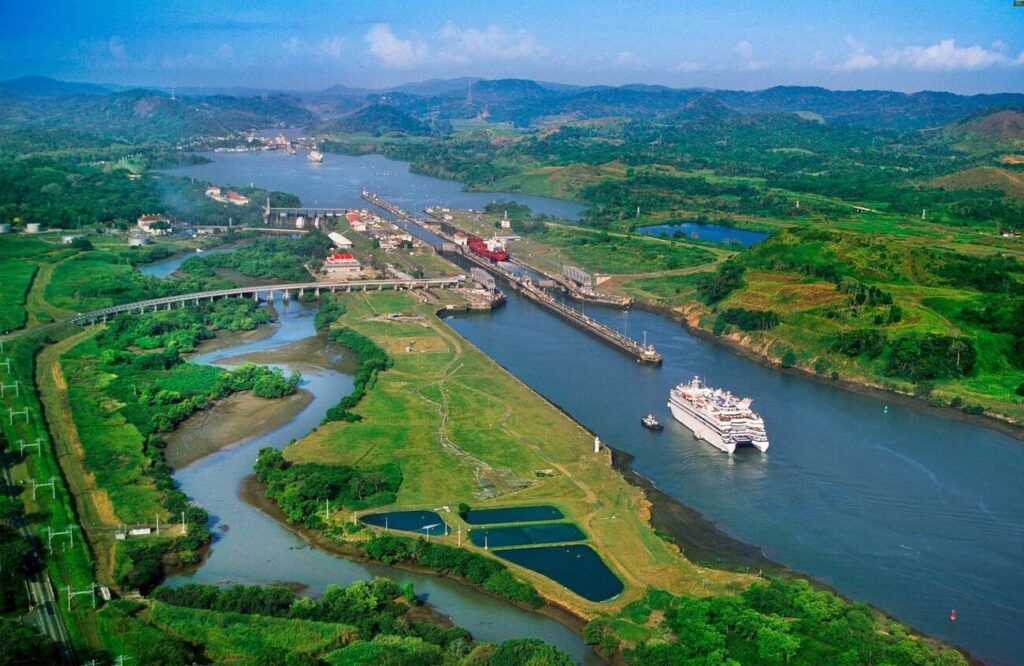
MUMBAI, July 15 — For Asian shippers and energy buyers, the Panama Canal remains a narrow bottleneck with outsized consequences. The waterway that carries electronics, clothing and auto parts from China, Japan and South Korea to the US East Coast is also the primary conduit for American liquefied natural gas heading to Asian markets — a trade flow that hit 1.2 billion cubic feet per day through the canal in 2023. The canal’s importance to Asia is indirect but structural.
Approximately 73% of all canal traffic originates from or is destined for US ports, according to the Panama Canal Authority. That means any disruption — drought restrictions, toll hikes, geopolitical tension — immediately ripples into supply chains that connect Asian factories to American consumers.
In fiscal year 2023, the canal transited 14,080 vessels carrying 511 million tons of cargo.
The numbers that matter
The canal handles about 40% of all US container traffic. The top US ports using the waterway include Houston, New Orleans and Savannah — all key nodes for agricultural and energy exports. For Asian importers of US grain and LNG, the canal is not optional; it is the fastest maritime route between the US Gulf Coast and East Asia.
Tolls are set by the Panama Canal Authority, which adjusts them annually. In 2023, the average toll per container ship was about $150,000.
Some large Neopanamax vessels — the bigger ships that the canal’s 2016 expansion was designed to accommodate — paid over $500,000 per transit. Those costs are ultimately borne by shippers and, in many cases, passed on to Asian buyers.
Drought and disruption
The canal faced severe drought-related transit restrictions in 2023 and 2024. The result was a sharp rise in shipping rates — up to 20% for some routes, according to industry data. For Asian importers of US LNG, the timing was particularly painful.
The 2016 expansion had opened the canal to Neopanamax LNG carriers, dramatically increasing the volume of US gas reaching Asia. When drought forced the canal to limit daily transits, those gains were partially reversed.
The canal competes directly with the Suez Canal and with US transcontinental rail routes for cargo moving between Asia and the US East Coast. Each route has different cost and time trade-offs. The Panama route remains the shortest for many Asian-origin goods, but its vulnerability to climate-related water shortages is now a known risk for logistics planners in Mumbai, Shanghai and Tokyo.
Analysts note that the canal’s toll structure and transit reliability will remain under scrutiny as Asian supply chains diversify. The US is the canal’s dominant user, but the implications for Asian exporters and energy buyers are direct.
When the canal tightens, Asian supply chains feel it first.
Sources
{“@context”: “https://schema.org”, “@type”: “NewsArticle”, “headline”: “Panama Canal’s Role in US Trade: 73% of Traffic Originates from or”, “description”: “MUMBAI, July 15 — For Asian shippers and energy buyers, the Panama Canal remains a narrow bottleneck with outsized consequences. The waterway that carries electronics,…”, “datePublished”: “2026-07-15T09:30:00+00:00”, “author”: {“@type”: “Person”, “name”: “Arjun Mehta”}, “publisher”: {“@type”: “Organization”, “name”: “InfoPulse Today”, “url”: “https://newsfeed.2bme.xyz/”}, “citation”: [{“@type”: “CreativeWork”, “url”: “https://en.wikipedia.org/wiki/Panama_Canal_Authority”}]}




