
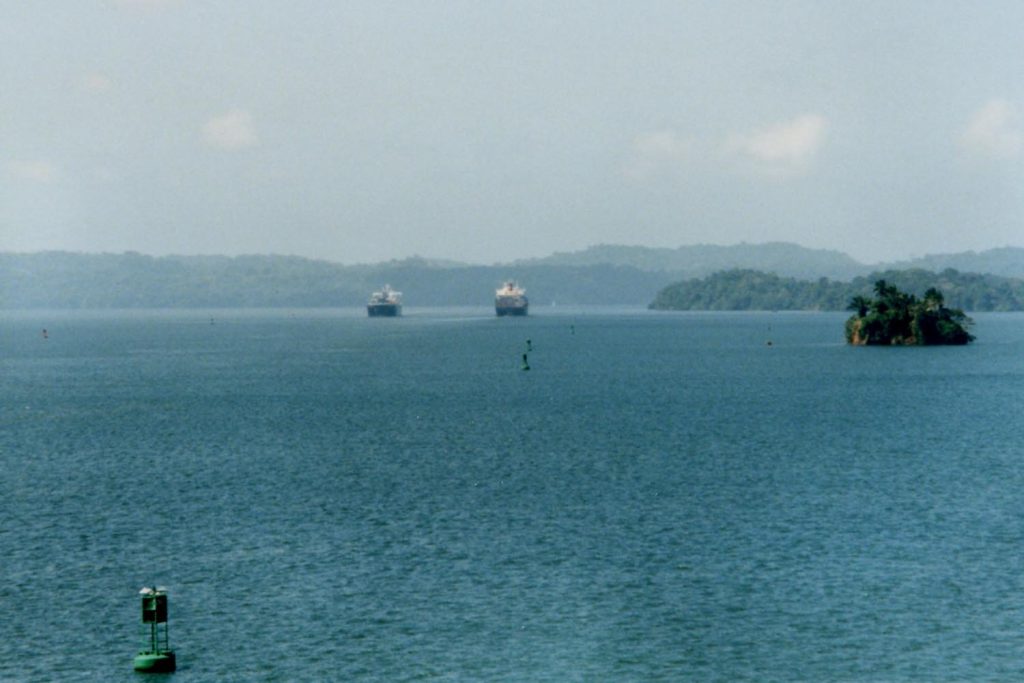
PANAMA CITY, July 15 — The drought that gripped Gatun Lake in 2023 and 2024 has quietly reshaped how the world thinks about one of global trade’s most vital arteries. Gatun Lake, an artificial body created between 1907 and 1913 by damming the Chagres River, serves as the primary water source for the Panama Canal’s lock operations. Think of it like the fuel tank for a massive cargo ship — without enough water in the lake, the canal simply cannot function at full capacity.
The lake covers 164 square miles and holds about 5.2 billion cubic meters of water at normal levels. In 2023 and 2024, a severe drought linked to El Niño conditions reduced rainfall by 30–50% below historical averages.
The practical upshot: Gatun Lake’s water level dropped to record lows. By November 2023, the water level fell to 79.3 feet above sea level, near the historic low of 78.8 feet set in 2016.
How the canal responded
The Panama Canal Authority, known as the ACP, imposed transit restrictions that rippled through global shipping. Normally, the canal handles 36–38 vessels per day. By December 2023, that number had fallen to as few as 22 per day.
The restrictions also reduced the maximum draft — essentially the depth a ship sits in the water — from 50 feet to 44 feet. In plain terms, ships had to carry less cargo to ride higher in the shallower water.
The result was a backlog of over 100 vessels waiting to transit in November 2023. Ships lined up at both entrances, burning fuel and time. The ACP implemented water conservation measures, including cross-filling lock chambers and using water-saving basins.
These are engineering tricks to reuse water rather than dumping it into the sea after each transit.
What the drought exposed
The drought highlighted the canal’s vulnerability to climate change. Here’s what it means: a system designed more than a century ago now faces weather patterns its builders never anticipated. The ACP has discussed building a new reservoir on the Indio River or using desalination to supplement water supply.
Both options carry enormous costs and environmental trade-offs. In 2024, rainfall improved, allowing the ACP to gradually increase transits to 27 per day by June 2024.
That is still well below normal capacity, but it marks a recovery from the worst of the crisis.
What to watch next
The question now is whether the canal can secure a more reliable water supply before the next severe drought hits. The discussions around the Indio River reservoir and desalination are not academic — they are about whether the canal can maintain its role as a linchpin of global trade. For the ships that carry everything from electronics to grain, the water level in Gatun Lake is not just an environmental statistic.
It is the difference between a smooth passage and a costly delay.
Sources
{“@context”: “https://schema.org”, “@type”: “NewsArticle”, “headline”: “Panama Canal Drought Cuts Transits as Gatun Lake Levels Drop”, “description”: “PANAMA CITY, July 15 — The drought that gripped Gatun Lake in 2023 and 2024 has quietly reshaped how the world thinks about one of…”, “datePublished”: “2026-07-15T09:30:00+00:00”, “author”: {“@type”: “Person”, “name”: “Erika Johnson”}, “publisher”: {“@type”: “Organization”, “name”: “InfoPulse Today”, “url”: “https://newsfeed.infopulsetoday.com/”}, “citation”: [{“@type”: “CreativeWork”, “url”: “https://en.wikipedia.org/wiki/Gatun_Lake”}]}




