
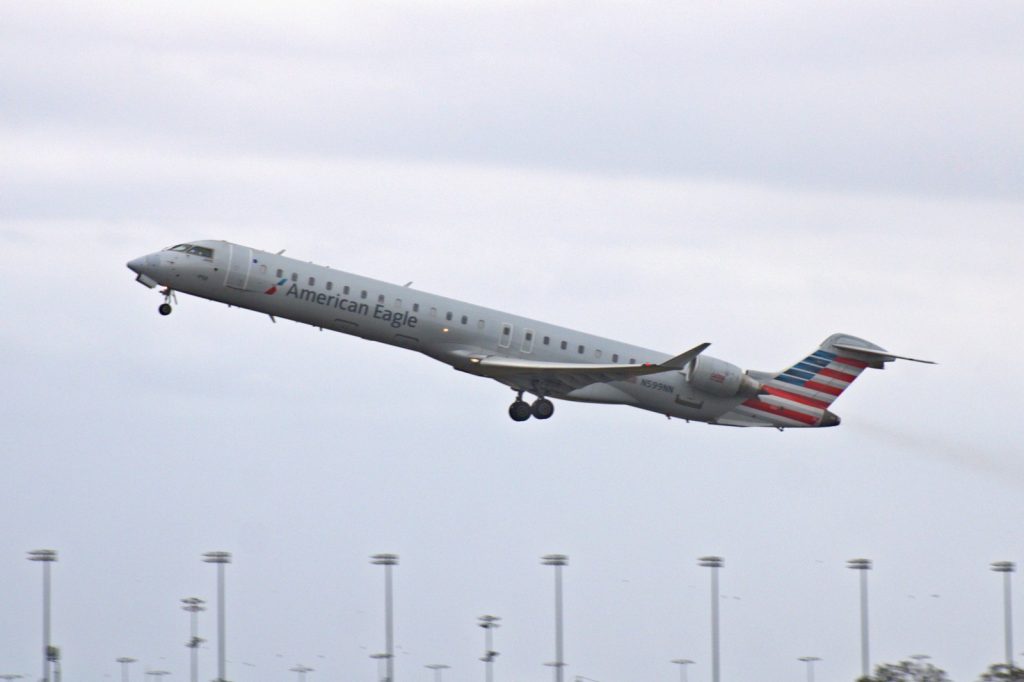
A routine landing at LaGuardia Airport turned catastrophic on March 22, 2026, when an Air Canada Express flight collided with a firetruck on the runway. The aircraft, a Bombardier CRJ900LR, was completing what should have been its final approach.
Instead, the crash killed two pilots and injured 41 others. The CRJ900LR involved in the accident was a stretched variant of the CRJ700, a regional jet program that began under the CRJ-X banner in 1994. The CRJ700 first flew on May 27, 1999.
For more than two decades, these aircraft served as the backbone of regional air travel across North America, shuttling passengers between major hubs and smaller cities. They were designed for reliability and efficiency, operating day after day, year after year.
The CRJ program is now a closed chapter. Mitsubishi Aircraft Corporation acquired the program from Bombardier in 2020, and production soon ended. Assembly lines stopped, and engineering teams dispersed.
Today, only a fleet of used aircraft remains, still flying for airlines worldwide. The plane that crashed at LaGuardia was one of these.
When an aircraft type goes out of production, the support ecosystem changes. Parts become harder to source, and institutional knowledge fades. Airlines that continue flying these planes must work harder to maintain them.
However, the accident report so far points not to a mechanical failure but to a collision with ground equipment—a firetruck on the runway that the pilots did not avoid. The central questions now involve coordination.
How did a firetruck end up in the path of a landing jet? Who was communicating with whom? Air traffic control, airport operations, and the flight crew form a triangle where communication apparently broke down.
LaGuardia is a crowded, constrained airport on a small piece of land in Queens. Its runways are short, taxiways are tight, and the margin for error is thin.
Investigators will examine the sequence of events. They will pull radio transcripts, radar data, and interview everyone on duty. The goal is to identify the exact point where the system failed. No pilot wakes up intending to hit a firetruck, and no controller plans to clear a vehicle into a landing path.
But it happened. The broader picture is uncomfortable.
Aviation safety has improved dramatically over decades, and fatal accidents are rare. But when they occur, they often involve the same root causes: communication errors, procedural lapses, and unchecked assumptions. The LaGuardia crash fits that pattern—a regional jet, a routine landing, and emergency equipment in the wrong place at the wrong time.
The CRJ900LR wreckage will be studied for years, but the real lessons will come from the human side: conversations that did not happen, warnings that were not heard, and split-second decisions that ended in disaster. Two pilots are dead, 41 people are injured, and an aircraft that survived decades of service is now debris.
The airport will review its procedures, the airline its training, and regulators the rules. That is how the system learns—from its dead.




