
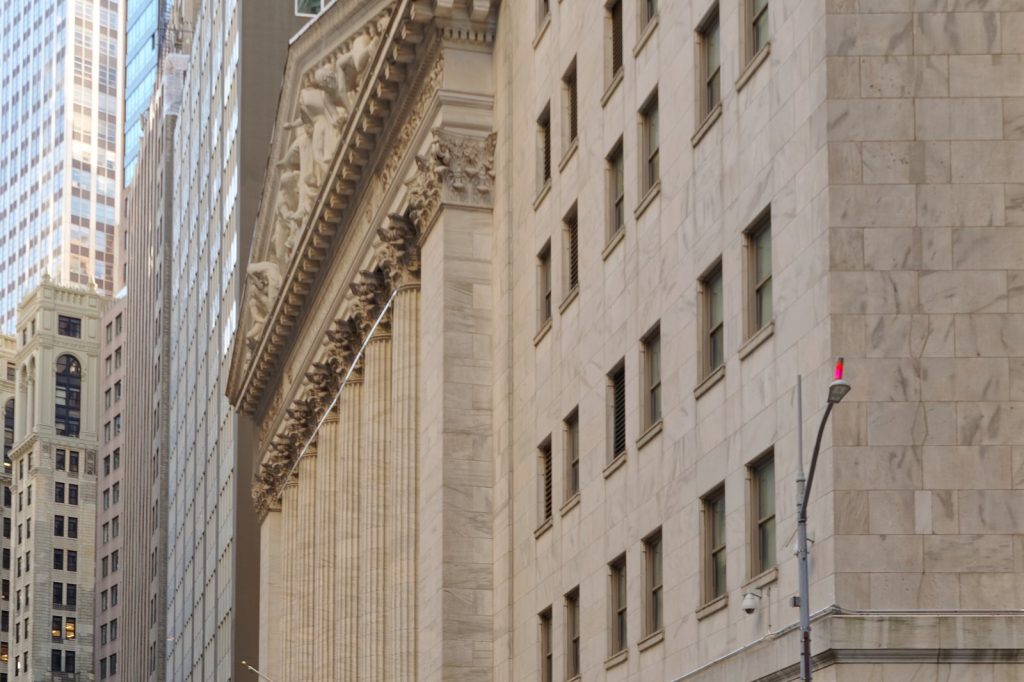
NEW YORK, July 18 — The noise hits first. On the floor of the New York Stock Exchange, the clatter of keyboards, the bark of traders, the flicker of screens showing prices for thousands of publicly traded stocks. This is the secondary market in action — the aftermarket where previously issued financial instruments are bought and sold every trading day.
It is a world away from the primary market, where new securities are first issued by an issuer to a purchaser and the proceeds go to the issuer. In these primary issuances, an underwriter often buys securities directly from corporations — such as in an initial public offering or private placement — and then resells them to other buyers, earning a fee.
Government treasuries may be sold directly to buyers. The money flows to the company or the government, not to a trader on a floor. Secondary market trading involves one investor selling to another.
Little impact on the originating company. The stock changes hands; the corporation gets no new cash.
But without this aftermarket, those first sales in the primary market would be far harder to make. The secondary market provides the exit door that makes the entrance possible.
What Is the Secondary Market?
The secondary market, also called the aftermarket, is the financial market where previously issued financial instruments — such as stocks, bonds, options, and futures — are bought and sold. It covers a variety of assets, from stocks to loans, and can be fragmented or centralized, illiquid or very liquid. Major stock exchanges such as the New York Stock Exchange, London Stock Exchange, and Nasdaq Stock Market are the most visible liquid secondary markets for publicly traded stocks.
Here, on a given day, shares change hands between investors with little direct involvement from the companies that issued them. But the aftermarket is not all bright lights and trading floors.
Most bonds and structured products trade over the counter, via phone with a broker-dealer. Loans sometimes trade online through loan exchanges. Another usage of the term refers to mortgage loans sold by mortgage banks to investors such as Fannie Mae and Freddie Mac.
The term also applies to markets for used goods or alternative uses of products, such as corn used for ethanol production.
From Stocks to Used Goods
The breadth of the secondary market is striking. On one end, there is the liquidity of exchanges such as Nasdaq, where stocks trade each day. On the other, there is the fragmented world of over-the-counter bond trading, where a trader negotiates a price.
Loans sometimes trade online through loan exchanges, a quieter corner of the market but one that serves a crucial function. Mortgage loans sold by mortgage banks to investors such as Fannie Mae and Freddie Mac represent another layer — a secondary market for home loans that underpins much of housing finance.
The term even extends into the real economy of used goods and alternative uses. Corn used for ethanol production is one example — a secondary market for a commodity that might otherwise be used only for food or feed.
The Engine of Liquidity
The secondary market’s function is to provide liquidity. Originally, fixed meeting places — stock exchanges — enabled this. Greater participation and centralization increase liquidity.
Accurate share pricing in the aftermarket helps allocate scarce capital efficiently in primary offerings. It reduces agency costs of management.
It makes hostile takeovers less risky. And it aids efficient allocation of debt finance. Without accurate pricing in the aftermarket, a company trying to raise money in a primary offering would have no reliable signal of what its shares are worth.
The secondary market provides that signal, every trading day, through the constant churn of buyers and sellers. It is the infrastructure beneath the surface of every trade, the mechanism that lets an investor sell a stock to another investor with the originating company barely noticing.
By nightfall, the screens go dark on the exchange floor. But the secondary market never really stops — it is the pulse that keeps the broader financial system alive, trading yesterday’s issuance to fund tomorrow’s capital.
Sources
{“@context”: “https://schema.org”, “@type”: “NewsArticle”, “headline”: “Secondary Market Explained: Investors Trade Previously Issued Securities”, “description”: “NEW YORK, July 18 — The noise hits first. On the floor of the New York Stock Exchange, the clatter of keyboards, the bark of…”, “datePublished”: “2026-07-18T09:30:00+00:00”, “author”: {“@type”: “Person”, “name”: “Isabella Moore”}, “publisher”: {“@type”: “Organization”, “name”: “InfoPulse Today”, “url”: “https://newsfeed.infopulsetoday.com/”}, “citation”: [{“@type”: “CreativeWork”, “url”: “https://en.wikipedia.org/wiki/Secondary_market”}]}




