
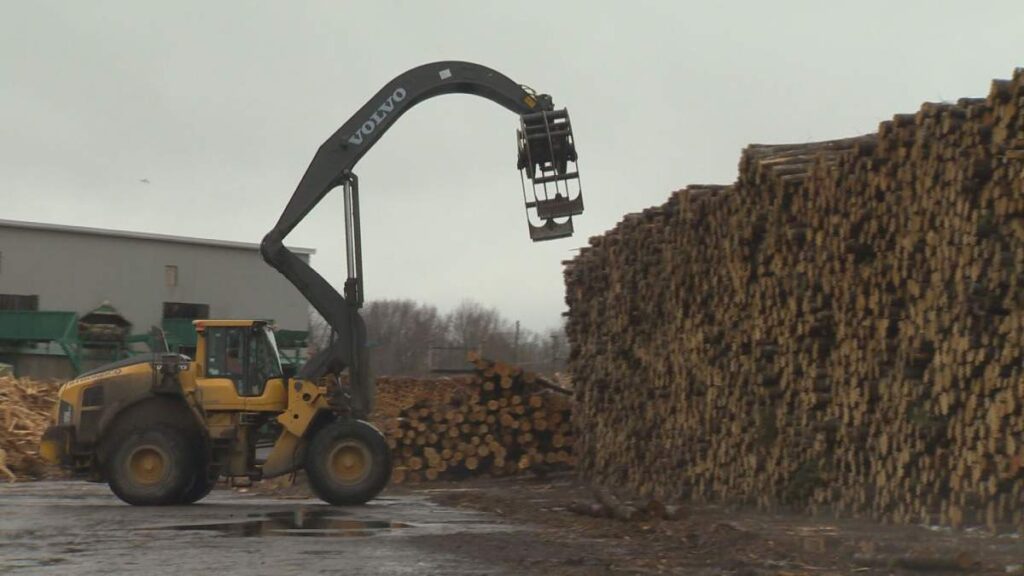
Canadian forestry companies lost about US$60 million in economic well-being in 2017 because of U.S. duties on their softwood lumber. American consumers lost more than $1.56 billion that same year. That 26-to-1 gap is the central finding of a 2022 study from the Montreal Economic Institute, a Canadian think tank.
The authors, economist Olivier Rancourt and policy analyst Gabriel Giguère, argue that the long-running dispute has hurt both countries and helped few people outside the U.S. sawmill business. Their conclusions are the institute’s own, and they come from a group that opposes protectionism.
Five disputes since 1982
The study counts five separate disputes since 1982. Added together, they cover 19 years, nearly half the time since the fight began.
The first came in 1982, when U.S. producers complained that imported Canadian softwood was heavily subsidized. In 1986 the American industry filed again, this time with the International Trade Administration, part of the Commerce Department. It set countervailing duties of 15%, the first tariff barrier of the saga. The two governments then agreed to a 15% levy, and Canada withdrew from that deal in 1991. Two more disputes followed in 1992 and 2005, each with complaints under free trade agreements.
The latest started in 2016, after Canada did not renew an agreement that had lasted more than nine years. In November 2017, President Trump imposed duties of 20.83%.
The U.S. position rests on the fact that 94% of Canadian forests are public, which American producers say proves the lumber is subsidized. The study says Washington held that line despite several losses before WTO and NAFTA tribunals. A WTO report made public in 2020 found that the U.S. Commerce Department had not acted objectively and impartially in its countervailing and antidumping measures.
The numbers behind the duties
U.S. authorities collected C$5.6 billion in export duties from Canadian forestry firms between 2017 and 2021. In 2021, more than 84% of Canada’s softwood exports went south.
The institute projects that from 2017 to 2027 the duties will cut Canadian exports by more than US$3 billion. Yearly export volume fell 9% from 2017 to 2019. Over ten years, the projected loss comes to more than 14 million cubic metres of wood. American mills did not make up the difference. With duties at 20.83%, the study estimates a net loss of 71,000 cubic metres of production, and less lumber on the U.S. market pushes prices up.
Forestry was a $24.2 billion sector in Canada in 2019.
Who pays
The authors estimate that U.S. consumers lost 7% more in well-being than U.S. producers gained. In their view the duties work as a transfer from buyers to sellers. The National Association of Home Builders came out against tariffs in 2022, citing already high wood prices and saying U.S. production cannot meet domestic demand. One study the paper cites found demand for softwood fell by 240,000 cubic metres while the 20.83% duties applied.
The institute also turns the argument on Canada, pointing to supply management, a system of quotas and tariffs that can reach 300% on some products.
Sources
- Canadian Softwood Lumber: A Costly Dispute for Consumers and Companies | Montreal Economic Institute




