
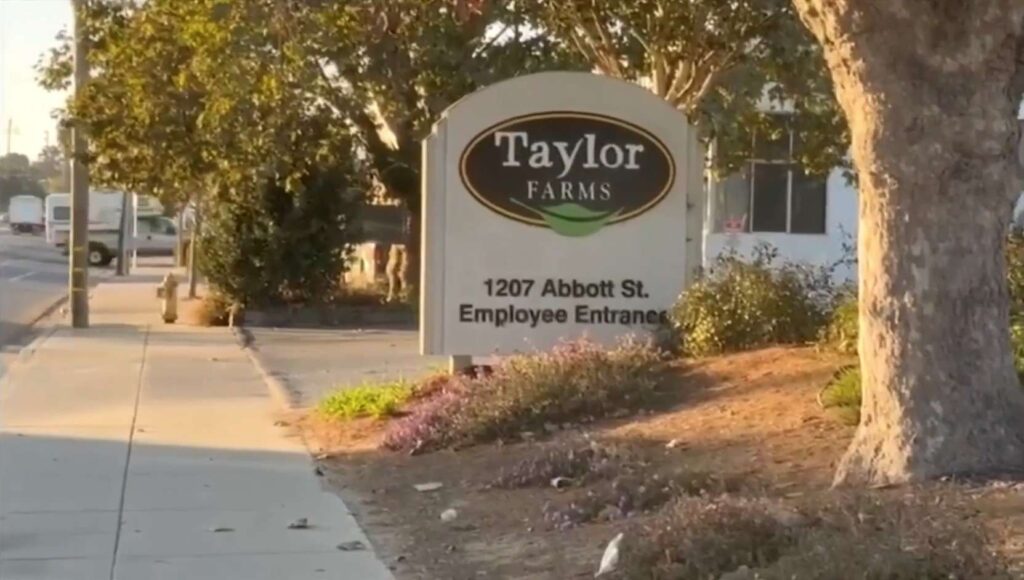
SALINAS, July 20 — Taylor Farms, the Salinas-based salad and fresh-cut vegetable processor, has been expanding beyond its core business. In April 2024 the company acquired FarmWise, an agricultural robotics company specializing in precision weeding and thinning. A year later it took an approximate 16% stake in Pacific Valley Bancorp.
For a firm built on washing and bagging lettuce, these moves represent a notable pivot toward automation and financial infrastructure. Founded in 1995 by Bruce Taylor—a third-generation produce executive who previously founded Fresh Express (later acquired by Chiquita Brands)—Taylor Farms now operates 30 processing plants and employs more than 25,000 workers.
The company moved its headquarters to downtown Salinas in August 2015. Its customer list includes McDonald’s, Chipotle Mexican Grill, Olive Garden, Red Lobster, and Taco Bell, with distribution handled through third parties such as Golden State Foods. In May 2011 it acquired River Ranch Fresh Foods as a wholly owned subsidiary; that unit closed operations in 2013.
The technical reality of scaling a fresh-cut operation at this level is challenging. Labour has been a persistent issue.
The company has faced shortages and complaints from workers about low salaries and the use of temporary-worker status. In 2016, some 900 Taylor Farms employees protested outside Chipotle restaurants in California, demanding better wages and conditions, represented by the International Brotherhood of Teamsters.
Food safety: a recurring detail
Safety systems have been a central part of the company’s public posture. In 2009, Drew McDonald, vice president of national quality systems, testified before a House panel on the Food Safety Enhancement Act, advocating for preventive, science-based safety systems. Yet the recall record is uneven.
In 2011, Taylor Farms recalled salads containing grape tomatoes from Florida growers in May, and then salad blends in October, with no illnesses reported. In 2012 it recalled mangoes and fruit mixes destined for Wawa convenience stores across four states.
In 2013 the company recalled organic baby spinach in 39 states over potential E. coli contamination, and broccoli salad kits in seven states over possible listeria in the dressing packets. The breadth of these recalls—spanning states and supply sources—underscores the complexity of a supply chain that moves billions of leaves through 30 plants.
Power plays
On the energy side, Taylor Farms has invested in alternative generation. In 2012 it introduced fuel-cell technology at one facility, cutting energy costs. The company has also developed facilities using cogeneration, wind, and solar power.
That push aligns with the broader trend among large food processors to hedge against volatile utility prices, though Taylor has not disclosed current energy-mix percentages. What to watch next: the FarmWise acquisition is still young—two years in—and the real test will be whether autonomous weeding bots can deliver the same throughput guarantees that the company’s existing labour force has struggled to maintain.
The Pacific Valley Bancorp stake suggests a long-term play on regional agricultural finance. For a firm that was already the world’s largest salad processor in 2009, and has since absorbed both recalls and protests without losing its major customers, the next move may be more about efficiency than expansion.




