
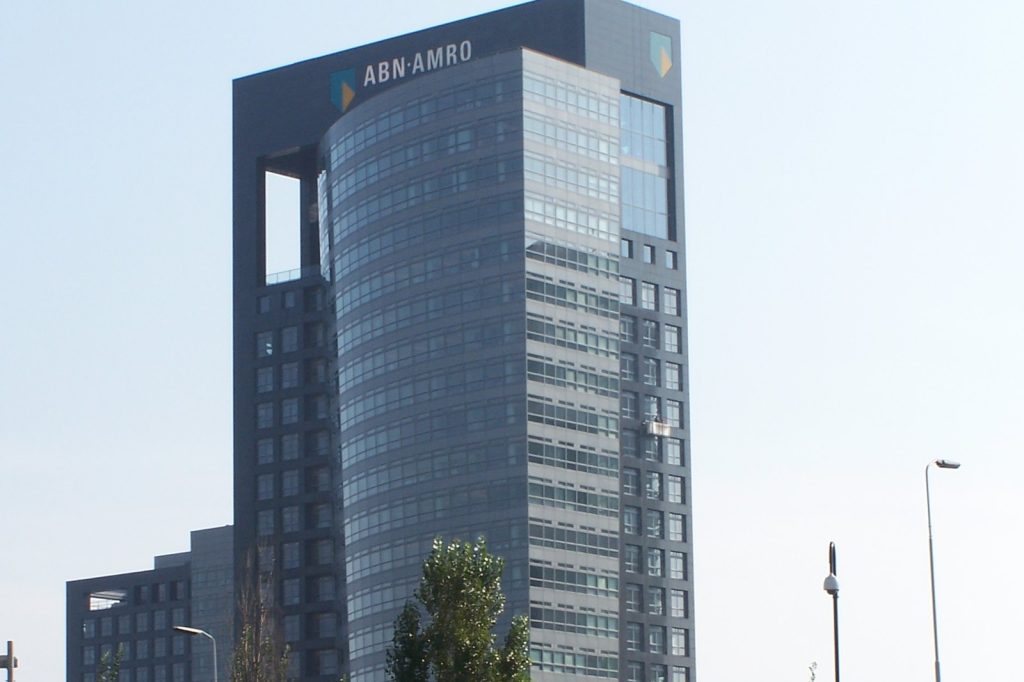
The €480 million settlement that ABN AMRO agreed to with Dutch authorities in April 2021 represents more than a financial penalty—it reflects a decade of internal disruption at the bank. Regulatory filings and public documents now reveal that the institution’s anti-money laundering safeguards never had a stable basis to operate, due to repeated structural changes. To understand how a bank supervised directly by the European Central Bank—classified as a “Significant Institution” since late 2014—ended up paying such a sum, one must look back to the autumn of 2008.
That was when Fortis, the Belgian-Dutch banking and insurance conglomerate that had just acquired ABN AMRO’s Benelux operations, collapsed under financial crisis pressures. The Dutch government intervened, nationalizing Fortis Bank Nederland and the former ABN AMRO assets it held.
By mid-2010, the entire entity was rebranded as ABN AMRO. That rebranding did not mark a clean start. Instead, it represented a temporary fix.
The bank inherited the consequences of a failed cross-border consortium—a 2007 breakup led by Royal Bank of Scotland, Santander, and Fortis—along with the effects of a rushed nationalization. Compliance systems originally built for one organization were forced to serve another.
Regulators later determined that the bank’s AML procedures were never properly integrated or updated to align with the new structure. The €480 million settlement amount reflects the cost of that inattention. ABN AMRO’s designation as a Significant Institution under European Banking Supervision, effective from late 2014, should have prompted a cleanup. The European Central Bank supervises only large entities whose failure could affect the entire eurozone.
ABN AMRO, as the third-largest Dutch bank, fits that category. Yet the AML failures that led to the settlement occurred after that designation took effect.
Direct ECB oversight did not prevent the breakdown. According to available records, the problem was systemic. The bank’s aggressive international expansion before the financial crisis—a strategy that made it a takeover target—had created a vast network of correspondent banking relationships.
Each relationship introduced money flows from jurisdictions with weak AML controls. The compliance department, already strained by post-nationalization restructuring, could not keep pace.
Transactions were flagged but not investigated. Suspicious activity reports were filed but not pursued. The settlement does not conclude the matter.
The bank remains under scrutiny. Its Significant Institution status allows the ECB to impose ongoing corrective measures.
The Dutch public prosecutor, which negotiated the settlement, has not ruled out further action against individual executives. The bank’s defense points to the complexity of its own history—a justification the regulator has not accepted as valid. ABN AMRO’s case illustrates what happens when a bank’s corporate structure becomes more complex than its compliance function.
The merger that created it in 1991, the breakup in 2007, the nationalization in 2008, and the rebranding in 2010 each added layers of legal entities, IT systems, and customer databases that needed reconciliation. Each step created gaps the AML system could not bridge. €480 million is the price of those gaps.
The bank paid it. The regulators collected it. But the underlying issue—a bank whose history is a series of violent reorganizations—has not been resolved by the settlement.
It has only been assigned a price.




