
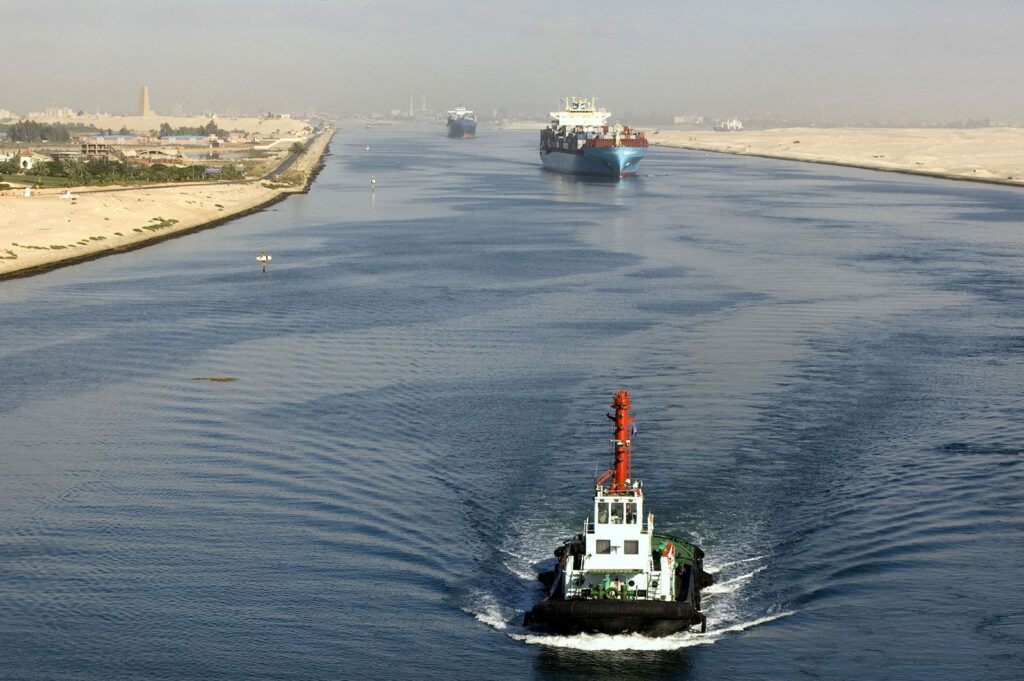
CAIRO, July 21 — The Suez Canal, that narrow ribbon of water that has connected the Mediterranean to the Red Sea since 1869, is once again a focal point of global trade anxiety. For ordinary consumers, think of it like a highway shortcut that carries about 10 to 12 percent of the world’s shipping traffic. When that shortcut is blocked or becomes too dangerous, everyone takes a much longer, costlier detour — and the price of everything from electronics to fuel eventually goes up.
Right now, the canal is still moving ships, but the traffic has thinned dramatically. Houthi attacks in the Red Sea, which began escalating late last year, caused a 40% drop in canal traffic by January 2024, according to the International Monetary Fund.
That’s a huge chunk of global trade suddenly rerouted. Major shipping lines — MSC, Maersk, CMA CGM — decided the risk wasn’t worth it and diverted their vessels around the Cape of Good Hope, the southern tip of Africa. The practical upshot: each voyage adds about 3,500 nautical miles and consumes 30% more fuel.
That extra fuel isn’t just a line item for the shipping companies; it gets baked into the prices we pay for imported goods.
A Chokepoint Under Pressure
The Suez Canal has long been a vital artery for global commerce. In 2023, the canal earned Egypt $9.4 billion in revenue, a testament to its importance. About 7.5% of the world’s oil shipments pass through it.
But the canal’s vulnerability has been exposed twice in recent years. The most vivid example was the grounding of the massive container ship Ever Given in March 2021, which blocked the canal for six days and cost an estimated $54 billion in disrupted trade.
That event was a freak accident — a ship stuck sideways in the sand. The current disruption is different: it’s a security crisis, not a navigational one. Insurance premiums for war-risk coverage in the Red Sea have skyrocketed.
In 2024, they rose from 0.1% of a vessel’s value to 1%. That may sound like a small percentage, but for a ship worth tens of millions of dollars, it’s a massive cost increase.
Shipping lines pass that cost on, and the ripple effect is felt in spot container freight rates. By March 2024, the rate for a 40-foot container from Shanghai to Rotterdam had jumped 150% compared to pre-disruption levels.
The Cost of Going the Long Way
So what does this mean for someone shopping online or filling up a gas tank? In plain terms, when ships take the longer route around Africa, they arrive later and more expensively. Supply chains that were already stretched from pandemic-era backlogs now face new delays.
The practical upshot: inventory takes longer to restock, and the cost of that extra fuel and insurance shows up in retail prices. It’s not instant — it takes weeks for the impact to travel through the supply chain — but it’s real.
The Suez Canal Authority has tried to soften the blow. They’ve discounted transit fees by 15% for some vessels, hoping to lure traffic back. But a discount on tolls doesn’t erase the risk of attack or the high insurance premiums.
So far, the discounts haven’t reversed the traffic decline. The canal remains open, but many shipping companies are still choosing the longer, safer route.
Echoes of the Ever Given
The current crisis echoes the Ever Given grounding, but the scale is different. The 2021 blockage was a short, sharp shock: six days, one ship, $54 billion in delayed trade. The Houthi-driven disruption has been ongoing for over a year, with no clear end in sight.
It’s a slower-burning problem, but the cumulative effect on global trade could be even larger. The IMF’s 40% traffic drop figure from January 2024 is a snapshot; the situation may have shifted since then, but the underlying pressures remain.
For Egypt, the revenue hit is significant. The canal is a major source of foreign currency for the country. A sustained drop in traffic means less income, which can affect the national budget and the value of the Egyptian pound.
For the rest of the world, the practical upshot is a reminder of how fragile global supply chains can be — and how a single chokepoint can affect prices and availability thousands of miles away.
What to Watch Next
The key question is whether security in the Red Sea will stabilize enough for shipping lines to return to the Suez route. That depends on geopolitical developments beyond the canal’s control. In the meantime, the 15% fee discount is unlikely to be enough on its own.
The shipping industry is watching insurance rates, the frequency of attacks, and the cost-benefit of the Cape route. If fuel prices rise further, the longer route becomes even more expensive.
If security improves, the canal could regain traffic quickly — but that’s a big if. For now, the Suez Canal remains a critical but troubled artery. The foundation of global trade is still flowing, but at a lower pressure, and at a higher cost to everyone.




