
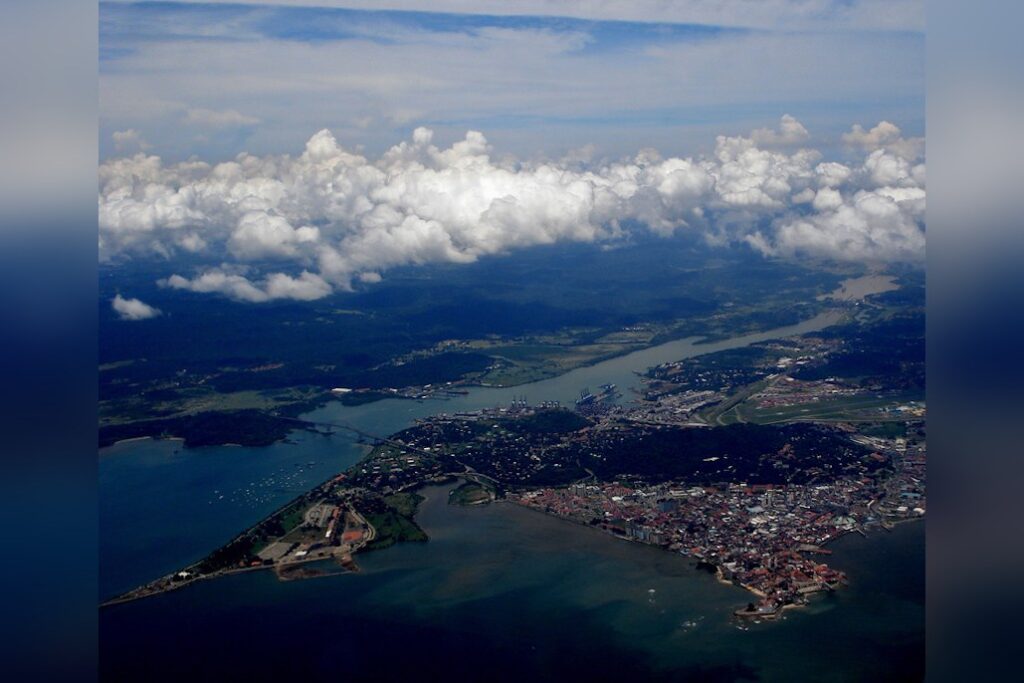
PANAMA CITY, July 10 — The man steering the Panama Canal through its most turbulent period in a century is an economist with a University of Chicago pedigree, a former finance minister, and a quiet conviction that the waterway’s survival hinges on a single bet: a new reservoir in the Río Indio basin. Ricaurte Vásquez, appointed Administrator of the Panama Canal Authority in 2019, has spent the past several years navigating a one-two punch that would have crippled lesser infrastructure operators.
First came the COVID-19 pandemic, which disrupted global supply chains. Then, far more consequentially, the severe drought of 2023–2024.
Strategically, the drought exposed a vulnerability the canal’s planners had long feared but never fully confronted: the freshwater lakes that lift ships across the isthmus are not infinite. Vásquez responded with a brutal calculus. He imposed transit restrictions and draft limits, effectively telling the world’s shipping lines that they could no longer count on the canal as a lock-and-load shortcut.
The move was deeply unpopular with the maritime industry. But the alternative—running the locks dry, stranding billions in cargo—was unthinkable.
The Drought Calculus
The broader stakes of Vásquez’s decisions go well beyond Panama. When the ACP cuts draft limits, it forces container ships to carry lighter loads, which means more voyages, higher costs, and delayed goods hitting American and European ports. For the U.S. East Coast, which depends on the canal for everything from liquefied natural gas to auto parts, the disruption is immediate.
What this signals is a fundamental shift in how the canal must operate. Vásquez, who holds a master’s degree from the University of Chicago and previously served as Panama’s Minister of Economy and Finance from 2004 to 2008, understands the economic ripple effects as well as any living Panamanian.
He also served as a director on the ACP board before taking the top job. That institutional memory has been critical. The drought of 2023–2024 was not a one-off event.
Climate scientists have warned that Central America’s rainfall patterns are becoming more erratic, with longer dry spells punctuated by intense storms. For the canal, which relies on two artificial lakes—Gatun and Alajuela—to supply the water needed for each lockage, the implications are existential.
When the lakes drop, the canal stops.
The Reservoir Bet
Vásquez has made his signature long-term investment clear: the proposed Río Indio reservoir. The project, still in the planning and environmental review stages, would create a new freshwater source west of the existing canal watershed. If built, it would effectively double the canal’s water storage capacity, providing a buffer against the kind of multi-year drought that brought the waterway to the brink in 2023.
The economics are daunting. Building a reservoir of that scale in tropical terrain involves relocating communities, securing financing, and navigating Panama’s own political currents.
Vásquez has publicly emphasized the canal’s role as a neutral and reliable route for global trade, even as climate change threatens its operations. The message is aimed as much at Washington and Beijing as it is at Panama City: this is a strategic asset, and its manager is thinking in decades, not quarters. He is a Panamanian economist by training, having earned his undergraduate degree from the University of Panama before pursuing graduate work at the University of Chicago, the intellectual home of free-market economics.
That background informs his approach: pragmatic, data-driven, and skeptical of grand gestures that lack a balance sheet.
Neutrality Under Strain
The canal’s neutrality is a matter of treaty law, enshrined in the 1977 Torrijos-Carter Treaties, which transferred control from the United States to Panama. Vásquez has repeatedly stressed that the ACP operates without political bias, charging the same tolls and applying the same transit rules to all nations. That principle has been tested as China has expanded its economic footprint in Latin America, including investments in port infrastructure on both the Pacific and Atlantic sides of the canal.
Strategically, the calculus for Vásquez is to keep the canal above the geopolitical fray. He cannot afford to alienate the United States, which remains the canal’s largest customer, nor can he ignore the reality that Chinese-owned ports sit at both ends of the waterway.
His public posture has been consistent: the canal is a service provider, not a chess piece. But climate change does not respect neutrality. The drought forced Vásquez into a role he never sought: rationing a critical resource in real time, with the world’s shipping lines watching his every move.
The transit restrictions he imposed were the first of their kind in the canal’s modern history. They worked, in the narrow sense that the canal remained open.
But they also revealed how thin the margin for error has become.
What to Watch
The next phase of Vásquez’s tenure will be defined by the Río Indio reservoir. If Panama’s government approves the project and secures financing, construction could take the better part of a decade. That timeline means the canal remains vulnerable to the next severe drought, which could come before the reservoir is operational.
{“@context”: “https://schema.org”, “@type”: “NewsArticle”, “headline”: “Panama Canal Chief Navigates Drought and Global Trade”, “description”: “PANAMA CITY, July 10 — The man steering the Panama Canal through its most turbulent period in a century is an economist with a University…”, “datePublished”: “2026-07-10T09:30:00+00:00”, “author”: {“@type”: “Person”, “name”: “Noah King”}, “publisher”: {“@type”: “Organization”, “name”: “InfoPulse Today”, “url”: “https://newsfeed.2bme.xyz/”}}




