
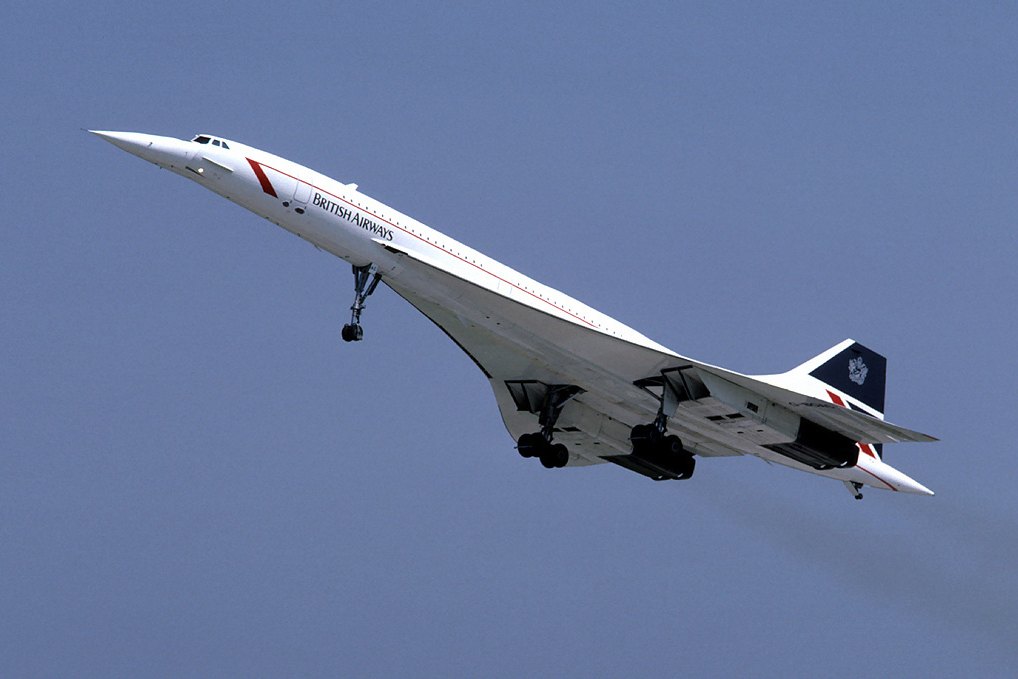
PARIS, July 10 — Against the backdrop of the 20th century’s most audacious aviation gamble, a new generation of engineers is once again chasing the dream of supersonic travel. The Concorde, that dart-shaped marvel of Anglo-French engineering, first flew on March 2, 1969, and entered commercial service on January 21, 1976, with British Airways and Air France. It was a bird of extremes.
Cruising at Mach 2.04 — 1,354 miles per hour — at 60,000 feet, it could cross the Atlantic in roughly three and a half hours, a journey that normally consumed a full working day. Its delta wing and the distinctive roar of its afterburning Rolls-Royce/Snecma Olympus 593 engines became symbols of an era when national pride and technological daring went hand in hand.
Yet only 20 of these aircraft were ever built, and just 14 entered operational service. The cabin, narrow and snug, carried between 92 and 128 passengers. The economics were punishing from the start.
Sonic boom restrictions grounded the aircraft over land, confining its supersonic dash to ocean routes. Fuel consumption was ferocious.
And then came July 25, 2000, when Air France Flight 4590 crashed shortly after takeoff from Paris, killing 113 people. The accident was a wound from which the programme never recovered. By 2003, low passenger numbers and rising maintenance costs forced the retirement of the entire fleet.
The last landing, at London Heathrow, closed a chapter.
The shape of things to come
What is at stake now is whether the lessons of that era can be applied to a new generation of supersonic aircraft. The technological hurdles remain formidable, but the landscape has shifted. In the corridors of the aerospace industry, one name surfaces repeatedly: Boom Supersonic.
The company’s Overture project targets an entry into service in 2029. It is a deliberately more modest proposition than Concorde was — smaller, more efficient, and designed from the outset to operate within the constraints that doomed its predecessor.
The wider picture, however, involves more than just commercial ambition. NASA’s X-59 QueSST programme, which first flew in 2024, is a research aircraft built to solve the fundamental problem of the sonic boom. If the X-59 can demonstrate that a supersonic aircraft can produce a low, muffled thump rather than a disruptive bang, the regulatory door to overland supersonic flight could finally swing open.
That would change everything. The Atlantic routes that sustained Concorde were lucrative, but the real prize is the ability to fly supersonic across continents — New York to Los Angeles, London to Tokyo — without disturbing those below.
Engineering the silence
The X-59’s design is radically different from Concorde’s. Where Concorde’s long, needle-like nose and delta wing generated a powerful double boom, the QueSST aircraft uses a slender, elongated shape and a carefully sculpted underbelly to keep shockwaves from merging into a single loud crack. The goal is to reduce the perceived noise to something akin to a car door closing 60 feet away.
For Boom Supersonic, the challenge is not just acoustic but economic. Concorde’s afterburning Olympus engines drank fuel at a rate that made profitability elusive even at premium ticket prices.
The Overture is designed to use new-generation turbofans that can operate without afterburners, a shift that promises a dramatic improvement in fuel efficiency. But the clock is ticking. The 2029 target for Overture’s entry into service is ambitious, and the certification process for a supersonic airliner will be unprecedented in the modern regulatory era.
What remains of the dream
The Concorde fleet itself is scattered across museums and airfields, preserved as monuments to what was possible. Yet the aircraft that once seemed like the future now serves a different purpose: as a reminder of the gap between technical possibility and commercial viability. For the engineers and entrepreneurs working on the next generation, the lesson is not that supersonic travel is impossible, but that it must be done differently.
The sonic boom must be tamed. The fuel burn must be brought under control.
And the business model must work without state subsidies. Against this backdrop, the revival of supersonic flight is not a foregone conclusion. The X-59 is a research vehicle, not a prototype for a production airliner.
Boom Supersonic has yet to fly a full-scale Overture demonstrator. The path from drawing board to runway is littered with projects that looked promising at the concept stage and failed at the execution stage.
And yet, the momentum is real. The regulatory agencies are engaged. The technology is advancing.
And the market — for business travellers, for time-sensitive cargo, for those who simply want to shrink the world a little further — remains as hungry as it was in the 1960s. What to watch next is whether the X-59 data convinces regulators to rewrite the rules on overland supersonic flight, and whether Boom Supersonic can translate its design into a flying, certifiable, economically viable aircraft. The answers will determine whether the next decade sees a return to Mach 2, or whether Concorde remains a singular, unrepeatable achievement.
{“@context”: “https://schema.org”, “@type”: “NewsArticle”, “headline”: “Concorde’s 27-Year Mach 2 Commercial Flight Era Ends”, “description”: “PARIS, July 10 — Against the backdrop of the 20th century’s most audacious aviation gamble, a new generation of engineers is once again chasing the…”, “datePublished”: “2026-07-10T09:30:00+00:00”, “author”: {“@type”: “Person”, “name”: “Beatrice Bianchi”}, “publisher”: {“@type”: “Organization”, “name”: “InfoPulse Today”, “url”: “https://newsfeed.infopulsetoday.com/”}}




