
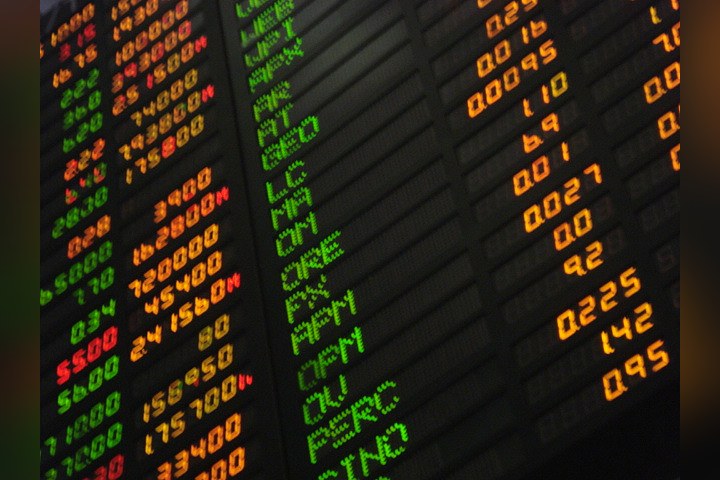
A 60-day window just opened for Iran to sell oil on global markets. The United States granted the license Monday. For markets across Asia, the effect was immediate — and it was not a rally.
Instead, stocks traded mostly lower Tuesday. The uncertainty that has gripped traders for weeks did not vanish.
The peace talks to end the Middle East war remain unresolved. The Strait of Hormuz is not fully open. The oil license, while significant, is a temporary measure, not a settlement.
This is what a market looks like when it is waiting. Waiting for a deal.
Waiting for a central bank. Waiting for the next headline. The Australian benchmark S&P/ASX 200 index is moving well above the 8,800 level.
That sounds like strength. But trading was choppy, and the market reversed only some of the losses from the prior three sessions. Gold miners and technology stocks are weak.
Iron ore miner stocks are up. The gains do not cancel the losses.
They just shift where the pain lands. The Federal Reserve policy session was in focus this week. It was the first to be led by the new chief, Kevin Warsh.
That alone injects a variable markets had not priced in before. In Europe, central banks of the U.K. and Switzerland announced their rate decisions.
In Asia, the Bank of Japan drew attention for its policy moves. Major central banks dominated the economic news flow. That is a lot of signals to parse at once, and none of them point in a clear direction.
The mixed cues from Wall Street overnight did not help. Asian markets opened lower, and they stayed lower. The pattern is familiar: Wall Street hesitates, Asia follows.
But the underlying cause is not just the overnight tape. It is the war.
It is the strait. It is the question of when — or if — crude oil supply recovers at the pace the oil license suggests. Officials said the uncertainty surrounding the peace talks has been a major factor in the market’s performance.
That is a careful way of saying the markets are stuck. They cannot price in a resolution that has not arrived.
They cannot ignore the possibility that the 60-day license is a prelude to something bigger, or a stopgap that buys time for more fighting. The region has a history of resilience in the face of economic challenges. Officials are closely watching the developments.
That watching is itself a kind of action — or inaction. Markets do not like ambiguity. They get it anyway.
What to watch next: whether the peace talks produce a concrete step before the 60-day clock runs. Whether the Federal Reserve under Warsh signals a policy shift.
Whether the Bank of Japan’s moves stabilize anything in Asia. Whether the choppy trading in Australia becomes a trend or a blip. For now, the markets are trading mostly lower.
That is the headline. The story behind it is the same as it has been for weeks: a war, a strait, a negotiation, and a world waiting to see which one breaks first.
{“@context”: “https://schema.org”, “@type”: “NewsArticle”, “headline”: “Oil License Fails to Calm Asian Markets Amid Ongoing Uncertainty”, “description”: “A 60-day window just opened for Iran to sell oil on global markets. The United States granted the license Monday. For markets across Asia, the…”, “datePublished”: “2026-06-23T04:19:20+00:00T09:30:00+00:00”, “author”: {“@type”: “Person”, “name”: “Sebastian Smith”}, “publisher”: {“@type”: “Organization”, “name”: “InfoPulse Today”, “url”: “https://newsfeed.infopulsetoday.com/”}}




