
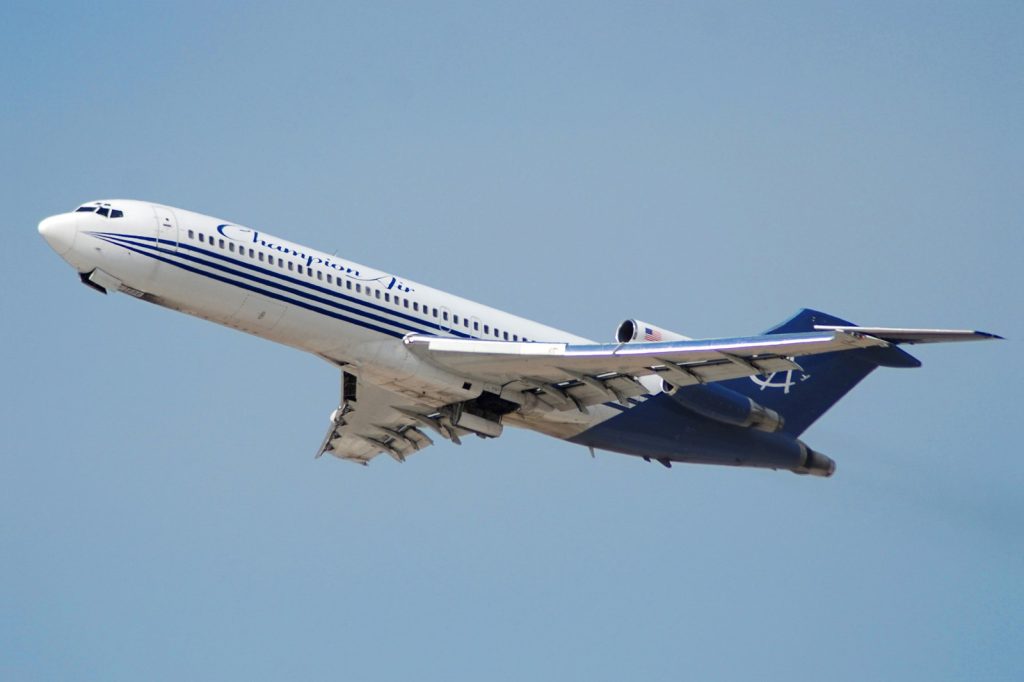
WASHINGTON, July 16 — The Boeing 727 took to the skies for the first time in 1963, a trijet built for an era when commercial aviation was still finding its footing. Over the next two decades, until production ended in 1984, Boeing built 1,832 of them. They became workhorses, known for their toughness and their ability to land on shorter runways than many jets of their size.
But the same qualities that made the 727 a marvel of mid-century engineering — durability, adaptability, independence from long paved strips — have made it, along with its younger sibling the 737, a quiet concern for regulators. The 737, introduced in 1967, has been in continuous production ever since.
As of 2024, Boeing had delivered over 10,000 of them. Together, these two aircraft families represent some of the most widely used commercial planes in history. That history, however, has a shadow side.
According to a Reuters investigation, aircraft used by companies linked to a U.S. Army Special Forces veteran were built in the 1960s and 1970s. Some of them had been stored for years before being reactivated.
These are not the gleaming jets of major airline fleets. Many older 727s and 737s have been retired from their original operators and sold to smaller companies, often with less oversight.
Flags of Convenience
These aircraft frequently operate under flags of convenience, registered in countries where regulatory enforcement is lax. The Federal Aviation Administration and the International Civil Aviation Organization have both raised concerns about the safety and tracking of such planes. The worry is not abstract: they can be used for illicit activities, including arms smuggling and sanctions evasion.
The aging fleet also poses direct safety risks. Several crashes of older 727s and 737s in conflict zones were reported in the 2020s.
The very ruggedness that made them attractive for rough airstrips in remote places also makes them attractive to operators who may not be subject to the same maintenance standards as a major airline.
What Regulators Are Watching
For the FAA and ICAO, the challenge is tracking aircraft that change hands frequently and cross borders into jurisdictions where paperwork may be thin. The Reuters investigation into the veteran-linked companies highlights how planes built half a century ago can be pulled from storage and put back into service in environments where oversight is minimal. What this means going forward is a question of enforcement.
The agencies have flagged the problem, but the gap between flagging it and solving it remains wide. For the families of those who fly on these planes, or for communities living near conflict zones where they operate, the concern is not theoretical.
It is about whether a plane built in the 1960s, reactivated after years in storage and registered in a country with weak rules, is safe to fly.




