
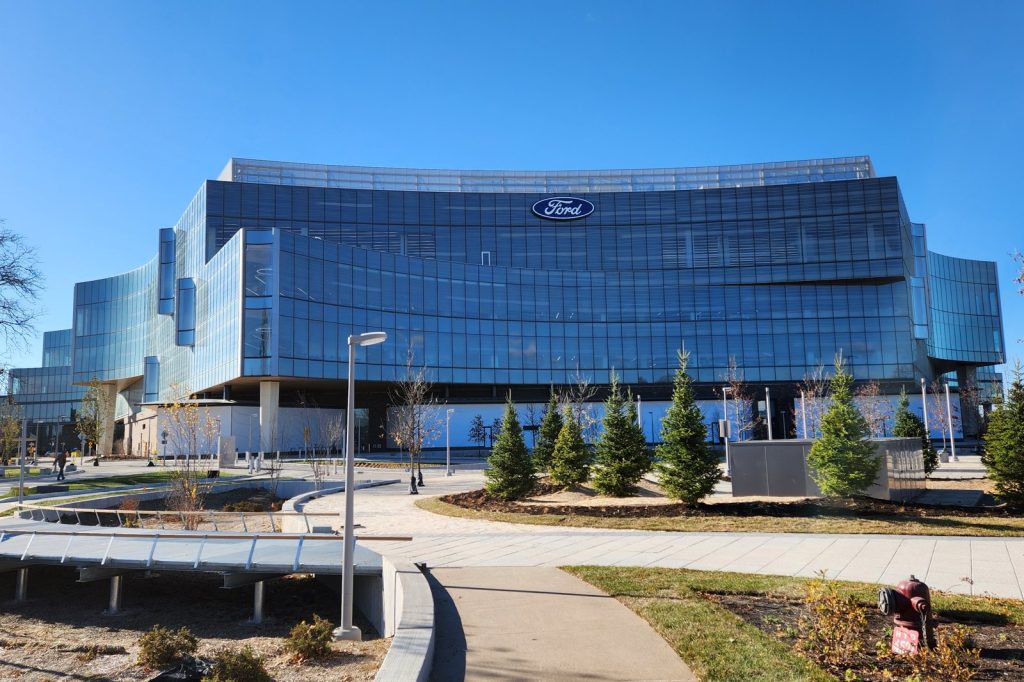
Ford Motor Company’s decision to rehire 350 veteran engineers — after discovering that artificial intelligence and automated systems could not reliably catch manufacturing defects — is a quiet admission with loud implications. The automaker, based in Dearborn, Michigan, spent years pushing toward a future where machines would handle quality control. That future arrived.
It did not work well enough. Chief operating officer Kumar Galhotra told reporters Ford had been “relying more and more on automated quality systems.” The results disappointed the company.
So Ford reversed course. It brought back technical specialists — some former employees, others who had been working at suppliers. These engineers, called “gray beards” in industry slang, now hunt for failure points in parts before those parts ever reach the plant floor.
This is not a small experiment. It is a structural change at one of the world’s largest automakers.
And it raises a question that extends well beyond Detroit: What happens when a corporation bets heavily on automation, and the bet loses? Ford’s vice president of vehicle hardware engineering, Charles Poon, was blunt. “Mistakenly we thought that by just introducing artificial intelligence and ingesting the design requirements that we had, that that would produce a high-quality product,” he said.
The mistake cost time and money. It also cost something harder to measure: trust. Trust that the vehicles leaving the factory would not fail in the field.
For families across Asia — in the Philippines, in Thailand, in Bangkok, in Manila — a car with hidden faults means more than a warranty claim. It means a tricycle driver in Manila loses a day’s income.
It means a family in Bangkok faces an unexpected repair bill that stretches the monthly budget. Ford’s quality problems are not abstract. They hit real people who depend on reliable vehicles for daily life and livelihoods.
The rehired engineers are now embedded in Ford’s quality processes. The company is not abandoning artificial intelligence entirely, but it has learned a hard lesson.
The machines could ingest design requirements. They could run simulations. They could flag statistical anomalies.
But they could not match the human touch — the intuition of a veteran who has spent decades assembling transmissions, the practiced eye of a mechanic who spots a flaw before it becomes a recall. This story is not unique to Ford. Across manufacturing, companies have rushed to replace experienced workers with algorithms and cameras.
The logic seemed airtight: machines do not retire, do not get sick, do not demand higher wages. But machines also do not develop intuition.
They do not learn the way a human learns — through years of trial, error, and quiet observation. A factory worker in Thailand who has spent decades assembling transmissions knows things no dataset can capture. Ford’s move suggests a correction is underway.
The company is not retreating from technology. It is retreating from the idea that technology alone is enough.
The “gray beards” are not an antique curiosity. They are a strategic asset. Their experience, once dismissed as obsolete, is now essential.
Where this leads is uncertain. Other automakers may follow Ford’s lead. Or they may double down on automation, betting that better algorithms will solve the problem.
But the lesson from Dearborn is clear: the human touch matters. A machine can measure tolerances.
It cannot sense when something feels wrong. That feeling — the product of decades of hands-on work — is what Ford is buying back.




