
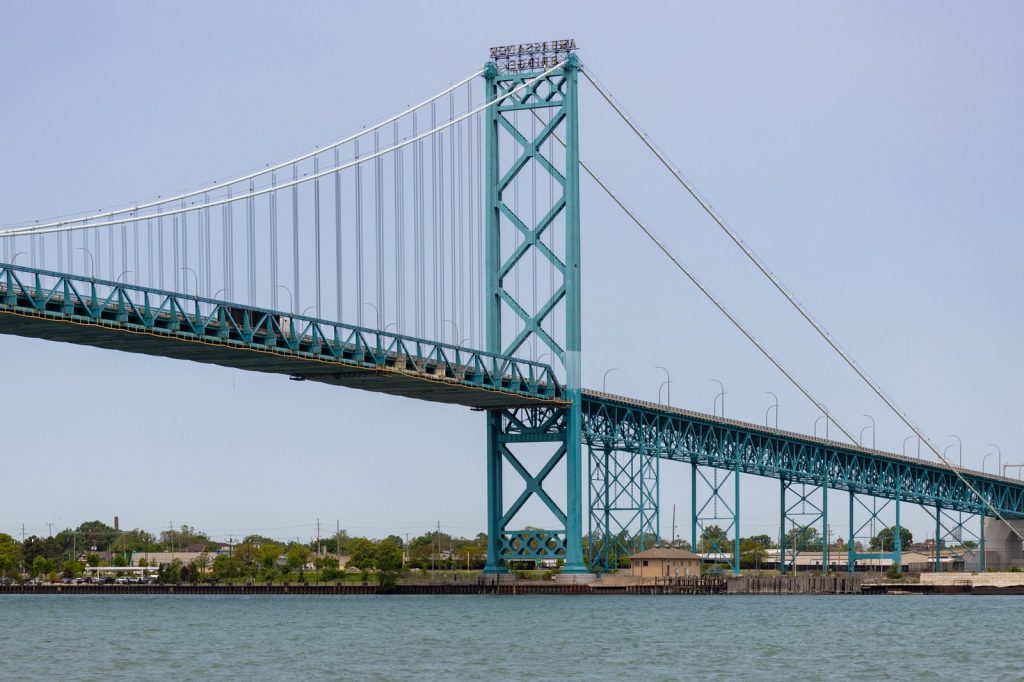
OTTAWA — The figure that matters on the Ambassador Bridge is $1.6 billion. That is the outstanding debt, including interest, that Canada still owes on its 2021 purchase of the Canadian side of the crossing, financed through a loan from the Canada Infrastructure Bank. The bottom line: Prime Minister Mark Carney has stated that Canada will not share any toll revenues with the United States until that debt is fully repaid.
For investors and border-watchers, that means the financial structure of the busiest commercial land border crossing between the two countries remains a point of friction. By the numbers, the Canadian government bought its half of the Ambassador Bridge from the Moroun family in 2021 for $1.4 billion Canadian.
The Morouns had owned the bridge since 1979. The Canada Infrastructure Bank — a federal Crown corporation created in 2017 to back infrastructure projects — provided the loan. The repayment terms are tied directly to toll collections on the Canadian side.
As of February 2025, the balance had climbed to roughly $1.6 billion Canadian. Investors will note that the CIB’s involvement in border infrastructure does not stop there.
The bank has also put money into the Gordie Howe International Bridge, a separate crossing currently under construction between Windsor, Ontario, and Detroit, Michigan.
The debt and the toll dispute
Carney’s statement that Canada will not share toll revenue with the U.S. until the CIB loan is cleared sets a clear financial condition. The bridge generates significant revenue from the thousands of trucks and cars that cross daily. That money, under the loan terms, flows first to debt service.
Until the $1.6 billion is paid down, there is no revenue-sharing arrangement on the table from the Canadian side. The United States has its own interests in the flow of cross-border commerce.
The Ambassador Bridge is a private-sector artery, and its ownership structure has been complicated for decades. The Moroun family fought Canadian government efforts to buy the Canadian side for years before the 2021 deal finally closed. Now the CIB holds the paper, and the repayment clock is ticking.
One short sentence captures the dynamic: Canada bought the bridge, Canada financed the purchase, and Canada wants the loan repaid before any revenue-sharing begins.
What to watch next
The debt balance will continue to grow as interest accrues. How quickly toll revenues can chip away at the $1.6 billion figure depends on traffic volumes, toll rates, and the pace of economic activity between the two countries. The Gordie Howe bridge, when it opens, will add another revenue stream for the CIB but also split the traffic that currently feeds the Ambassador Bridge.
For now, the math is straightforward. The loan gets paid first.
Everything else waits.




